

Rolls-Royce has unveiled the first electric model in its new Coachbuilt Collection as a 1920s-inspired drop-top named Project Nightingale.
Set to be limited to just 100 invitation-only examples, Project Nightingale marries the EV powertrain of the Spectre coupe with a striking two-seat convertible body that draws on high-end yachts and experimental Rolls-Royce cars from 100 years ago.
As you’d expect from a limited edition from one of the world’s most exclusive car makers, Project Nightingale packs a wealth of fancy features, from 10,500 interior “stars” to a side-hinged bootlid, bespoke paint tone and 24-inch alloy wheels inspired by yacht propellers.
Chris Brownridge, chief executive of Rolls-Royce Motor Cars, said: “Some of the most discerning Rolls-Royce clients in the world asked us for our most ambitious work.
“We responded by bringing three things together that have never coexisted within our brand: the complete design freedom of coachbuilding, our powerful, near-silent all-electric powertrain, and a uniquely potent yet serene expression of open-top motoring – an experience that only this technology makes possible.”
Exterior design
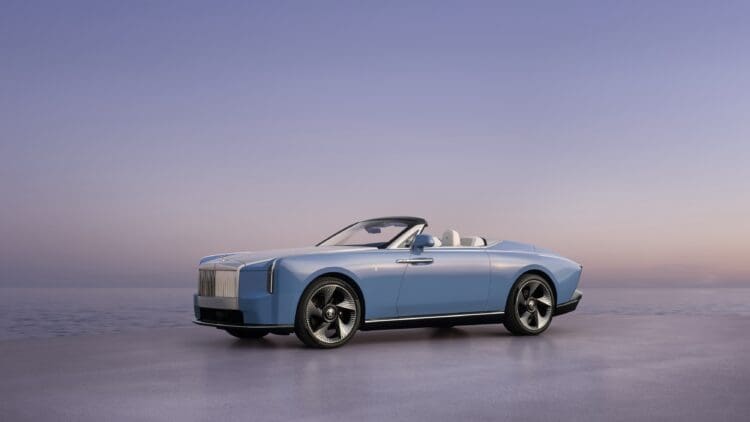
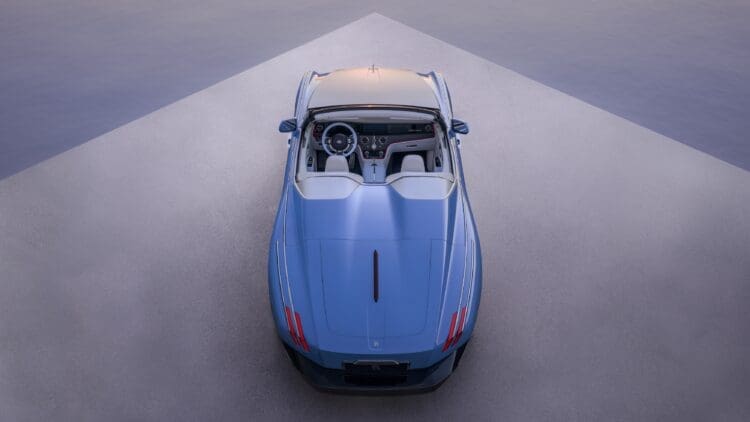
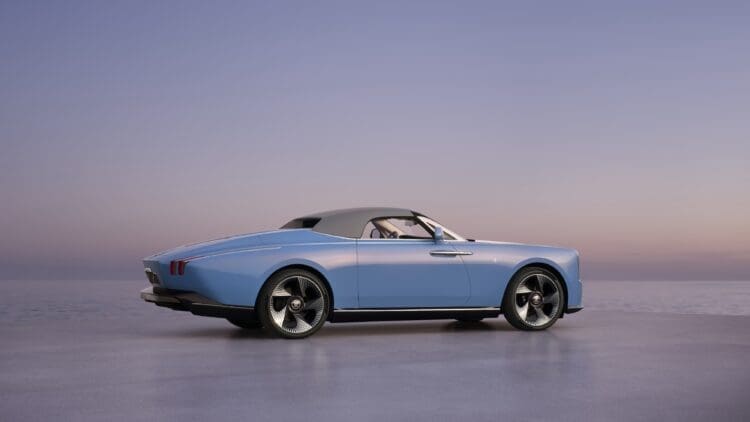
At 5.76m long, Project Nightingale is almost as big as the flagship Phantom saloon, but is a two-door convertible with a folding fabric roof. Rolls-Royce describes it as a “motor car that is almost entirely bonnet and tail”, with huge forward and rear bodywork cocooning an “intimate” two-seat cabin.
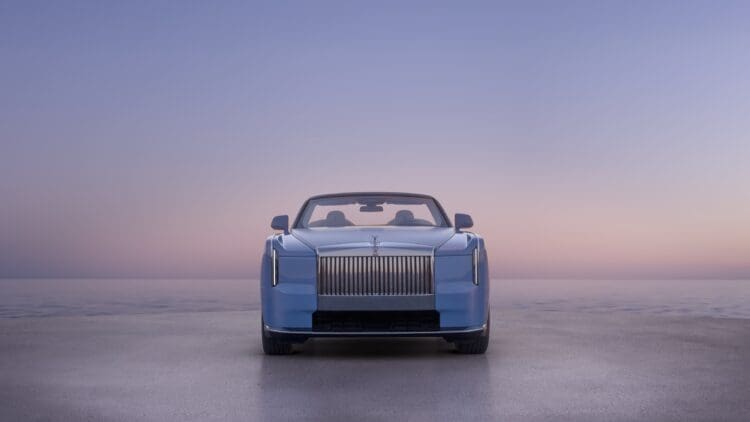
Design inspiration has been drawn from the Art Deco movement and the radical 16EX and 17EX cars of 1928, which were developed to set new speed records. Their clearest influence is in slim upright headlights which are set into the near-vertical leading edge of the front wings. Between them an almost one-metre-wide take on the Pantheon grille sits on top of a carbon fibre “plinth” and is capped with the famous Spirit of Ecstasy, which sits in a specially recessed mount.
Inspired by the EX cars, the grille’s RR logo is picked out in red rather than the black which has been standard since the 1930s.
Rolls-Royce’s designers declared that they wanted Project Nightingale to showcase the brand’s focus on grand dimensions, clean lines and a “monolithic” sense of design. The smooth, uninterrupted flanks are designed to look like they are carved from a solid piece of aluminium. The handles for the rear-hinged doors have been redesigned and even the “Badge of Honour” on the front wings have been reimagined as two simple interlocking stainless steel Rs which sit directly on the bodywork. On the lower edge, a carbon fibre skirt is supposed to echo the running boards of early cars.
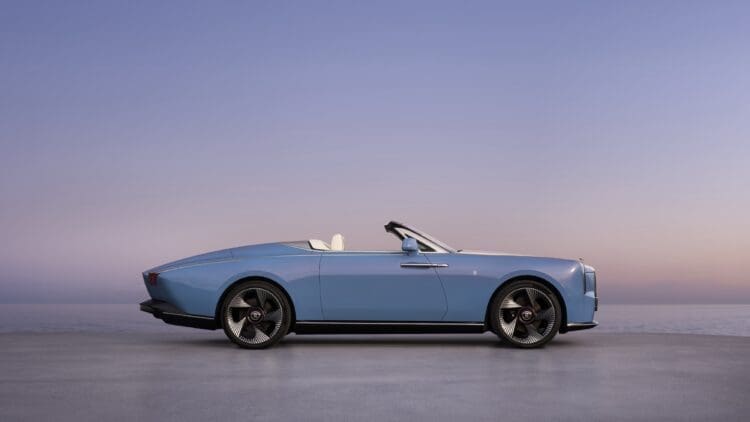
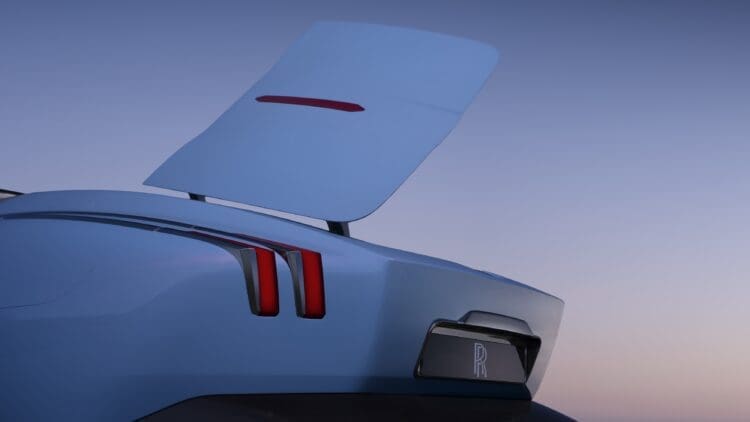
A steeply raked windscreen flows towards the dipping rear deck, which incorporates a side-hinged, cantilevered bootlid that its designers say echoes the lid of a grand piano. Like the headlights, the rear lights are thin upright units and the two sets of lights are joined by a high-level chrome coachline that runs the length of the car.
Interior
The Nightingale name comes from the name of the designers’ house on Henry Royce’s French Riviera estate but extends beyond just a title.
The car’s interior also draws from the bird, with a unique illumination called the “Starlight Breeze suite” inspired by sound waves of birdsong. Without a fixed roof to house the traditional Starlight headliner, Project Nightingale features 10,500 individual “stars” that run from the front edge of the door cards around the cabin and into the horseshoe behind the seats to wrap around their occupants.
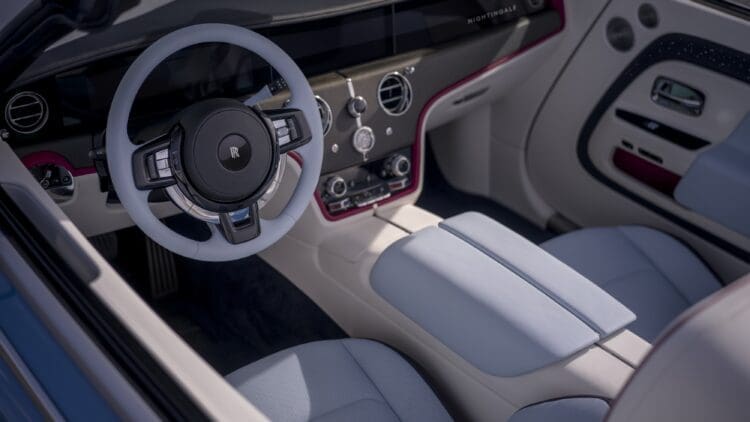
Like every Rolls-Royce there’s extensive use of the finest leather, from the seats and door cards to the powered central armrest, which slides back when the doors open to reveal the aluminium-collared rotary controller for the infotainment system. A handful of other rotary controls along with traditional Rolls-Royce features such as the organ stop vent controls keep the interior design simple.
The interior is finished in a combination of Charles Blue and Grace White leather, with Peony Pink detailing. The exterior is painted in an exclusive pale blue flecked with red inspired by the original blue of the EX cars, with a silver fabric roof. This features multiple layers of cashmere, fabric and sound deadening to deliver a typically serene drive with the roof up, while bringing the pleasure of open-air motoring when it’s down.
Powertrain
Rolls-Royce hasn’t given any specifics about Project Nightingale’s powertrain but we do know it’s based on the system that drives the Spectre.
We wouldn’t be surprised if this special edition uses the more powerful Black Black iteration, which delivers up to 650bhp and 793lb ft via a two-motor arrangement. This brings all-wheel-drive, all-wheel steering and Rolls-Royce’s famous magic carpet ride courtesy of its adaptive air suspension.
Price
If you have to ask, you can’t afford it. But that doesn’t matter because the Project Nightingale cars will only be offered to a select 100 customers chosen by the manufacturer as part of the invitation-only Coachbuilt Collection programme. They will get to personalise their cars at one of the marque’s exclusive Private Offices over the coming months before deliveries begin in 2028.


