




In recent years, the EV world has exploded with brands, models, and bodystyles. In fact, there are now 178 EVs on sale in the UK alone, ranging from cheeky superminis and the ubiquitous C-segment SUV, to plush luxury saloons and clever MPVs. Of course, most of them have different interiors.
But with so much choice available, there’s a plenty to want, as well as plenty that will make you want to get the bus. These, then, are some of the best and worst EV interiors around today.
Starting with the best…
Rolls-Royce Spectre
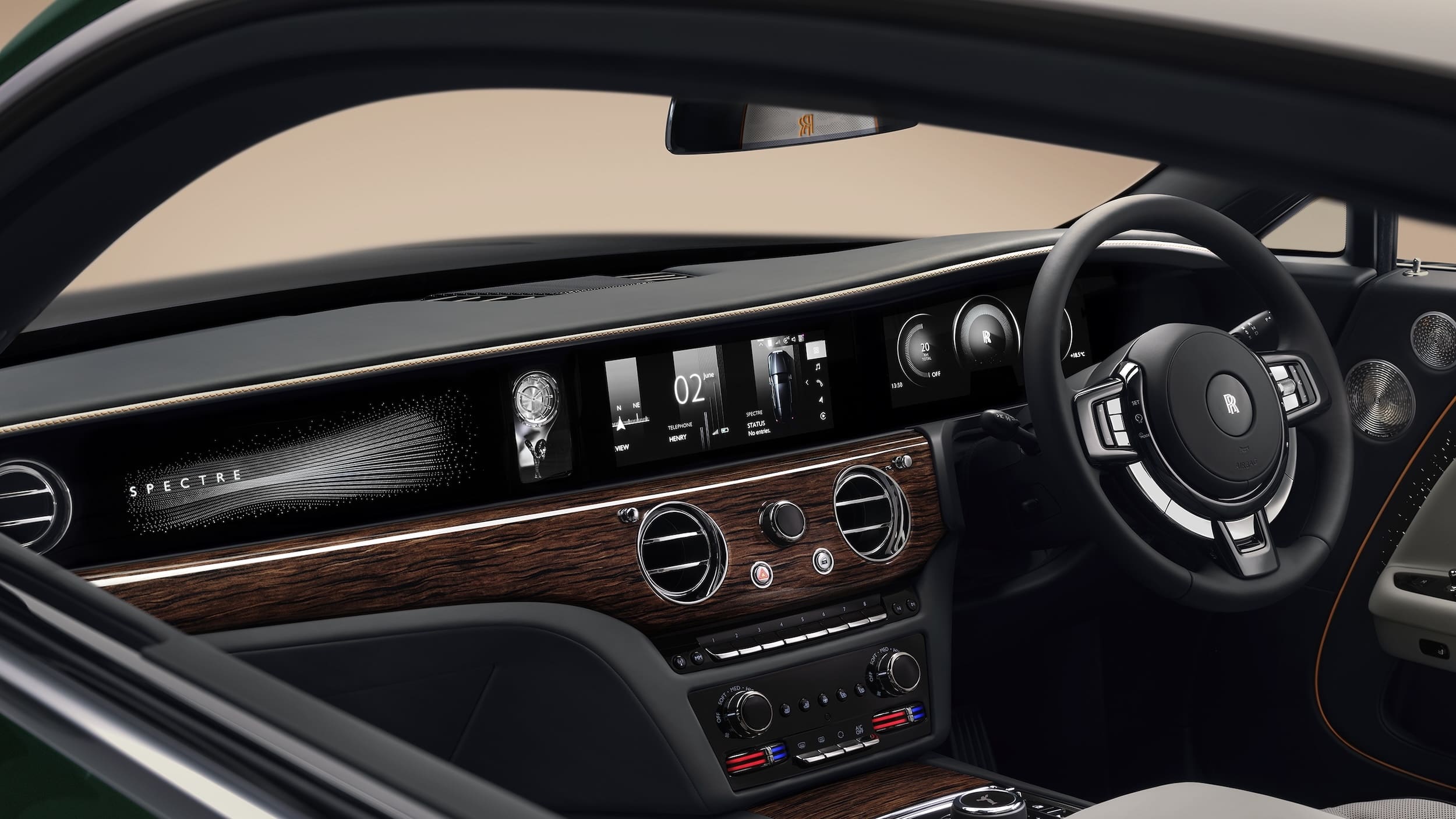
The Rolls-Royce Spectre shows what you can do when you aren’t a slave to every modern trend. While too many EVs go all-in on the “new tech” approach with massive screens, no buttons and very little in the way of character, Goodwood’s finest has stuck to its guns. Stepping into a Spectre is like stepping into any Rolls-Royce. From sumptuous lambswool carpet to the massive drive selector and chrome organ-stop vent controls, everything is made of the finest materials assembled to the highest standards. There are modern touches such as the digital instruments and infotainment system, but they are incorporated into a timeless design that puts user-friendliness and tradition ahead of tasteless fads.
Renault 5
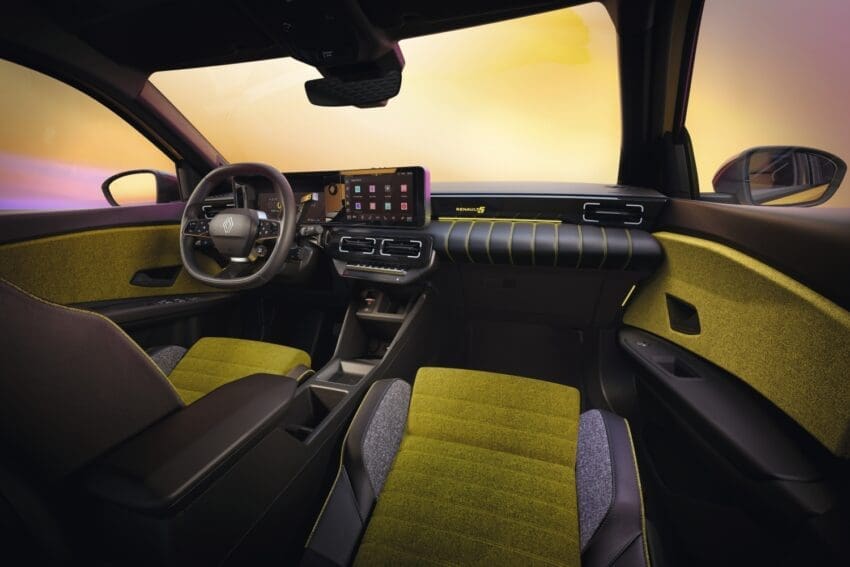
The Renault 5 might not have the timeless elegance of the Spectre or the top-drawer material quality of the Genesis, but it nails its brief of blending retro chic with modern usability. Its squared-off seats with vibrant yellow panels are a knowing nod to the original ‘Cinq’ while the stitched leather dashboard brings a touch of modern couture. But more than looking good, it’s also one of the most user-friendly interiors out there. From the digital dials that give you the information you want where you want it to the proper physical switches for the air conditioning and volume, it’s a lesson in simple usability. Add to that a Google-based touchscreen with big clear icons and a simple menu structure, plus the My Safety Perso button that instantly activates your ADAS preferences and it’s easily among the best EV interiors out there.
Genesis GV70
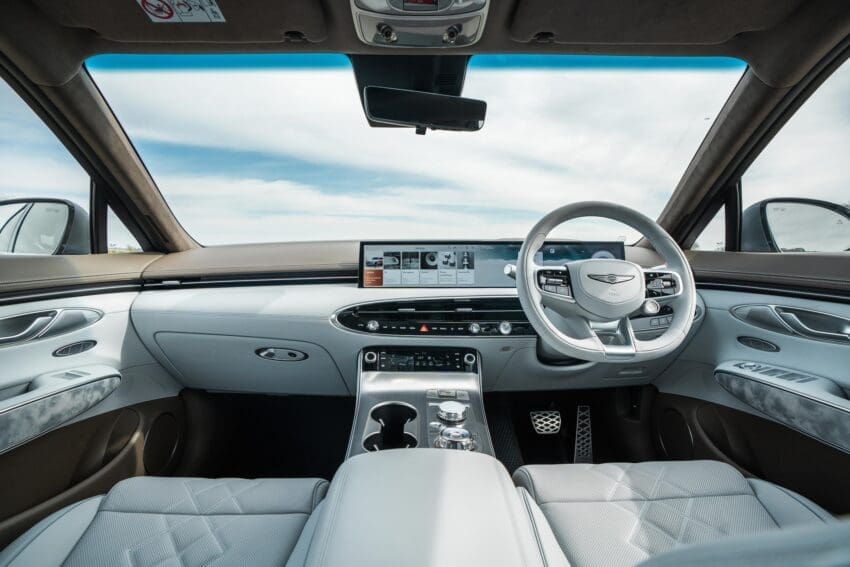
The GV70 is one of those cars that just feels “right” when you climb on board. From the high-quality materials to the impeccable construction and logical layout, it welcomes you in and makes you feel instantly at ease and pampered. The Korean brand has worked hard to ensure it offers a look and feel to rival the likes of Audi, Mercedes and BMW, but it hasn’t tried to copy them. Instead, it has gone its own way, meaning its high-tech features sit neatly in an understated interior with soft, organic shapes and tactile finishes. Its Nappa leather-clad seats are super-supportive and endlessly adjustable, with heating, massage and posture-correcting functions. Meanwhile, active noise cancelling and adaptive air suspension allow it to make serene progress whatever the outside conditions.
BMW i4

Compared to the new iX3 and i3, the BMW i4’s interior is very much a welcome reminder of how Munich used to make interiors. While yes, there is a screen for the driver’s instrument binnacle and yes, there is another screen in the middle of the dashboard, there’s a quiet simplicity and understatedness to the i4’s cabin that’s missing from BMW’s latest ‘Neue Klasse‘ EV range. Ostensibly, the i4 is a 4 Series fitted with an electric drivetrain, and the interior is very much an indicator of that. Inside, the i4 shares plenty of physical switchgear with the 4 Series, along with the same simple driver-focused layout, and what now seems to be a pared down version of BMW’s iDrive-based infotainment system. Inside, the only clue that points to the i4’s electrical underpinnings is some blue BMW ‘i’ detailing on the gear selector and the adjacent ‘start/stop’ button. Given their impressive range and bold design, here’s to hoping that history will be just as kind to the Neue Klasse cars.
Volvo EX40

Following an ergonomic wobble with the EX30 in 2023, Volvo’s newly-updated EX40 serves as a reminder that Gothenburg can still make a small-ish SUV with a great cabin. Inside, the EX40 is finished with squidgy plastics aplenty, high-quality upholsteries, and razor-sharp screens. Most importantly for enthusiasts of Sweden’s foremost and only carmaker, everything moves and feels solid to the touch as a ‘proper’ Volvo should. The concave interior panels are illuminated by soft-lighting, which add to the absolute sense of calm that’s inherent to the brand. Meanwhile, physical switchgear on the steering wheel and beneath the infotainment screen shows that Volvo hasn’t forgotten the importance of user friendliness. The EX40 has been around for a while now, but this latest version demonstrates what a carmaker can do with an already-solid baseline. When you see one of these on the road in 20 years time, don’t expect any of it to have aged badly.
Skoda Elroq

Skoda builds its cars around the premise of being “simply clever” and the Elroq – along with its slightly bigger-booted sister, the Enyaq – are very much that. Unlike parent company, Volkswagen, who took leave of its senses when it introduced its all-electric ID range in 2020, Skoda didn’t bother with making their first two EVs seem futuristic or otherworldly – they just retained the practicality and ease of use that has made Skoda such a favourite amongst buyers. Everything in the Elroq falls easily to hand and is laid out in a fashion that’s simple to use and won’t make any EV converts question their decision about dropping petrol or diesel in favour of an electric powertrain. In an automotive world where interior gimmicks such as avatar graphics, on-board karaoke systems, and dirty-talking infotainment systems are the norm, Skoda’s refusal to do anything beyond what makes it such a likeable brand is refreshing. Shout outs to Toyota for walking a similar part with its C-HR+, updated bZ4X, and the bZ4X Touring.
Brace yourself. Now it’s time for the worst…
DS No.8

As a general rule, we try not to be too cruel about cars, but the DS No.8’s interior is ‘lipstick on a pig’ defined. If you go off press images, the big DS’s cabin looks to ooze Gallic sophistication thanks to swathes of what look to be high-end materials and a level of design flair seldom seen these days. Unfortunately, this is the result of excellent editing and none of this is true in the real world. France’s answer to the Volvo ES90, the Audi A6 e-tron, and the BMW i5 is an exercise in not-so-fantastic cheap plastic and a proper parts bin special from parent company Stellantis. Almost everything feels brittle, overstyled, and as another kicker as part of your almost-£70k, the infotainment system is lifted from the somewhat unpleasant Peugeot E-3008.
Tesla Model Y
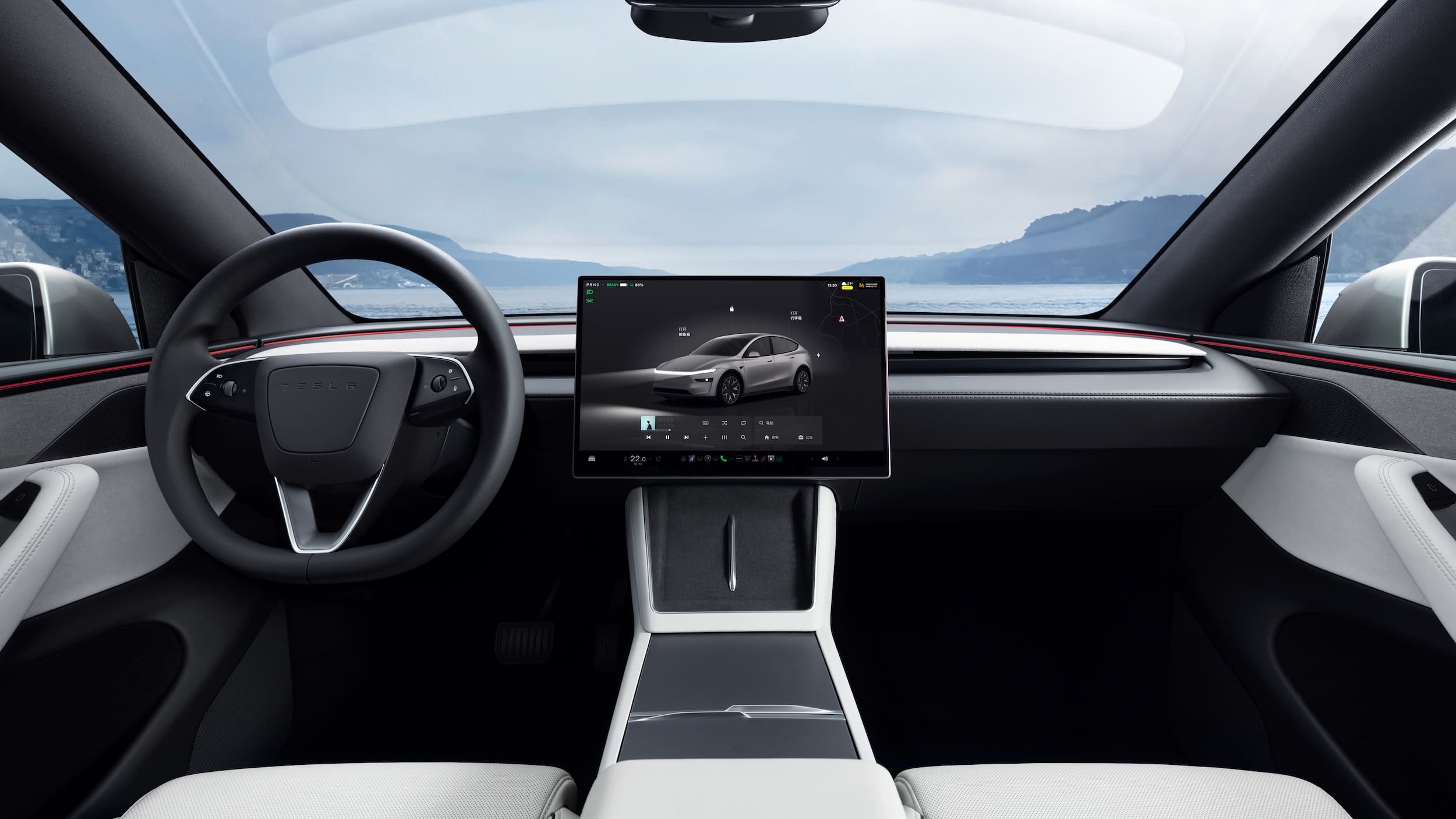
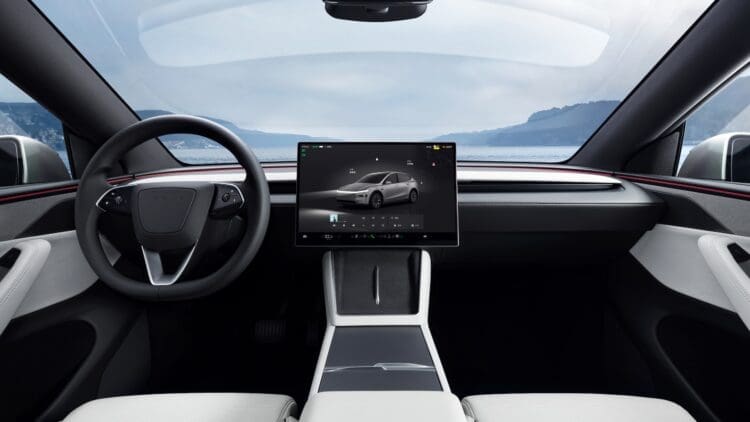
Getting into the Tesla Model Y is like climbing into a faux-leather-wrapped Russian prison. From the 50 shades of grey plastic finish everywhere to the near-complete lack of physical controls it’s a visual assault on the soul. Featureless, characterless and utterly hateful, it’s a prime example of what happens when you let software developers have a hand in car design. See also the Tesla Model 3 and the Model X, which as well as being as dull as dishwater, have some of the worst interior materials this side of a 1970s Fiat.
BYD Dolphin Surf

While some of BYD’s ergonomic choices remain, erm, quirky, it’s widely accepted that the Chinese automotive giant builds some of the best quality interiors out there… except with the Dolphin Surf. Where to start? Well, to begin with, there’s the gimmicky centrally-mounted touchscreen, which has thankfully been dropped from some of BYD’s newer models. Meanwhile, the graphics on said touchscreen and driver display appear to have been lifted from a mid-2010s Android phone. The air-conditioning, well, works, but the temperature on the screen doesn’t actually correlate with the air being blown at you. Overall, the Dolphin Surf’s cabin is just a drab, badly-thought out, poorly-built place to be. Thankfully, though, the engineering and design teams at BYD are a smart bunch and the next-generation of China’s answer to the Renault 5 looks to be a properly nice piece to spend time.
Suzuki e-Vitara

You can’t fault the construction of the e-Vitara’s interior. It feels well screwed together and most of the key touchpoints feel of far higher quality than previous Suzukis. But the design feels a generation out of date. This is Suzuki’s first EV, a chance to break new ground and try something new, but the e-Vitara is disappointingly unimaginative and, in some places, distinctly out of date. The design is basic and the materials are a dull assortment of greys and blacks that ambient lighting can’t really lift. Worse, though, is the user interface. There are buttons for the air con but everything else is done via a relatively small touchscreen with perhaps the slowest interface of any modern car.
Skywell BE11

The Skywell BE11’s interior isn’t without its merits. There’s lots of space in the rear, so you’ll fit three passengers easily. And the 467-litre boot is a decent enough size. And… Well, that’s it, really. Everywhere else it’s a mess. The rear space comes at the expense of legroom for the driver, and everywhere you look the materials feel a decade old. From the horribly cheap faux-leather on the seats to the rattly fake wood on the dash and the brittle, badly fitted trim on the centre console, it’s a horror show. If all that isn’t bad enough, the central touchscreen is a mess of incomprehensible menus and weird third-party apps that turn even simple adjustments into an epic test of patience.
Volkswagen ID.3
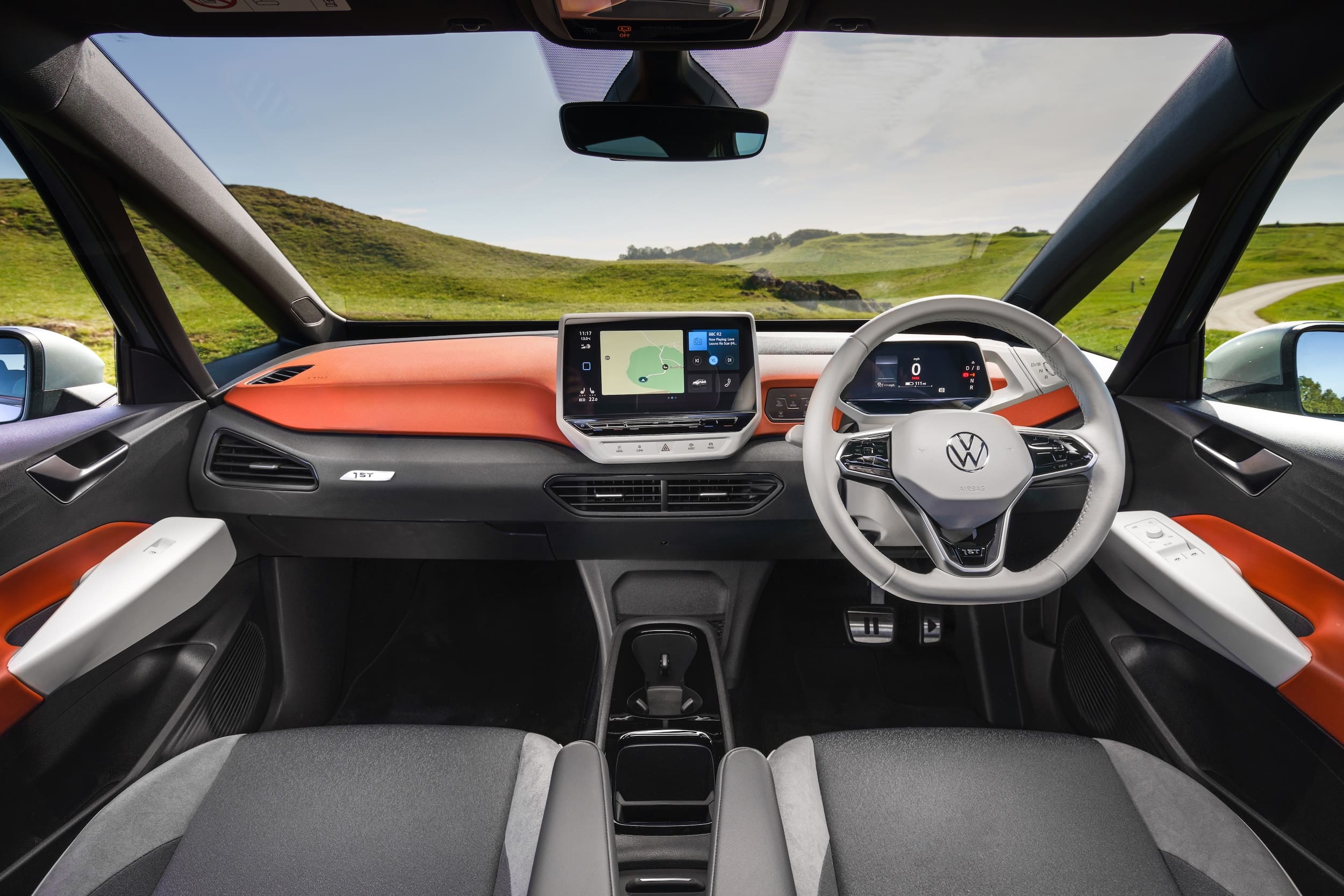
When it turned up in 2020, the ID.3 promised a brave new era of electrification for Volkswagen… until it didn’t. Despite undergoing quantum leap-levels of improvements over the coming years, early versions of the ID.3 weren’t great. Much has been said about the software issues that blighted Mk1 cars, but another part of its problem was the interior. You see, the ID.3 came at a time when the Golf 7.5 was still in production. This was a bit of a problem, because the 7.5 is considered one of Wolfsburg’s greatest-ever efforts, largely in part due to its iron-clad, user-friendly interior. Instead of adapting what it already had with the Golf, VW took the ID.3 in totally the opposite direction. The plastics were low-rent with some questionable colour choices, the gear selector was by the steering wheel, and all of the physical buttons were replaced by some pretty ropey haptic sliders… that weren’t backlit at night.


