
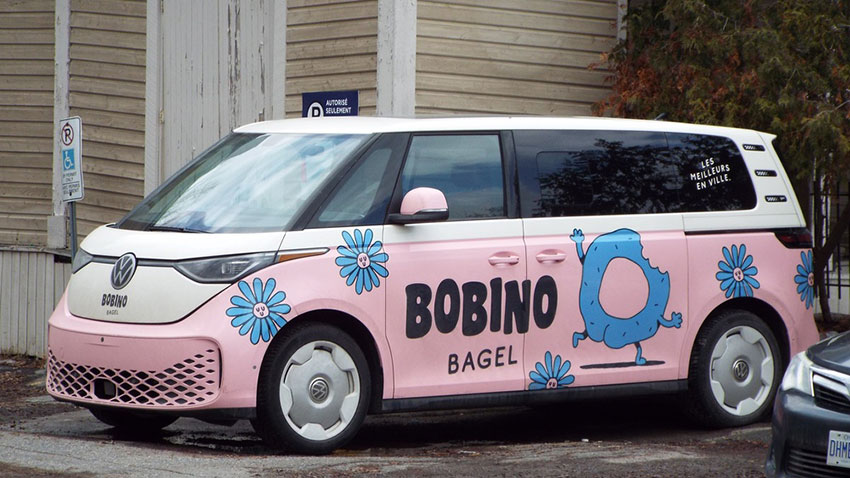
How to Build a Cohesive Brand Identity Across Your Entire Company Fleet
Your fleet is a moving billboard, and most businesses treat it like an afterthought. Every van, truck, or company car that pulls into a customer’s street, parks outside a job site, or sits in traffic is either building your brand or quietly undermining it.
The difference between a fleet that generates real commercial value and one that’s just transportation comes down to a handful of deliberate decisions, most of which have nothing to do with design software.
Think of the Fleet as a Marketing Channel, Not a Vehicle Expense
First and foremost, you need to change your mindset. Fleet vehicles should not be seen as a mere part of the operations budget. They are a mobile advertisement that is constantly working for you, in the very neighborhoods where your potential customers reside and do business.
The facts speak for themselves. When it comes to cost per impression, vehicle wraps are the most effective outdoor advertising medium, at times even as low as $0.48 per 1,000 impressions. On average, vehicle advertising garners about 30,000 to 70,000 daily impressions, depending on the city size (Outdoor Advertising Association of America). This is an incredible return on investment for an existing, fully functioning asset that your business possesses.
Once you perceive the fleet as a media outlet, your entire approach to operations changes. Maintenance turns into regular marketing procedures. Driver conduct becomes a service to the customer. Ensuring a satisfactory vehicle presentation, from the design elements to the license plates, justifies the substantial expenditure.
Don’t Overlook the Details That Signal Scale
There’s a category of fleet detail that most business owners ignore entirely, the small things that, taken together, tell an observer whether they’re looking at a professional operation or a company that’s cobbled things together as it grew.
Registration plates are a good example. When businesses explore cohesive fleet number plate options, they often find that sequential registrations, plates issued in consecutive order across a fleet, project something that graphics alone can’t: the impression of a structured, well-managed operation. It’s a subtle signal, but it lands. Customers and prospects who see three vans with sequential plates parked outside a job draw a different conclusion than they would from three vans with random, mismatched registrations. One looks like a fleet. The other looks like a collection of vehicles.
These are the kinds of details that separate companies that look established from companies that look like they’re still figuring it out.
Write Brand Guidelines Specifically For Moving Vehicles
Most companies design their brand guidelines based on flat, static surfaces: the website, a printed brochure, an email header. However, those guidelines don’t translate directly to a three-dimensional, in-motion object on a motorway.
A logo that is perfectly readable on a business card doesn’t mean squat on the rear doors of a Transit van unless you specifically adapt the proportions to that scale and viewing distance. A tagline that looks lovely under the logo on the letterhead doesn’t matter at 50 miles an hour. There won’t be time to read it, so why clutter your vehicle?
Deciding on a few brand guidelines that are fleet-specific requires answering specific questions. What’s the minimum size your logo can be for a door panel as opposed to a full side panel? What single call-to-action, your phone number, website URL, or service category, will get most drivers’ eyeballs on the road? What do you absolutely need to include on every vehicle, and what can be optional according to the size of the vehicle?
It’s all about making decisions on the right design, based on what visuals are going to attract the most eyeballs as the vehicle flies past. One, maybe two things maximum, are all your harried driver can pick up on as they speed past on the motorway. Make sure one of those things is the logo. The other is a strong, high-contrast call-to-action. Put these in the most obvious spot.
Standardize the Base Vehicles Before You Touch the Graphics
Many businesses overlook this important step.
A fleet made up of different vehicle makes, sizes, and factory paint colors immediately presents an issue in terms of brand consistency. The application of the same vinyl graphic to a white van and a silver van results in two very different outcomes even though the art is the same. Different colors read. Different reflection. From the street, it doesn’t look like the same company.
Where it’s possible, standardize the base vehicle. Choose one make and model for each vehicle class in your operation, and select a factory base color. White or silver are popular choices because they provide a neutral, consistent background for any graphic treatment. This also simplifies insurance pooling and fleet management so that the operational benefits are also visual.
Once the base has been standardized, achieving color accuracy is pretty straightforward. Specify all vinyl colors by their Pantone Matching System. PMS codes provide your graphics supplier with a reference that is exact and won’t change between print runs, between suppliers, or indeed when you’re ordering another two vehicles in two years. A fleet where the red exactly matches the red is a fleet that appears to be managed by people who pay attention to detail.
Choose premium cast vinyl over the cheaper calendered vinyl for any long-term application. Cast vinyl wraps around vehicle curves, does not chip or peel over a longer service, and preserves colors in spite of years of UV exposure. The upfront cost discrepancy is real. The difference after 18 months is more real.
Maintenance Isn’t Optional it’s Part of the Brand
Having a perfectly designed fleet wrap on a dirty van is even worse than having no wrap at all.
Dirt, bird droppings, weathered graphics, lifting edges, and knocked-about panels are all a statement about your brand. And whether you like it or not many customers will assume, usually correctly, that this is a business that doesn’t take care of the small things. In the service industry particularly, where potential clients are weighing up the question of whether they want this tradesperson alone in their home, a scruffy fleet gives the wrong impression before that front door is even opened.
You need a schedule. And you need to stick to it. Vehicle washed at least weekly, for busy high-mileage town vehicles, should be your rule of thumb. Quarterly vehicle checks should include a ten-minute walk round each vehicle to check graphics. Any lifting edges, noticeable fading, or damage to any lettering should be red-flagged for a repair, not a shrugged “Good enough.” A small rewrap is much cheaper than the lost lifetime value of a client who went to a competitor with smarter trucks.
Park with purpose as well. Wherever possible, park your vehicles at the curb so the branded side is clearly visible. Teach your drivers to do this: visibility costs nothing and it’s a fascinating exercise in noticing how few firms squander this free advertising.
Driver Behavior is Brand Behavior
A vehicle with excessive branding being driven recklessly is promoting the wrong image.
Each driver in a branded vehicle is a public face for your business. Tailgating, cutting people off, going through yellow lights, these are things that countless people will see you do each day, and many of them will also see the name written on the side of that truck doing it.
Telematics helps with this. Those fleet management systems that measure speed, harsh braking, and harsh cornering metrics provide a level of oversight and accountability training never can. When drivers know the telemetry system is logging their every trip, and when they know you regularly review the data, they’re less likely to drive like jerks. The benefits here aren’t just in terms of fewer accidents or lower fuel bills, it’s about protecting the value of that brand-new rebrand.
Introduce your driver behavior program in lockstep with your brand rollout. When you start discussing the new vehicle livery with your teams, speak simultaneously about the necessity to drive differently, and to treat other road users differently, as a result. These are not separate issues.
Measure What the Fleet is Actually Delivering
Most companies that decide to put branding on their vehicles don’t ever get to know if it actually had an impact. That’s a solvable problem though.
Dedicated tracking phone numbers are the simplest option, a unique number on the fleet generates a call log that’s directly attributable to mobile advertising. Custom landing pages or vehicle-specific QR codes on rear panels serve the same purpose for digital-first audiences.
This data matters because it turns the fleet from a cost into a measurable investment. When you can show that fleet graphics drove a certain number of inbound calls or web visits in a given month, the business case for maintaining and upgrading that fleet becomes a numbers conversation rather than a gut-feel one. Budget decisions get easier. Renewal cycles get justified more easily internally.
Don’t use the same URL on every surface. Put a dedicated landing page address on the rear panels where stationary traffic can read and remember it. Keep the phone number on the side panels where it’s visible at speed. Different surfaces serve different viewing contexts, and the measurement should reflect that.
Compliance is Non-Negotiable
Whatever you apply to your vehicles has to remain within the rules set by the relevant transport authorities in your jurisdiction. Reflective marking requirements, window visibility standards, plate regulations, and roadworthiness rules aren’t negotiable and aren’t worth testing.
Work with a graphics supplier that understands commercial vehicle compliance. Make sure any modifications, window tinting, rear-panel additions, lighting changes, are assessed against current regulations before they go on the road. A single non-compliant vehicle that draws enforcement attention can create reputational and financial problems that dwarf the savings you thought you were making.
Build compliance checks into the same schedule as your maintenance inspections. Regulations do change, and what was compliant when a vehicle was wrapped three years ago may need attention now.
The Fleet as a Reflection of Operational Standards
A uniform fleet doesn’t occur coincidentally. It is determined by choices made throughout the business, procurement, operations, HR, marketing, all operating from the same playbook. When that happens, the fleet is no longer just a means of getting from A to B. It becomes something that consistently builds trust long before a salesperson arrives to make a first sales call. In competitive local markets, this is more important than most businesses think, until they notice this happening.