







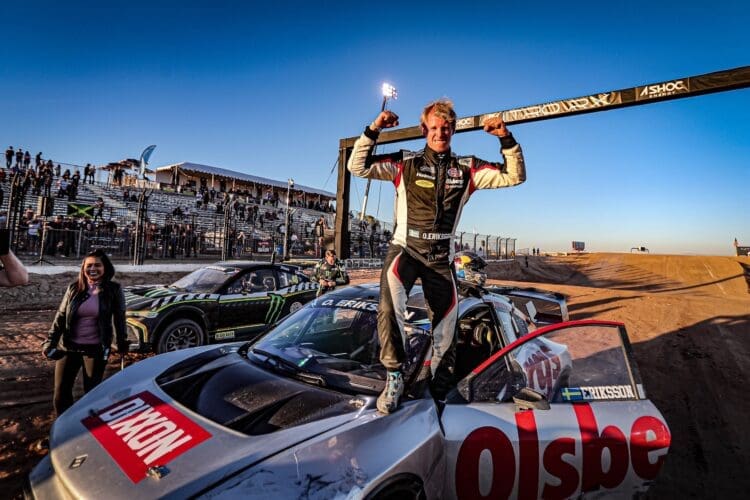
With the upcoming RallyX Americas series, electric RX is finally on the cusp of being done properly. We were joined by Andreas Eriksson, the ‘wizard’ helping shape it, to discuss the tech, the attitude and the hard work that are set to make a difference.
The FIA World Rallycross Championship didn’t have to die that way, did it? Despite a few last-minute attempts to get it back to where it was during its heyday, it was never going to work.
Not even a return to Freeview, or bringing back Andrew ‘the voice’ Coley to the commentary box, could repair the damage done behind the scenes. When the FIA brought the series back under its control (instead of keeping it outsourced) for the 2025 season, it was too little, too late.
When the final death knell came in October last year two-time World Rally Champion, Marcus Grönholm, lamented to EV Powered: “to blame the collapse of World RX completely on EVs? I don’t think that’s correct”.
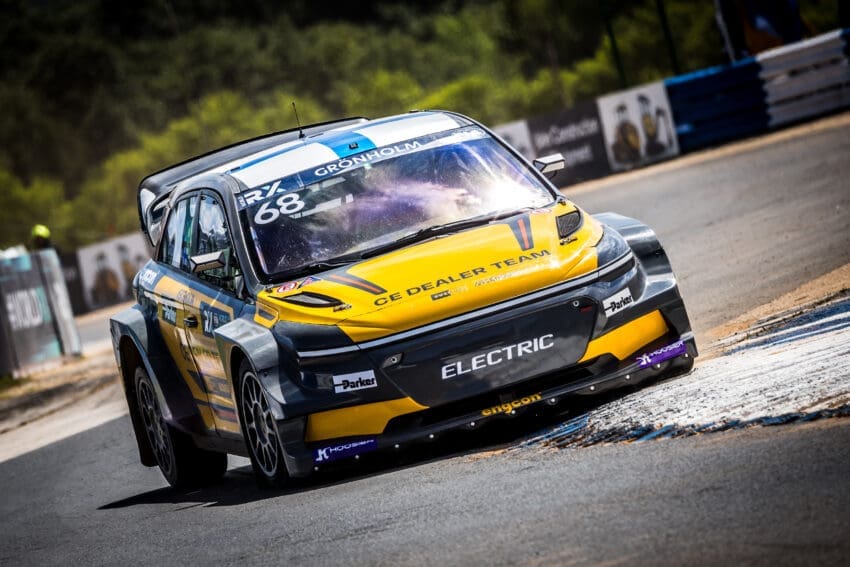
The Big Finn knows a thing or two about rallycross. After retiring from the WRC, he went on to compete for the Swedish Olsbergs-MSE team run by Andreas Eriksson in Euro RX, and then in US rallycross’ various guises.
Grönholm’s son, Niclas, also enjoyed a successful nine-year World RX career, which started with Eriksson’s outfit back in 2016.
Eriksson, then, understands what makes rallycross work. He’s been involved as a driver and manager for more than 20 years, securing wins at the wheel, championships as a team leader, and helping introduce the sport to the United States via the Global Rallycross (GRC) in 2014.
He has, possibly better than anyone involved in the sport, grasped the formula behind what’s needed to make RX a success in everything from onboarding manufacturers to understanding what the fans want.
When the elder Grönholm referred to his friend and former employer as “some kind of rallycross wizard,” it’s hard to disagree.
‘EVs weren’t the problem’
“I completely agree with Marcus that the problem with World RX wasn’t the electric cars,” Eriksson told us from his workshop in Sweden. “It was just poor decision after poor decision, and to replace the Supercar class with a new car was not the right way to implement EVs into rallycross. Changes are hard enough to do as it is, without striking a balance of old and new understanding.
“We need a platform to create rallycross stars of the future, and the only way to make motorsport professional is to be part of the evolution of where car manufacturers and the car market is going,” he explains. “By forcing World RX to go fully electric was too early, a lot of hatred was created towards EVs.”
In his case for an electric rallycross series, Eriksson draws on his knowledge of co-founding the Red Bull GRC during the years in the build up to its inaugural 2011 season.
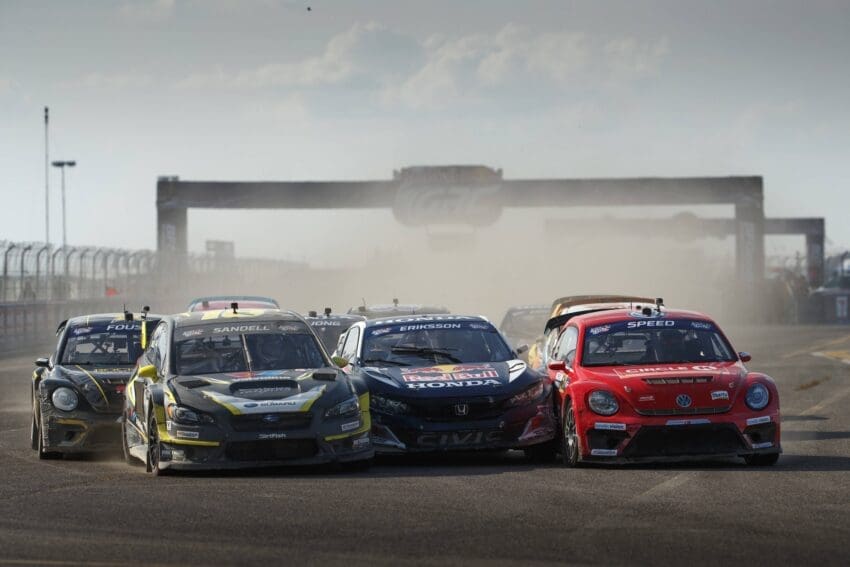
“When we started competing in the GRC with Marcus and Topi [Heikkinen] driving the Ford Fiesta, that was the perfect time for that car and the sport,” he says. “Up until that point, the US car industry had gone from V8, to V6, and it was then making the transition to in-line four turbos.
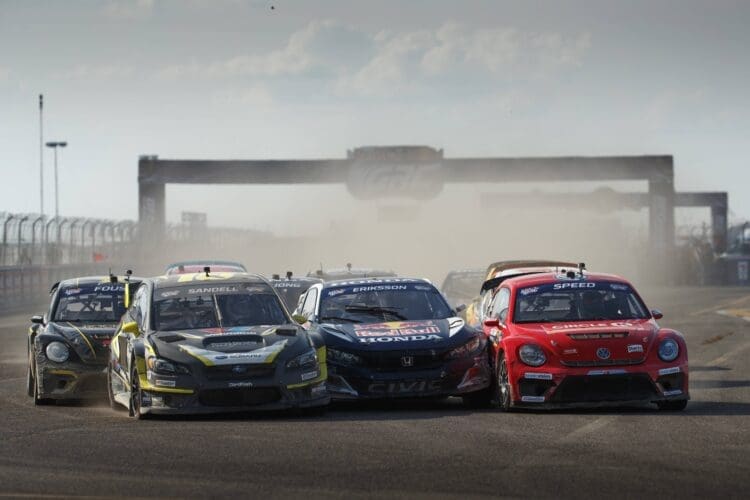
“With that small car, we were a perfect fit to show what you could do with a small, lively engine and up until politics got involved again, it worked, because it was a brilliant championship. We brought on names like Ken Block, Travis Pastrana, Scott Speed…
“Now in this world of electric cars, and there’s no escaping them because in Europe we now sell more EVs than ICEs, I originally thought that World RX was too late in going electric, but we were five years too early – it’s taken the battery tech and the infrastructure that long to catch up.”
‘It’s not about us, it’s about the future’
But with the tech now in the right place, for Eriksson, the key to successful electric rallycross lies very much in the future.
In a stark contrast to the FIA’s top-down order to make World RX electric-only “in a response to the Dieselgate scandal”, Eriksson’s approach is about working with the manufacturers and tech suppliers to give them a playground where they can showcase the capabilities of EV tech.

“Maybe I’m one of the crazy ones, but I’m always trying to think what will happen in five years time. That’s how I see the world,” he contemplates.
While the FIA is playing checkers with a possible, bio-fuelled return for World RX in 2028, Eriksson is playing 4D chess by using the current trends of the automotive industry as his yardstick.
“We need to tell a story that EVs are cool, and the only sport that can ever do justice to an electric powertrain is rallycross, because it’s about 100% performance in every corner and ultra-quick acceleration,” he says. “It’s up to us to understand what is relevant for the current generation of car buyers, then the next generation – I think we can see where they’re going, and that’s EVs.
“I think if we, those of us who are over 35, pursue our own interests and get stuck in our world where we think something is fantastic, that’s when you get a decline of interest. It’s not about us.”
Coming to America
As the FIA flip-flops, Eriksson is putting his plan into action under the ‘RallyX Americas’ banner. Oh, that’s another thing he’s achieved in his career – he founded the RallyX series as a platform to develop a roster of professional rallycross drivers.
With the likes of Niclas Grönholm, Timmy Hansen, and Ole-Christian Veiby, having all competed there at some point in their RX careers, RallyX is yet another success story the quietly-spoken Eriksson can add to his name.
As for the ‘Americas’ moniker, he explains, “that’s because they know how to put on a better show than we do in Europe – if it’s a success there, it’ll be successful in Europe. That’s what we saw with GRC, because that started a few years before World RX was even a thing, then it really blew up over here.”
The opening three rounds of RallyX Americas have been co-developed with assistance from USAC, America’s answer to the FIA. So the inaugural 2026 RallyX Americas season will begin with a two-race event over the weekend of June 20-21 at the Crandon International Raceway in Wisconsin.
Faster, more extreme, more fun
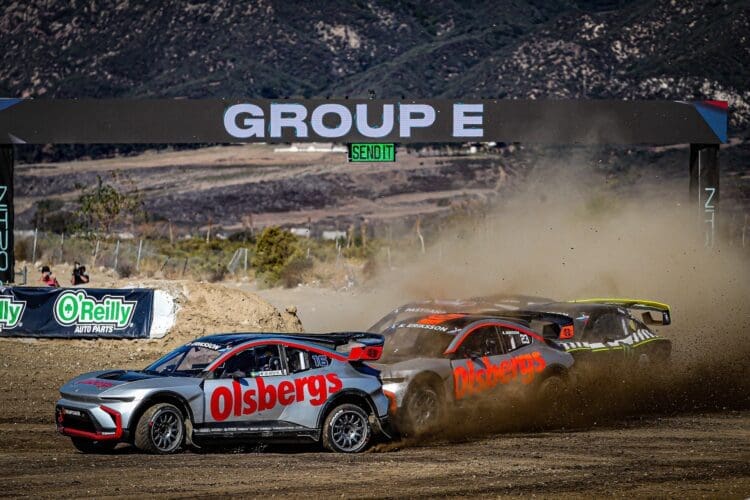
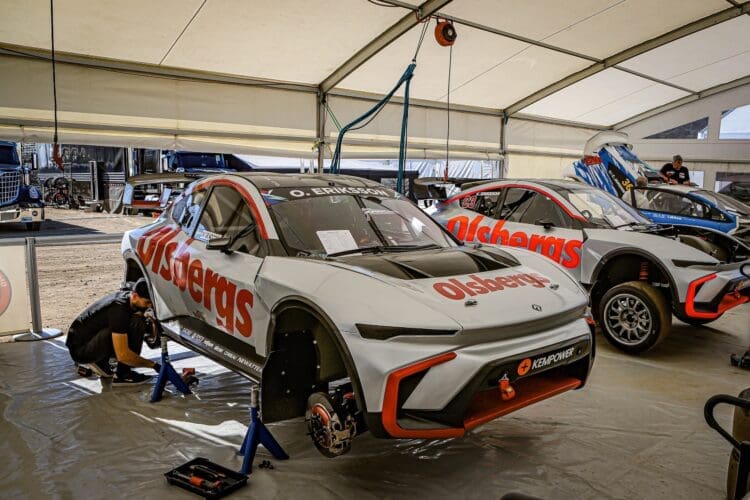
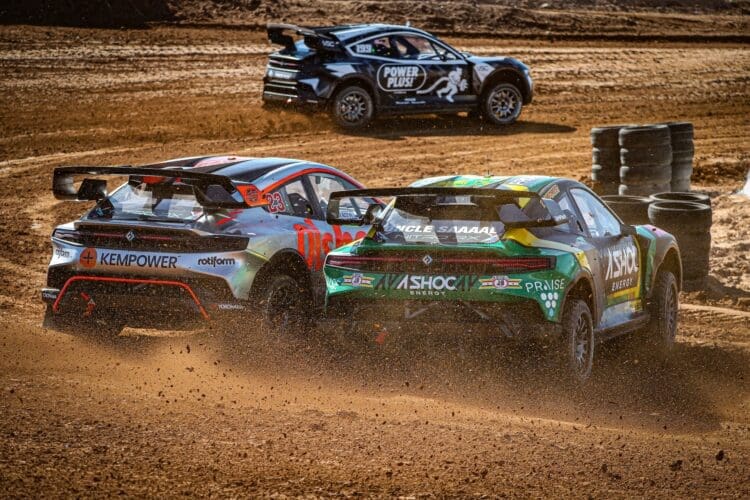
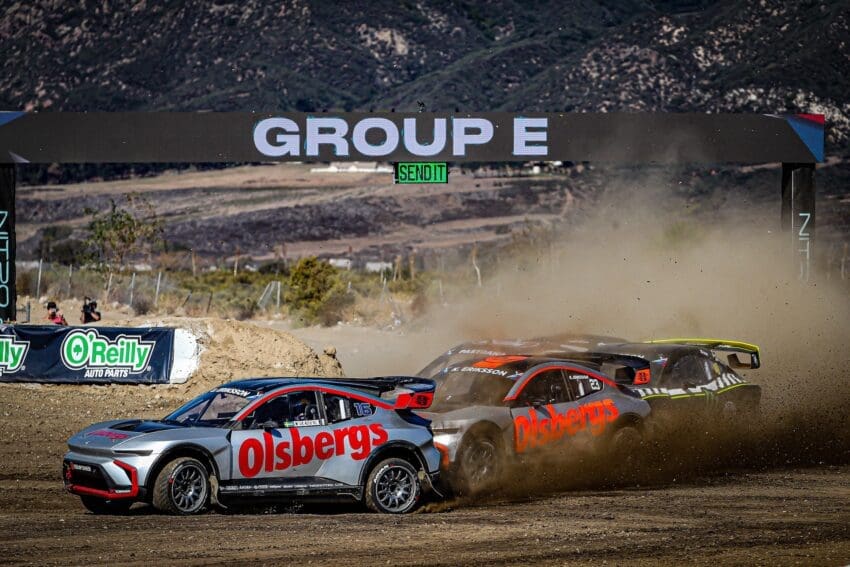
The car used to compete is the FC1, developed by FirstCorner. Having been around since 2022 and earned its stripes in Nitrocross and the Race of Champions, Eriksson is keen to stress that FC1 is a platform, rather than a car.
Right now, the FC1 visually echoes an SUV coupé. Yet given Eriksson’s goal of working alongside manufacturers, it can be adapted to accommodate any sort of bodystyle. The sky, then, is indeed the limit. The first cars that came to my mind were Subaru’s upcoming electric STi, or any of Ford’s promised ‘rally-focused’ EVs.

“Developing the FC1, I realised we need to make something much faster, and much more extreme than anyone has ever done before. At the end of the day, even your mum’s standard EV is quick,” Eriksson outlines. “It’s my vision of how an electric performance car should be, and it’s open to the manufacturers to put their body and maybe add some of their technologies into it in the future.”
The numbers surrounding the FC1 are mind-boggling. Its quad-motor, all-wheel-drive setup generates up to 1,500bhp and 663lb ft of torque. The 0-60mph run is dealt with in a mere 1.5 seconds, and subjects the driver to 3G under acceleration while doing so.
In line with Eriksson’s outlook on what a performance EV should be and do, Olsbergs-MSE has developed a three-speed manual gearbox. It’s not a synthetic unit, either. The transmission is a proper mechanical linkage connecting the FC1’s front and rear ends.
“When we did this, everyone laughed at us and said you don’t need that,” he explains. ”But we looked at the data and quickly understood that if we were limited in acceleration we had good top speed, but if we had no top speed, we didn’t have good acceleration.
“To achieve both, we added a gearbox and added a prop shaft, so we connected the front and rear mechanically.”

The ‘rallycross wizard’ has even looked so far ahead, that the issue of sound – one of the biggest criticisms levelled at the electric era in World Rallycross – has been dealt with. Yet again, Eriksson feels that the solution to RX’s noise debate isn’t rooted in the past.
“It’s not a noise made like the old four-cylinder turbos in World RX or GRC. I don’t think that’s the right thing to do,” he says candidly. “Instead, we’ve replicated the noise of the electric motors and the drivetrain heard by the driver. We know the FC1 platform is tremendously fast, but the fans can’t experience what the driver feels.
“We’ve worked with Kicker and Borla to develop a 120dB speaker system on the car, so they can hear and feel the same thing as the driver inside. It’s the sort of sound we’re hearing from performance road cars these days – it’s not a fake V8 noise, it’s its own thing authentic to EVs.”
Opening the door to teams and fans
The FC1 platform is priced from between €400,000 and €500,000 to buy outright, including batteries, and all charging infrastructure; a stark contrast to the almost €800k sum commanded by the final generation of World RX cars.
To keep costs sensible, teams can also rent a car and equipment on a race-by-race basis, meaning that the inaugural RallyX Americas championship can be done for €100,000.

To stop RallyX Americas from closing the door on curious teams, the organisers will handle teams’ transport, and the tracks are already built.
For the fans, the racing will be free-to-view on YouTube, and the paddock will be an open space where they can get up close to the cars and the latest EV tech surrounding them. It’ll be something like the Goodwood Festival of Speed’s ‘Electric Avenue’, albeit with more dust, noise, and fewer people wearing red corduroy trousers.
Eriksson’s vision and bloody-minded dedication to electric rallycross appear to have paid off. Already, there are between nine and 12 cars entered for Crandon in a couple of weeks, and RallyX Americas has already attracted a healthy roster of big Rallycross names.
While Timmy Hansen and Tommi Hallman are confirmed, Eriksson won’t confirm to us who the rest are. However, Grönholm, Timmy’s brother, Kevin, Lia Block, and Tanner Foust are just a handful mentioned. It’s a similar case for the interested manufacturers. However, Olsbergs-MSE, Hansen Motorsport, and S.E.T. Promotion are outfits locked in for 2026.
We’re promised we’ll find out everything soon enough, though.
Always moving forward
Before a wheel has even been turned at the season opener, Eriksson is once again looking into the future beyond RallyX Americas, and where the next ‘big things’ lie in terms of EV tech.
“First of all, we need to prove to the manufacturers and the fans that we are different, because we have an excellent platform with the FC1, we can keep costs down, and we want to be open in showing what EVs are capable of.

“We want to bring new fans in, and show them that electric cars aren’t something to dismiss or be scared of – in fact, they’re pretty exciting.
“We’re already looking at introducing solid-state batteries to the next-gen car, and we’re very close to doing that,” he says in closing. “SSBs will give us quicker charge times, better discharge rates, and a bigger range to put on longer races.
“Then there’s battery storage solutions and vehicle-to-grid. Why shouldn’t we be looking at using the FC1 to power, or at least partially power our teams’ set-ups?”
And just like that, the brilliant mind of the “rallycross wizard” stands on the cusp of making electric RX great again.


