George Watson creative director at global creative agency forpeople, examines where modern car design is going wrong and how car makers can reengage with drivers
In the early days of electric cars, spec was where it was at. The race was about who could go furthest or which car could accelerate fastest. But we now exist in a space where nearly every EV boasts similar performance, and features an array of shiny new tech. However, we often hear consumers complain that modern EVs feel colder, more complex and harder to trust than their petrol cousins.
So, with brands delivering near‑identical performance claims, drivers would be justified to ask themselves: what really sets one EV apart from another? The answer lies in understanding and designing for real people, not just engineering targets, the answer lies in focusing on experience as the new differentiator.
Experience‑driven development
A people‑first car doesn’t start with a list of features. It starts with a detailed picture of who will be sitting in it, using it and in what way. Nio’s ONVO L60 family SUV illustrates this. Launched in 2024, ONVO was conceived to bring happiness and good products to family users. Happiness is a measurement that is hard to quantify. But for designers it covers the core user needs, and from this point supports engineering the car around those user needs. Instead of simply stretching the wheelbase, they created a cabin that can flex between a mobile living room, a quiet workspace or a play area, reflecting the messy realities of family life.
This approach, sometimes called experience‑defined vehicles, goes beyond technology. Teams storyboard an entire customer journey from pre‑conditioning the car before another school run to how easy it is to charge at night. Designers work with the project team to create a shared narrative that everyone can understand and buy into. When done well, the result should feel like they were designed for you.

Simplicity over saturation
As EVs have become more digital, interfaces have become busy and distracting. Owners want fewer menus and more intuitive interactions. Rather than burying features in deep menus, the system should naturally guide the driver with hierarchy and timing.
Natural interaction can also build trust. AI assistants can learn drivers’ routines, speak in a friendly tone and use light signals, reducing the sense of talking to a robot. As vehicles march inevitably toward greater autonomy, designers should strive for more transparent, easily understood and empathic interfaces, which will be important as any sensor suite.
Designing for all the senses
Human‑centred design engages more than sight and touch. Our brains are not one dimensional, they interpret spaces through sound, light, texture and even smell. Subtle choices can create comfort or tension. Ambient lighting, historically just a decorative touch, now plays a significant role in contributing to safety and driver mood. Low colour temperatures have been shown to increase comfort, while higher temperatures improve driver alertness.

Sound matters too. Well‑tuned chimes, quiet electric drivetrains and natural voice responses reduce stress. Scent is emerging as a design tool as well, using natural materials and purification systems to evoke calm. Multi‑sensory design is not decoration; it’s neuroscience. It turns the cabin into a sanctuary and gives a brand a signature feel.
Experience beyond the car
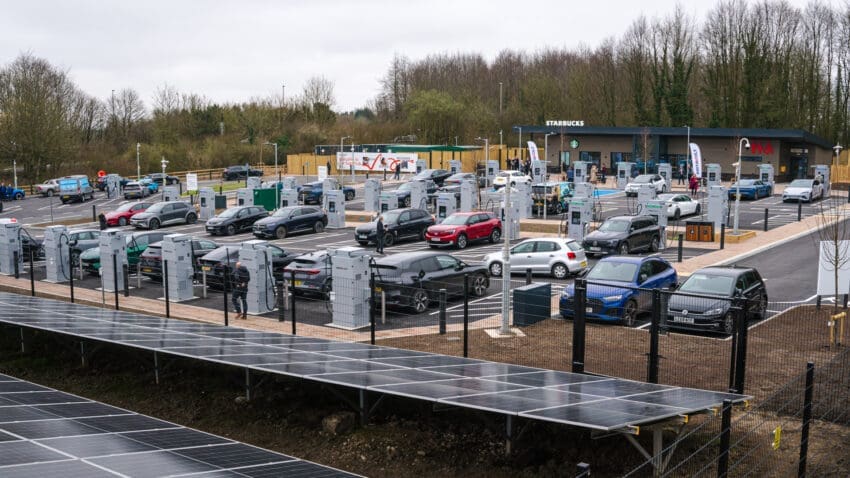
Finally, a people‑first approach extends outside the vehicle. New EV brands are acting less like manufacturers and more like ‘experience’ companies. Forward-looking brands are investing in ecosystems outside of the vehicles that engage owners in an emotional and personal way – from community hubs to battery swap customer networks to lifestyle products and cultural collaborations. These touchpoints, some mighty and big, often small with outweighed impact, turn routine interactions into positive moments.
EV brands that design every touchpoint to be seamless, personalised and community‑focused stand to build loyalty that survives the next tech cycle.
Why this matters
The shift from performance to experience reflects a broader reality: EV technology is rapidly commoditising. When range and acceleration are similar, what endures is how a vehicle makes you feel, how you interact, experience and connect to mobility. Investing in experience-driven design is not about soft power; it’s an investment in trust and emotional connection that will drive advocacy and repeat purchases. As the original Mini and Beetle proved, cars that resonate on a human level can outlast any spec sheet.