Michelle Little, head of propositions at So Energy explores the next big challenges as the UK looks to build on its EV momentum
New data suggests that the UK’s electric vehicle market has reached a “tipping point”. After years of gradual momentum, the shift to electric mobility is now accelerating into the mainstream, with global EV sales surpassing 17 million in 2024, making it one of the “fastest technology diffusion processes” in the history of transport.
The economic landscape is now also shifting in favour of EVs. For the first time, average purchase prices have reached parity, with some electric models now cheaper than petrol and diesel ones. Additionally, with scaling charging infrastructure and home charging innovations such as solar integration and tariffs, running costs continue to deliver meaningful annual savings for drivers.
There is no doubt about whether EVs will scale, but we need to pay attention to how quick this uptake is, and whether the industry is equipped to grow at the speed of increasing demand.
Transport is no longer a passive energy user
The growth of EV demand fundamentally changes the role of transport within the energy system. Transport has been treated as a passive consumer of fuel or electricity, largely separate from how energy systems are planned and operated. That assumption no longer holds.

Transport is now one of the largest emitting sectors in the UK, responsible for around 29% of total greenhouse gas emissions, with cars accounting for most of that footprint. Electrifying transport is therefore essential to achieving net zero, but it also introduces a more complex form of electricity demand.
Unlike traditional demand patterns, EV charging is dynamic, location-dependent and increasingly concentrated. As more drivers plug in at similar times, whether at home or at public rapid charging hubs, electricity systems face new peaks and pressures than originally planned for the grid.
Transport is therefore no longer simply drawing power from the grid but actively reshaping how that grid must function.
A growing cost imbalance in charging
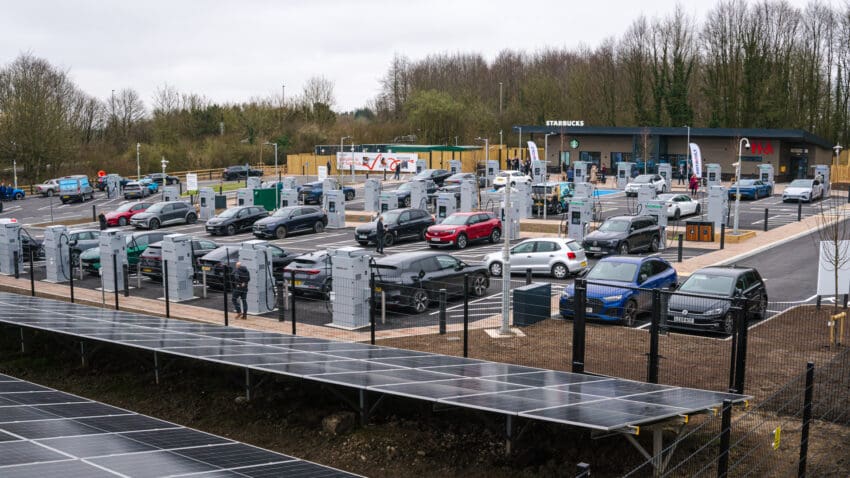
The UK has made rapid progress in expanding its charging infrastructure, with more than 86,000 public charge points installed by late 2025, representing annual growth of over 20%. This expansion reflects strong investment, and a clear recognition of the role infrastructure plays in supporting adoption.
However, as the market matures, a more pressing challenge of the rising cost of charging away from home is emerging.

For most drivers, public charging is significantly more expensive than home charging, often by a wide margin. While home charging allows EV owners to benefit from lower residential tariffs and off-peak rates, public charging prices, particularly at rapid and ultra-rapid sites, can approach or even exceed the cost of running a petrol or diesel vehicle. This disparity is becoming more visible as UK EV numbers approach two million and reliance on the public network grows, especially among drivers without access to off-street parking and fleet operators with high utilisation needs.

The challenge, therefore, goes beyond simply increasing charger numbers. High energy costs, network charges, and connection constraints are feeding directly into higher prices for consumers, creating an uneven experience between those who can charge at home and those who cannot.
Without action to address the cost structure of public charging, the EV transition risks becoming not only an infrastructure challenge, but an affordability one – potentially slowing adoption among precisely the groups it most needs to reach.
Integrating EV infrastructure in the energy transition
Much of the UK’s energy transition to date has focused on decarbonising generation. However, the transition is not only defined by how energy is produced but also how it is being used.
Electric vehicles are often framed as a source of additional demand, but they also represent a significant opportunity. At scale, EVs could become one of the largest sources of flexible load within the energy system, capable of absorbing excess renewable generation and smoothing peaks if managed effectively.
Realising this potential, however, depends on integration. Charging behaviour must be aligned with grid conditions through smart tariffs and digital tools. Infrastructure deployment must be coordinated with network capacity. And over time, advances such as vehicle-to-grid could allow EVs to operate not just as consumers of electricity, but as active participants in balancing the system
Collaborating with policymakers
While EV uptake is being driven forward through ambitious targets and incentives, energy system planning and policy must keep evolving in tandem.
Transport policy, energy regulation and infrastructure planning must be developed as part of a single, coordinated strategy. Flexibility, accessibility, and smart charging must move from niche solutions to standard practice, from both home and public charging perspectives. Collaboration across all relevant sectors will be essential to ensure that growth is both sustainable and efficient.
Looking ahead
The UK’s EV tipping point is a milestone worth recognising. It reflects years of progress in technology, policy and consumer confidence, and it brings the goal of decarbonised transport within reach.
However, it also marks the start of a more complex phase of the transition. As adoption accelerates, the focus must shift from individual vehicles to the entire energy system.
If the energy system cannot keep pace, the consequences will be felt in higher costs, slower infrastructure rollout and a diminished user experience, especially for those cannot charge at home. Yet, if integration is prioritised, a cleaner, more flexible and more resilient energy system, with transport at its centre can be built.