With funding for on-street charging finally coming on-stream, Susan Wells, director of EV and solar at Hive, examines why roll-out is still slow and what can be done to improve matters
The UK’s EV transition entered 2026 with something it hasn’t always had – momentum that feels structural rather than speculative. Nearly one in four new cars registered last year was electric, and the conversation has shifted from whether EVs work at all, to whether one will work for a specific driver, commute or household budget.
That is a meaningful change. But momentum in the vehicle market only counts if the infrastructure is ready to meet it. And here, the picture is more complicated.
The government’s Local Electric Vehicle Infrastructure (LEVI) fund, a £381 million programme designed to bring on-street charging to residents with nowhere else to park, combines capital funding for charger rollout with a separate capability fund to help councils build the internal resource and expertise needed to deliver long-term infrastructure projects. What is becoming clear in 2026 is that much of the work so far has happened out of public view – in procurement teams and contract negotiations, rather than on streets.
Our Freedom of Information (FOI) research, conducted towards the end of last year, examined how local authorities across England were progressing with LEVI funding – including how much funding had been allocated, how much had been spent and where councils were in the procurement and delivery process. What we found was not a story of failure, but of a programme only now entering its delivery phase. Of the 62 councils that responded, 54 had spent nothing from their LEVI capital allocation. For most, that reflects where they are in the programme cycle rather than any lack of intent.

Capital approvals only started flowing in earnest through 2024. Building the internal capability to design, procure and manage complex, long-term infrastructure contracts takes time –which the capability fund was specifically designed to support. Suffolk County Council, the first authority in England to sign a LEVI contract, did so in April 2025. Its first charger went live in January 2026. Even at the front of the queue, the journey from contract to installation takes the best part of a year. Most councils are not yet at that point.
This matters because the national charging network, while growing, is not growing in the right places quickly enough. According to Zapmap, the UK had 120,388 public chargers at the end of April 2026. But the pace of new installations slowed from 24,557 added in 2024 to 13,281 in 2025 – that’s a fall of nearly half.
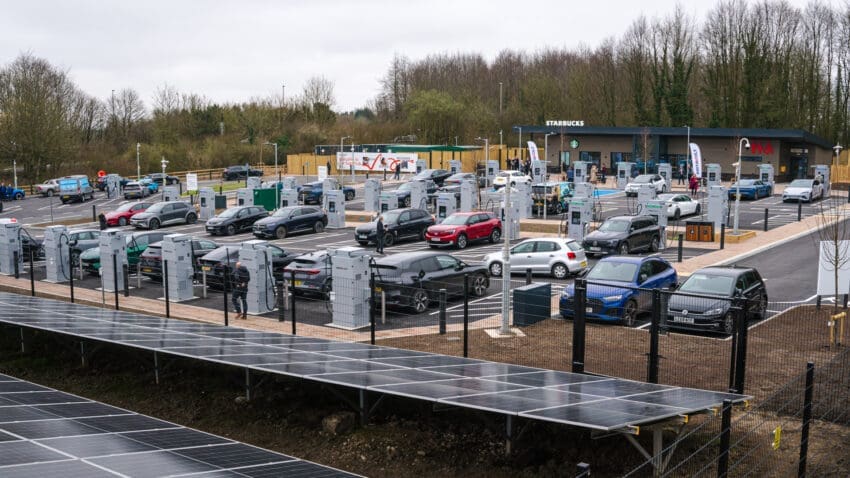
Much of the growth that is happening is concentrated in rapid and ultra-rapid en-route charging. That is important for longer journeys and driver confidence, particularly for those covering higher mileages. But it does not solve the day-to-day challenge facing people without driveways. Standard on-street residential charging, the kind LEVI exists to deliver, is still where the need is greatest and supply remains weakest.
For drivers who can charge at home, the picture is more encouraging. Smart home charging, which schedules charging automatically at cheaper and greener times overnight, has materially changed the economics of EV ownership. We see this directly at Hive. Drivers with access to smart charging tend to build confidence quickly, because much of the cost and complexity of running an electric vehicle disappears into the background.

But that advantage is still largely limited to drivers with off-street parking. For the millions without it, the public on-street network will determine whether switching to an EV feels realistic.
So what is causing the lag, and what needs to change?
Procurement
Local authorities have been navigating complex, long-term infrastructure contracts largely independently. Standardised national procurement frameworks (ones councils can adopt rather than build from scratch) would significantly compress the time between funding approval and first installation.
Resourcing
EV teams across many authorities are small and still relatively new to large-scale infrastructure delivery. The capability fund has helped, but experienced delivery expertise remains stretched. Closer involvement from private sector partners – not just as contractors, but as delivery collaborators – could help bring additional pace and operational experience.
Visibility
There is currently no consistent public reporting on LEVI project status. Transparent, regularly updated disclosure on where each council sits in the delivery pipeline would drive progress and give drivers a clearer view of when and where infrastructure is likely to arrive.
The good news is that 2026 should be the year LEVI starts to become visible. Contracts are being signed, delivery is beginning and the programme is moving from planning into implementation.
But the pace from here needs to match the scale of what was promised. For EV adoption to keep growing beyond early adopters and driveway owners, on-street charging has to become easier to find, easier to use and more evenly distributed. The next stage of EV adoption will depend less on convincing drivers to switch, and more on making charging work for everyone.