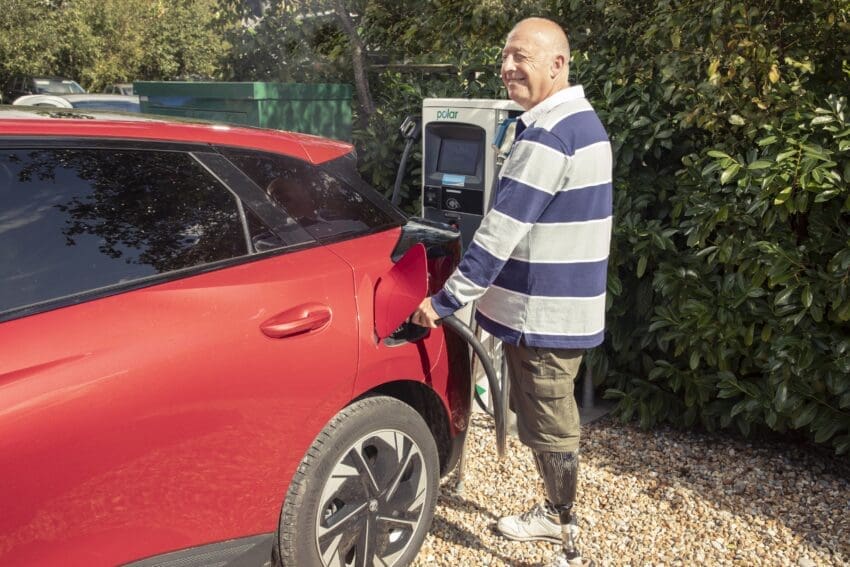
Charging an EV already involves far more software than many drivers probably expected a few years ago. Public charging networks now rely on apps, account systems, digital wallets, subscription plans, roaming agreements and contactless payments that sit quietly in the background of everyday journeys.
That growth in software-driven charging has happened alongside rising EV adoption worldwide. The International Energy Agency estimates that electric car sales exceeded 17 million globally in 2024, accounting for more than 20% of all new car sales worldwide. As charging infrastructure expands, conversations around payments, authentication and network compatibility are becoming harder for operators to ignore.
Along with that, alternative payment technologies, including crypto, are appearing more often in discussions around charging infrastructure and digital mobility.
EV charging is becoming increasingly digital
Public charging has become noticeably more streamlined in recent years, but it is still far from unified. Depending on where they travel, drivers may need different apps, RFID cards, or payment accounts just to access separate charging providers.
That complexity has grown alongside the charging network itself. UK charging infrastructure expanded significantly again in 2025, with more than 13,000 public chargers added nationwide, according to Zapmap’s latest statistics. The wider network also recently passed 120,000 public charging devices across the UK.
Networks such as IONITY and Tesla’s Supercharger system have already made app-based charging and automated billing feel normal across parts of Europe, even if payment methods and roaming access still vary between operators.
As networks grow, charging providers are spending more time trying to remove unnecessary friction. Some of that involves practical changes like better roaming agreements and simpler contactless payments. Recent pressure for easier contactless access across public charging networks also reflects how strongly the industry is prioritising convenience. Other discussions are more experimental, particularly around how future charging systems could automate payments between vehicles, apps and charging stations themselves.
Few drivers care what sits behind the payment infrastructure if the charger simply works first time. That expectation is becoming increasingly important as EV ownership moves further into the mainstream.
Crypto keeps surfacing in charging conversations
Much of the interest around cryptocurrency in the EV sector has less to do with speculation and more to do with payment infrastructure. Some developers and startups have explored whether blockchain-based systems could eventually support machine-to-machine payments between EVs and chargers. In theory, that could allow vehicles to authenticate and pay automatically without relying on multiple external platforms.
There is also interest in whether decentralised systems could simplify charging across borders, particularly in Europe, where drivers often move between providers in different countries during a single journey. That does not mean crypto payments are about to become standard at charging stations.
Most public networks still prioritise practical payment methods like bank cards, mobile wallets and app-based billing because they are familiar and easy for drivers to use. Volatility alone would probably make many drivers hesitant about relying on cryptocurrency for everyday charging payments.
Crypto adoption has continued growing globally, however. Research from Triple-A’s cryptocurrency ownership report estimates there are now more than 560 million crypto owners worldwide. Even outside finance and technology sectors, digital currencies are increasingly appearing in conversations around automated payments, online transactions and digital identity systems.
Within EV charging, much of the discussion remains exploratory rather than commercial. Several blockchain-focused charging projects have launched pilot schemes over the past few years, though most remain relatively small in scale compared to mainstream charging networks.
Cross-border charging remains a challenge
One area where alternative payment technologies continue attracting attention is cross-border charging.
EV drivers travelling across Europe can still encounter fragmented charging systems where different operators require separate accounts or memberships. Roaming partnerships have improved accessibility, but consistency remains uneven depending on the country or provider involved.
That has prompted some companies to explore whether blockchain infrastructure could support more universal settlement systems between charging operators. In practice, many of these projects are still experimental, but they reflect a broader attempt across the sector to make charging simpler and more consistent.
The wider EV market has already shown that convenience often determines whether new technology gains traction. Most drivers simply want to arrive, plug in, pay quickly and continue their journey without opening multiple apps along the way.
Digital-first industries are shaping payment expectations
One reason crypto continues appearing in discussions around EV charging is that other digital-first industries have already experimented with alternative payment systems for years. Streaming platforms, gaming services, online marketplaces and subscription-based apps all helped normalise app-based payments, digital wallets and account-driven transactions long before many infrastructure-heavy industries began adopting similar systems.
Gaming and online entertainment platforms have been some of the clearest examples because they already rely heavily on digital purchases, virtual economies and seamless online payments. As cryptocurrency adoption expanded globally, parts of the online gaming sector began experimenting with crypto payments earlier than many mainstream consumer services.
Research platforms such as casino.org track crypto-enabled gaming and casino platforms alongside the payment methods being adopted across parts of the online entertainment sector, offering insight into how digital currencies are being integrated into consumer-facing online services.
That does not necessarily mean EV charging networks will follow the same path. Still, industries built around high-frequency digital payments can provide useful examples of how users respond to payment flexibility, lower friction and increasingly automated transactions.
Convenience will probably matter more than novelty
For most EV owners, reliability still outweighs innovation when it comes to charging. Drivers are far more likely to prioritise charger availability, pricing transparency, uptime and charging speed than the underlying technology processing the payment. If payment infrastructure evolves further over the next decade, much of that change may happen quietly in the background rather than through dramatic shifts in how drivers interact with charging stations.
Crypto may ultimately remain a niche option within the wider EV ecosystem. Equally, parts of blockchain infrastructure could end up supporting certain backend processes without drivers even noticing. Most drivers are unlikely to care how payments happen behind the scenes as long as charging feels straightforward when they need it.