


Almost two years after its concept unveiling, Tesla has confirmed it will launch its fully self-driving Cybercab taxi at an official event in Austin, Texas, on September 3, 2026.
Speaking at the Cybercab concept’s reveal at Tesla’s ‘We, Robot’ event in California in 2024, company CEO Elon Musk confirmed that pricing for the Cybercab was expected to be around $30,000 – roughly £23,000 currently.
While admitting he “tends to be a little optimistic with timeframes”, Musk said the Cybercab was “expected” to enter launch “before 2027”, but didn’t commit to an exact date.
As such and in light of Musk’s previously “optimistic” claims around new vehicles and technology, traders have given Tesla a 17% chance of it selling this year, despite the announcement of the September plans.
Earlier this year the US automaker angered customers when it cancelled a delivery event for run-out versions of the Model S and X at the very last minute.
Tesla Cybercab design and practicality
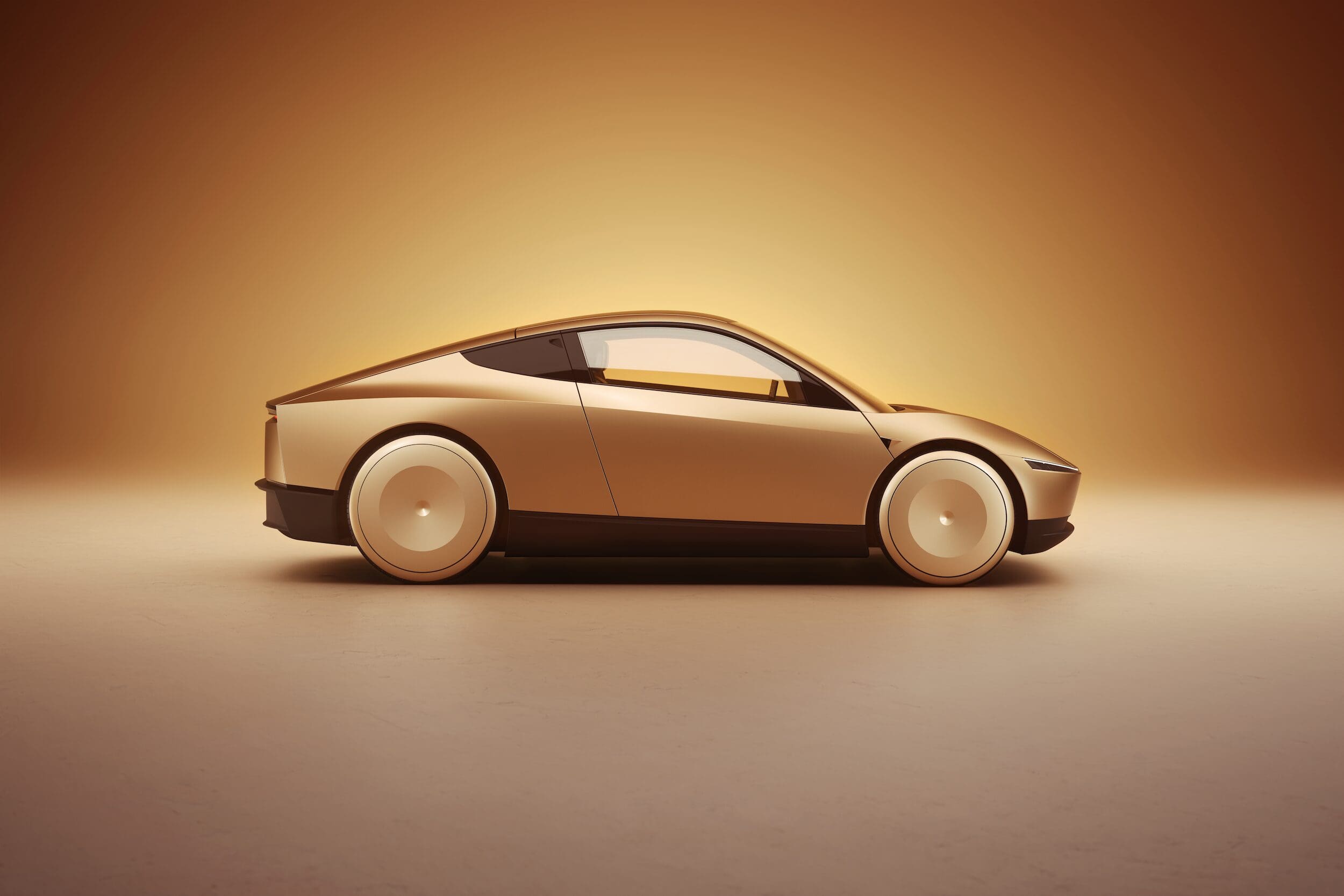
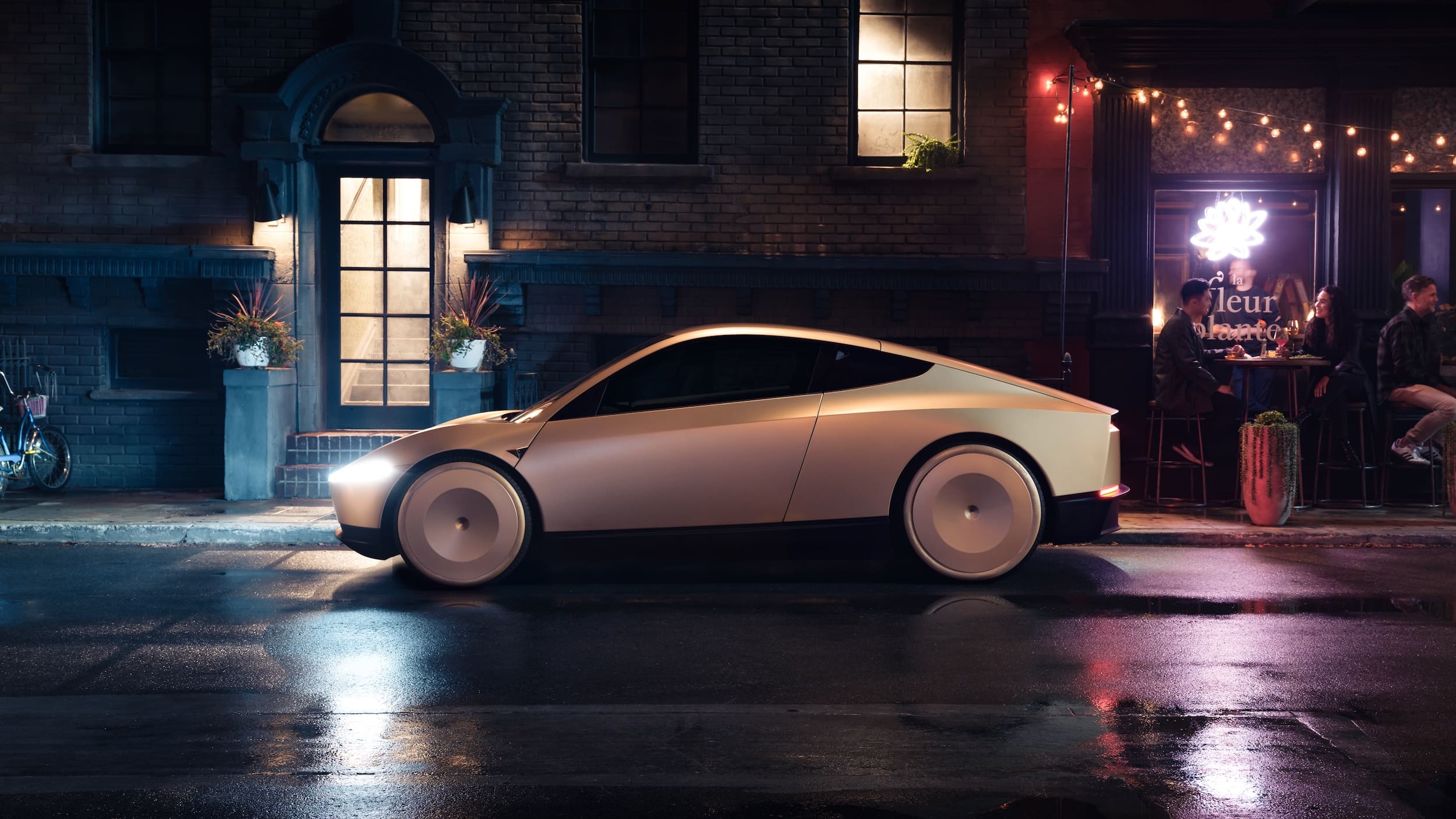
Dubbed the Robotaxi, the Tesla Cybercab prototype was an exercise in minimalism, inside and out.
The two-seater coupé’s exterior design is all smooth surfacing in typical Tesla fashion. Meanwhile, the full-width light bars front and rear are not dissimilar to those fitted to the latest generation of its best-selling Model Y SUV.
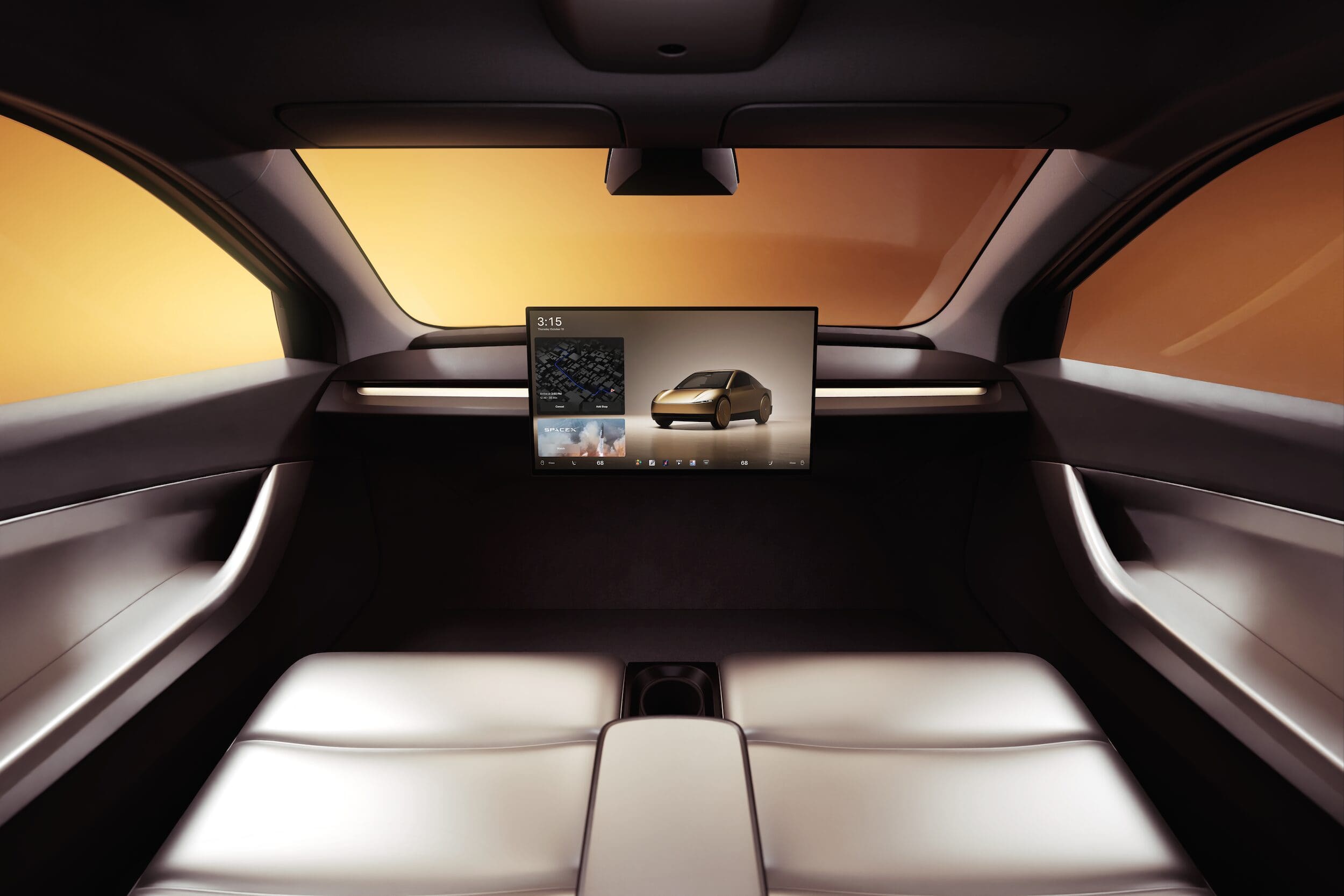
Interestingly, the Cybercab, and not the second-generation Roadster, is set to be the first Tesla to come with butterfly-style doors. The blanked-off wheel discs assist aerodynamic efficiency, and the rear rims are larger than those up front.
Once again, it remains to be seen how many of these design elements carry over to the production version of the Cybercab.
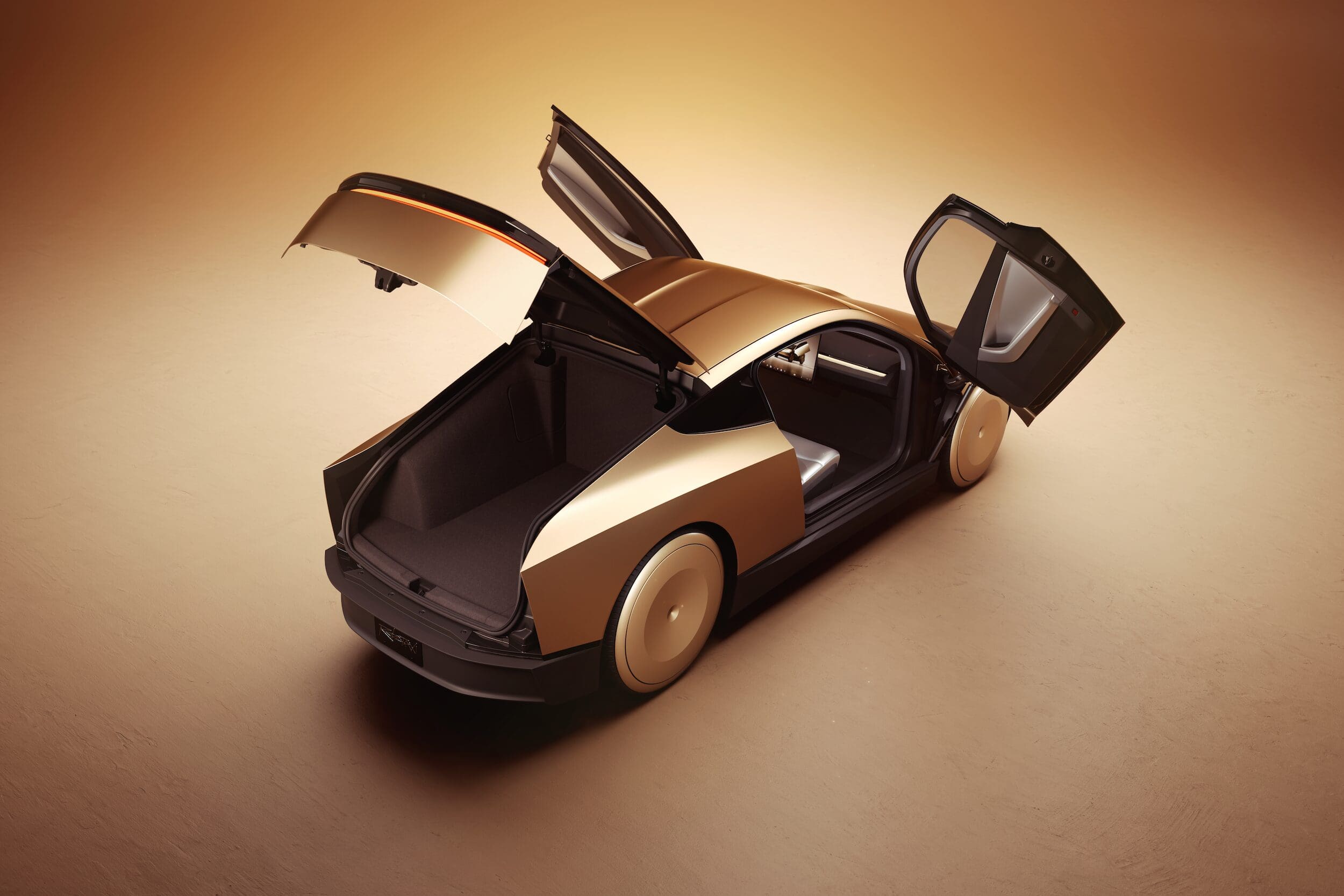
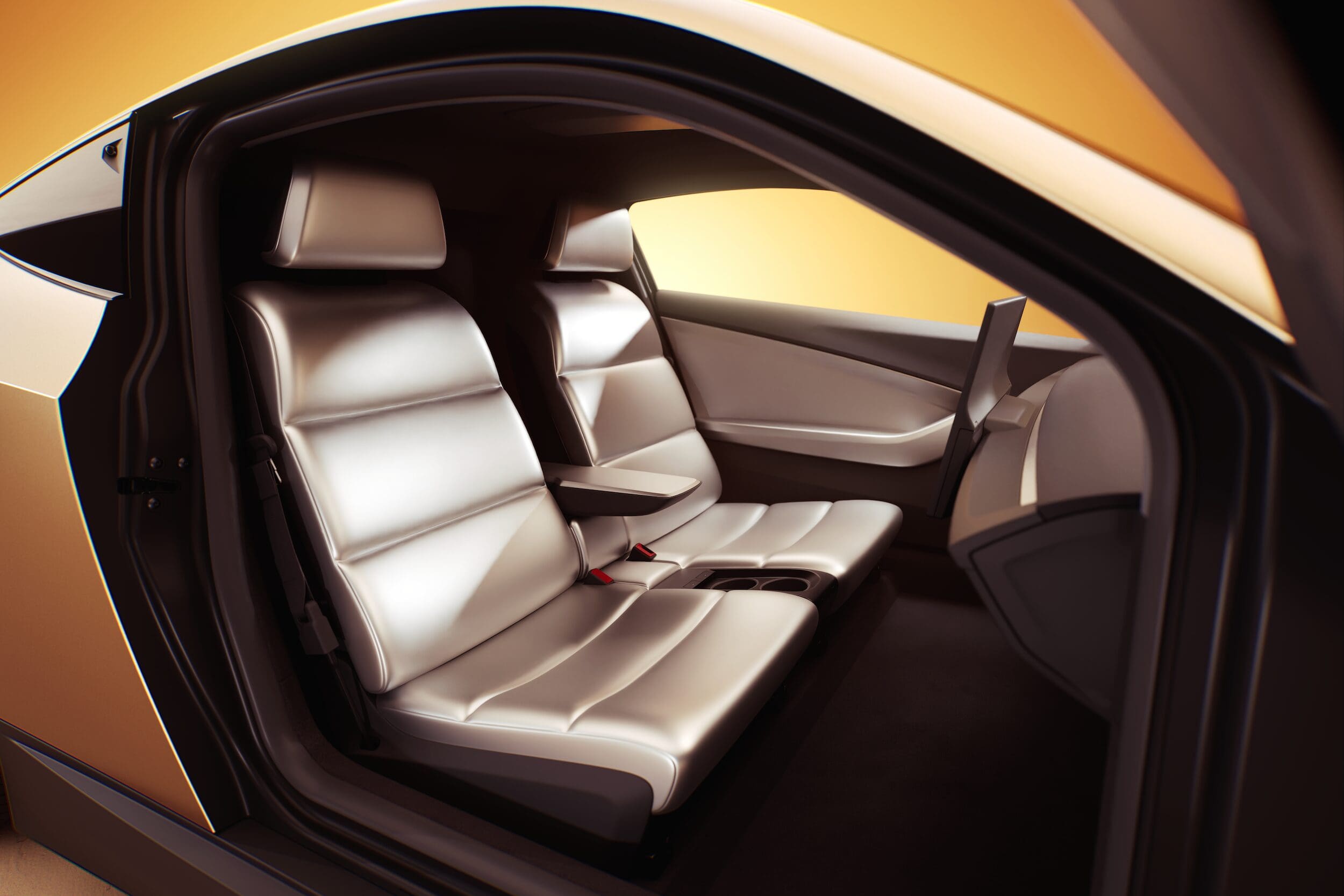
Inside, Tesla has fully leaned into its signature minimalist design philosophy. The Cybercab has no steering wheel or pedals, and the car’s functions are managed via a 20.5-inch screen positioned in the centre of the dashboard. Besides that, the cabin has two front seats, two cupholders, and an armrest – that’s it.

Tesla has yet to confirm any numbers surrounding the Cybercab’s practicality. However, we do know that the back has a large boot and a hatchback-like tailgate. This is said to be big enough for two carry-on suitcases, plus two extra pieces of hand luggage, and a bicycle.
Powertrain, battery, and charging details
According to an application published on the United States Environmental Protection Agency (EPA) website earlier this year, the Cybercab will be powered by a 48kWh battery with a 418-mile range. Tesla quotes the Cybercab’s efficiency at a huge 5.5m/kWh.
In a first for Tesla, the Cybercab gets a front-mounted electric motor, a 219bhp unit. The move from rear- to front-wheel-drive (FWD) is to keep the vehicle’s weight down to a relatively slimline 1,412kg, and maximise cabin space. For context, the Cybercab has roughly the same dimensions as a Peugeot e-308 or a similarly-sized C-segment family car.
A second first for the Tesla Cybercab is rumoured inductive charging. Instead of being compatible with Tesla’s Supercharger EV charging network, the self-driving taxi will drive onto a charging pad and charge wirelessly. This suggestion is compounded by the fact that the Cybercab has no charging port.

Porsche is also looking into wireless charging for its next generation of electric vehicles, starting with the next-generation Cayenne.
Tesla Cybercab rivals
In recent years, car manufacturers and tech firms have poured millions into developing self-driving vehicles.
Alongside Tesla, Waymo, which is owned by Google’s parent firm, Alphabet and pictured below, operates a fleet of self-driving Jaguar I-Pace taxis across several US cities and in Tokyo, Japan. Intending to launch in the UK, Waymo began testing its fleet in London in spring this year.

Uber signed a £917bhp deal with Rivian, one of Tesla’s biggest rivals, to build 50,000 self-driving taxis based on its R2 SUV, while Verne, a start-up founded by Maté Rimac in Croatia, has commenced operations in Europe.
What’s holding the Cybercab back in the UK, then?
Apart from Musk not confirming that the Cybercab will be sold in the UK, the Government’s Automated Vehicles Act requires passengers to occasionally make driver inputs. This means that Tesla’s latest model would need to be retrofitted with a steering wheel or similar to comply with UK legislation.
Introduced in 2024, the Automated Vehicles Act allows self-driving vehicles if they “achieve a level of safety at least as high as careful and competent human drivers”.
Last year, the Government introduced fast-track programmes for taxi, private-hire, and bus-like vehicles to be used on the road from spring 2026 as long as they met the conditions.
In prototype form, the Cybercab has been involved in a series of high-profile crashes, resulting in an accident rate four times higher than that of a human-driven vehicle. This is despite Tesla’s claims that the Cybercab has an “impeccable” safety record.
The most recent was in Austin, where the vehicle failed to navigate a kerb extension marked off by plastic traffic posts, turned directly into them, and continued with its journey.


