Classic car owners thinking about going electric usually start with the obvious questions. How far will it go on a charge? Will it still sound like a car, or just hum along like a fridge?
What happens to the gearbox? But there’s one part that rarely gets talked about until someone is halfway through a conversion and staring at a pile of parts on the garage floor: the clutch.
It sounds like a small detail. It isn’t. Whether you keep, modify, or bin your clutch setup entirely can decide how the finished car actually drives — and how much of the original character survives the swap.
Why the Clutch Question Even Comes Up
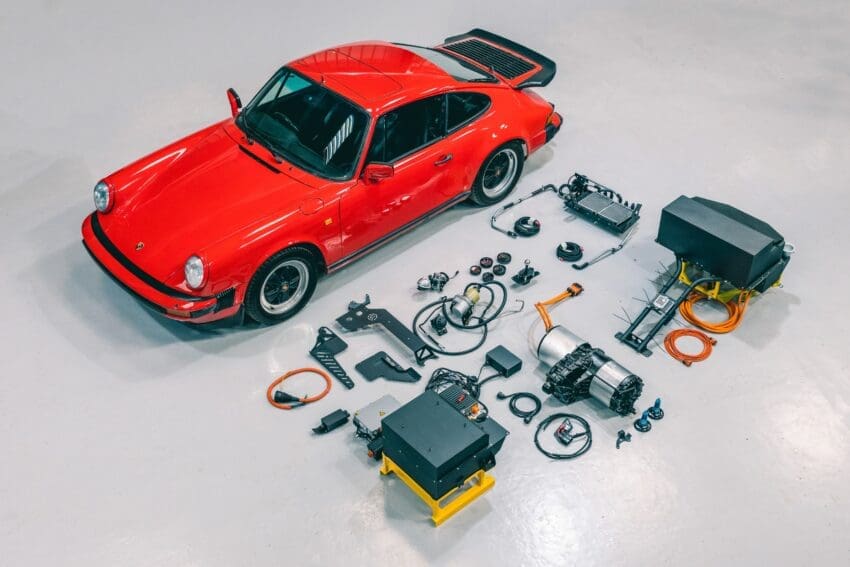
Most classic conversions start with a manual donor car. The engine and fuel tank come out, a battery pack and motor go in, and everything else — brakes, steering, suspension, and yes, the transmission — is up for debate. Some builders keep the original gearbox so the car still has a stick and a clutch pedal, mostly for nostalgia or because it makes the swap mechanically simpler. Others remove the gearbox completely and connect the motor straight to the diff, since electric motors don’t need multiple gears the way a combustion engine does.
If the gearbox stays, the clutch stays too, and that means the clutch cable stays under the same wear and tear it always faced. Cables stretch, fray, and seize just as easily in an EV conversion as they did in the original petrol car, and a tired cable will throw off pedal feel and biting point no matter how smooth the new motor is. It’s one of those unglamorous jobs that’s easy to overlook once the excitement is all about batteries and range.
Keeping the Mechanical Feel Without the Mechanical Headache
For builders who want to keep a manual-style driving experience, sourcing a reliable replacement cable early in the project saves a lot of frustration later. It’s a cheap part relative to everything else in a conversion, but a worn or incorrect one can undo hours of careful work elsewhere in the drivetrain. Anyone doing this kind of build tends to end up hunting through car parts suppliers rather than EV-specific shops, since this is still a very ordinary mechanical component. A straightforward search for clutch cable for sale is often the fastest way to find the right fit without having to strip a donor car apart just for one cable.
Gearbox or No Gearbox: There’s No Single Right Answer
There isn’t a universally “correct” approach here — it comes down to what the builder wants from the finished car. Direct-drive conversions are simpler, lighter, and need less maintenance, but they lose the manual gear changes some owners genuinely miss. Keeping the gearbox and clutch preserves that feel, at the cost of extra weight and one more system that can wear out. It’s worth browsing our roundup of the best electric classic car conversions to see how different builders have handled this exact trade-off, since the finished cars vary hugely depending on which route was chosen.
A Reminder About Getting It Signed Off
Whichever direction a build takes, anyone converting a classic to electric in the UK still needs to go through the proper approval process before the car goes back on the road. The DVSA’s guidance on vehicle conversions is the reference point most builders end up checking at some stage, and it’s worth reading early rather than after the car is finished.
Small parts like a clutch cable rarely make it into the glossy write-ups about EV conversions, but they’re exactly the kind of detail that separates a car that drives beautifully from one that just about works. Get the basics right, and the bigger, more exciting parts of the build have something solid to sit on.