The electric vehicle transition must work for everyone – not just those with access to a driveway and a home charger. Right now, too many people in terraced streets, council estates and urban neighbourhoods are not having their charging needs met. That’s not a minor policy detail. It’s an issue of fairness, and one that Believ exists to solve – ensuring ‘no one is left behind’.
For the estimated 35-40% of households without access to off-street parking, a reliable public charge point close to home isn’t a luxury – it’s essential to them realising the positive economics of EV ownership and adopting a cleaner vehicle.
LEVI: the right foundation, properly funded
Government has recognised this challenge. The Local Electric Vehicle Infrastructure (LEVI) fund represents a genuine commitment to helping local authorities plan and deliver the residential on-street charging networks their communities need. It is one of the most important infrastructure policy tools of this parliament, and it deserves to be built on. LEVI has encouraged local authorities to think long term and to go to market at scale, to maximise private sector investment. It has also provided valuable funding to put in place dedicated EV officers.
LEVI (as well as EVIF in Scotland and ULEV in Wales), gives councils the capital and the confidence to act; operators like Believ bring the delivery capability, the long-term maintenance commitment and the community-first design principles that turn that investment into real-world outcomes.
Cross Pavement Charging (XPC): a compromised solution
XPC is where cable channels and surface gullies cut across a public space (typically pedestrian footpaths) allowing residents to run a charging cable from their home across the pavement to a vehicle parked on-street in a residential setting.
Industry recognises that in the right circumstances, in locations where dedicated on-street infrastructure simply isn’t feasible, XPC has a supporting role to play.

But we should also be aware of potential drawbacks, for example the practical burdens on local authorities. Every XPC installation requires a council to maintain not just the cable channel itself, but the associated pavement surface, gullies and drainage infrastructure around it. In a period of acute pressure on local authority budgets, adding ongoing maintenance liability without a corresponding revenue stream is a challenge.

Furthermore, there are the concerns around electrical safety, as it introduces domestic electrical systems into public highways, with unresolved risks e.g. earthing, touch point risks and asset degradation – while authorities remain ultimately responsible for footpath safety.
More fundamentally, cross-pavement charging is, by its nature, a privatisation of shared public space. It may provide a single household with access to slightly cheaper charging if they are able to park outside their home, but once the cost of also having to install and maintain a home charger are factored in, as well as the cross pavement channel itself, it looks like anything but the cheaper option.
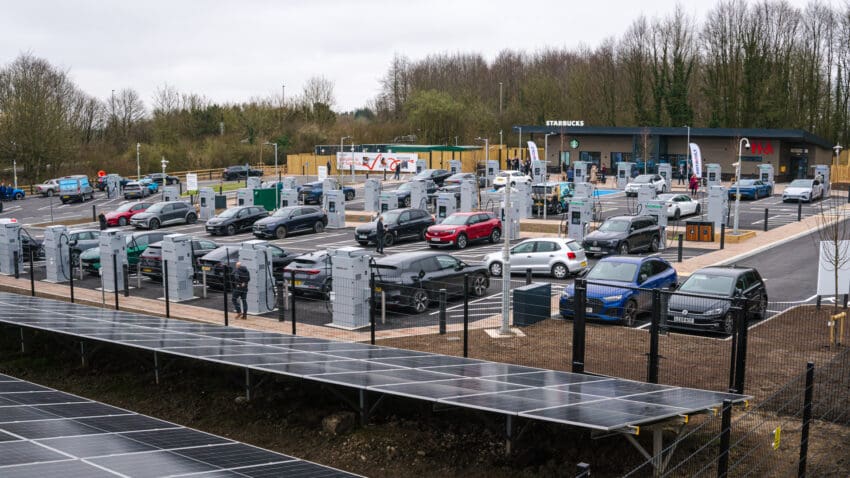
By contrast, a communal public charger, designed to a high standard and fit for purpose, is a true community asset. For the benefit of not only that individual household, but the wider community. Most EV drivers will only tend to charge once or twice a week at most, so one well-placed charge point can serve multiple households, multiple vehicles. Providing reliable charging infrastructure, with all of the costs of maintaining the charger to a high standard, all covered by charge point operator.

As a public charger it can then also serve the charging needs of fleets, and visitors. That’s the model that delivers cleaner air for all.
Affordability: the next frontier
Infrastructure equity is only half the picture. Public charging costs remain a barrier for many drivers, and this is an area where positive signals are emerging, including smarter energy tariff design and the possible move on VAT equalisation for public charging.
The clean air agenda makes the need to transition to zero emission travel and transportation an urgent non-negotiable. Air quality in our towns and cities remains a genuine public health crisis, disproportionately felt in the same communities that are furthest from EV ownership. On-street charging infrastructure, delivered equitably and affordably, is a direct intervention in that crisis. It’s not a nice-to-have. It is critical infrastructure delivering long term public health benefits.
The opportunity is significant and the building blocks are in place. The UK can build a public charging network that a care worker finishing a night shift, a delivery driver heading home, or a family without a garage can all rely on. That is the network Believ is committed to delivering – reliable, affordable, and accessible charging for all.