



The Megane has undergone a mid-life revamp to ensure it remains at the forefront of the hotly contested electric family hatchback class.
Over the last year, the Renault 4 and Renault 5 have rightly earned their stripes as the darlings of the EV world. Both lean into their historic namesakes without entering into pastiche territory, both pack infectious personalities, and both represent tremendous value.
Yet the all-electric Megane ran so the R4 and R5 could walk. In 2022, the Megane, or ‘Renault Megane E-Tech’ if we’re using full-name terms, was the first car to come from then-CEO Luca de Meo’s ‘Renaulution’ plan to transform the beleaguered French brand into a European EV powerhouse.
The father of the Renaulution proved an instant success, drawing accolades and gaining a reputation as a good-looking, sweet-handling car.
But in the EV world, four years is an aeon. With the likes of a new, electric Alfa Romeo Giulietta and a fully-electrified Volkswagen Golf on the horizon, Renault decided the Megane was due a midlife upgrade to ensure it remained a competitive proposition in the increasingly fiery electric family hatchback class.
Read on to find out what’s changed on the new Renault Megane for 2027.
New Renault Megane: Updated battery, more range, but no more power
At the new Megane’s launch, Renault was keen to stress the updated car’s new battery technology.
The French carmaker has ditched the 60kWh, Nickel Manganese Cobalt (NMC) unit from the previous car, and replaced it with a slightly larger, 67kWh pack using a Lithium-Iron Phosphate (LFP) composition, which adds a minuscule 20mm to the Megane’s height.
Alongside adopting the same battery chemistry as the upcoming Twingo, the move to LFP reflects an industry-wide trend. LFP batteries use fewer rare earth materials in their makeup and have a longer lifecycle than NMC packs, making them a greener, cheaper value proposition for manufacturers.

The clever new battery means that the Megane is now capable of up to 310 miles on a single charge – a 30-mile increase. Peak charging speeds are now also up to 165kW, a 35kWh boost over the previous model, which translates into a rapid 15-80% top-up time of just 24 minutes.
To ensure that the Megane can compete with the likes of the excellent Kia EV4 and heavily revised Volkswagen ID.3 Neo, vehicle-to-load (V2L) technology is now standard across the range, as is vehicle-to-grid (V2G) functionality.
V2L means you can use the car to power any external electronic device up to 220V. Meanwhile, V2G allows the car to serve as a battery storage unit, returning electricity to the grid and reducing the cost of home charging.
Despite its new battery tech, the facelifted Megane gets the same motor as before – a front-mounted unit producing 217bhp, and a Nissan Leaf-matching 0-62mph time of 7.8 seconds. This shouldn’t really be a surprise, as both cars are built on Renault’s impressive, EV-only AmpR medium architecture.
Yet throughout its 127-year history, Renault has historically shown that it knows a thing or two about vehicle handling. Building on what was already a well-balanced chassis, the big-brained folk of Boulogne-Billancourt have fitted the new car with a new multi-link rear suspension, which aims to strike a balance between comfort and engagement. At the front, an updated steering system promises a more precise and engaging driving experience.
New Renault Megane: Refreshed design
The previous Renault Megane E-Tech was far from ugly, and was a more handsome proposition than the likes of the amorphous pre-Neo ID.3 and the somewhat fussy MG4.
Unlike the R4 and R5, where Renault has delved deep into its history books for styling inspiration, the new Megane adopts a Scenic-esque front-end. This is no bad thing, as the Megane’s big SUV brother is a handsome-looking car.
The new Megane’s black front grille is finished with a diamond pattern to reflect the Renault logo, and the main, centrally-positioned Renault badge now sits beneath the bonnet line.

Gone are the previously shaped front air intakes, which have been replaced with a classy light signature comprising eight diamond-shaped DRLs. The shape’s angular geometrics afford the new Megane a more mature, purposeful aesthetic.
In fact, the only visual carry over from the previous electric Megane are those slim headlights – that body-coloured bumper you see is completely new, too.
Moving along the car, the 4.2-metre length is unchanged, but the addition of flush door handles creates a smoother, more aerodynamic appearance, synonymous with electric vehicles.
Around the back, the redesigned rear skirt reflects the front-end’s robust appearance, and while the rear light bar still runs the width of the loading hatch, it’s been redesigned using uncovered 3D components. Below it sits ‘Megane’ wording, which uses a sportier font to reflect the redesign.
Commenting on the design, Renault’s design chief, Laurens van den Acker, said: “We have enhanced the perceived width and on-road stance of [the] new Renault Megane to give it greater presence. Its sporty, modern styling gives it an appeal that echoes its inherent dynamic qualities.”
It’s fair to say that once again, the Dutchman and his team of designers have succeeded.
New Renault Megane: Simplified trim levels
Renault understands that simplicity is key to attracting new and retaining existing customers. As a result, there are just two trim levels available: entry-level Techno and range-topping Esprit Alpine.
Externally, both trim levels come with a body-colour-matched front bumper and standard alloy wheels: retro-style, 19-inchers on the Techno, and bigger, sportier 20-inchers on the Esprite Alpine.
Irrespective of trim level, Renault offers the Megane in seven body colours, including a new satin blue, along with several two-tone configurations.

Step inside, and not much has changed – at least in visual terms – from the current Megane. The digital instrument cluster and infotainment screen are still combined into one unit, and the latter (thankfully!) retains its bank of physical keys for the climate control functions.
Renault claims that it has focused on improving the quality of the Megane’s interior for the 2027 model year.
Across the new Megane range, a TPE (that’s Thermoplastic Elastomer) dashboard is standard, along with ambient lighting that changes depending on the selected drive mode.
The Techno trim’s electronically-operated seats can also be trimmed in light grey or titanium black eco-friendly TPE, and a grey-patterned or wood-effect finish is exclusive to this model.
Step up to the Esprit Alpine, and there are black Alcantara-effect seats embossed with the Alpine logo, offset with blue, white, and red Tricolore stitching. The doors benefit from their own dedicated inserts that grade from grey to blue, and add to the car’s driver-focused aesthetic.
Clever new tech
The new Renault Megane comes with the rather excellent Google Built-in system, which comes with an integrated route planner that promises you’ll never run out of battery. Naturellement, Apple CarPlay and Android Auto functionality are integrated here.
This latest car is also the first Megane to come with the Google Gemini AI bot, which lets you have a “natural” conversation with your car, if you’re so inclined. Like the onboard YouTube and HBO apps, we at EV Powered don’t really see the point.
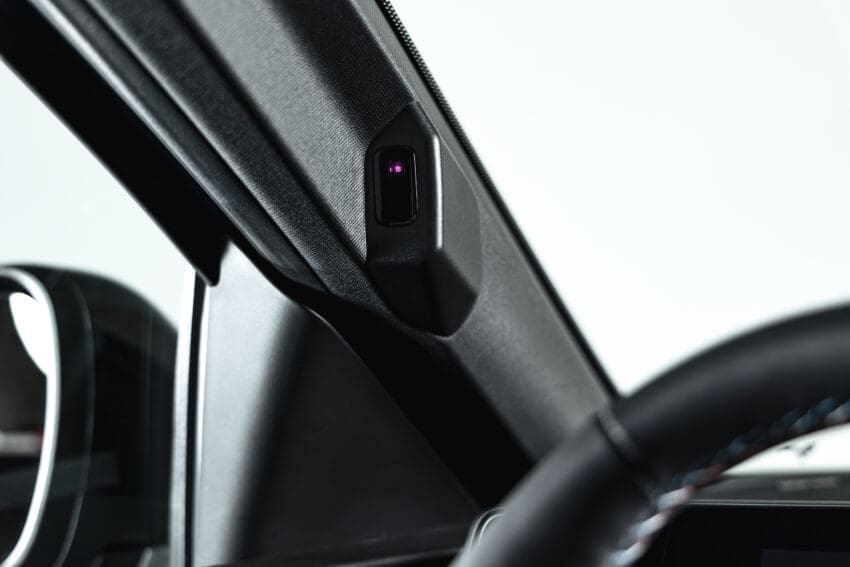
Another key new piece of tech is the new Megane’s driver recognition function. Up to five drivers can create a profile with a facial scan, which recognises their driving preferences such as seating position and favourite apps. Thankfully, Renault has stressed that all facial data is stored within the vehicle and not shared with an external server.
When it comes to driving, the Mégane is the first new Renault to benefit from its Smart Mode function. This means the car automatically selects from either Eco, Comfort, or Sport driving mode depending on how heavy you are with your right foot. It also gets one-pedal driving for the first time.
New Renault Megane price and launch date
From what we know so far, the new Megane is shaping up to be yet another massively capable electric Renault. The only thing we don’t know is when it’ll arrive, and how much it’ll be priced at.

If we were to guess, we’d say it’ll hit Renault showrooms nationwide around the time the ‘27 plates drop this September. Given the current car starts from £31,295, we’d estimate a price tag of around the £33k mark.
Restez à l’écoute…


