

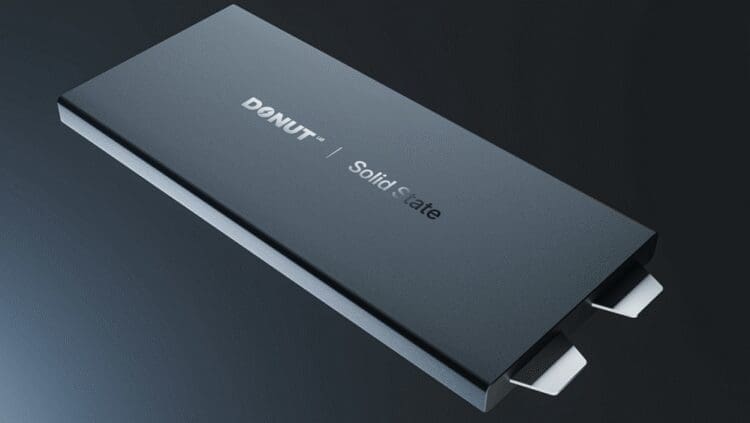
Donut Lab has unveiled test results for its new solid-state battery (SSB), demonstrating an ultra-rapid charge from 0% to 80% in four and a half minutes.
The Finnish tech startup claims its SSB is the world’s first commercially viable solid-state battery, capable of ultra-fast charging and an extended lifespan.
The SSB was tested under almost perfect conditions, and it appeared to outperform Toyota’s SSB efforts in battery charging time. While confirming it is developing an SSB capable of over 600 miles on a single charge, the Japanese automotive giant has been tight-lipped on the performance of its offering.
However, questions remained about whether the Donut Lab solid-state battery could withstand tens of thousands of charging cycles, and how it would perform in extreme hot and cold temperatures.
Third-party adjudicator, Finland’s VTT Technical Research Centre, confirmed the battery’s performance, but a 100,000-cycle lifespan still requires further independent verification.
The Donut Lab test also only involved a single cell, which it admitted will perform differently to a whole vehicle-sized battery pack.
However, the firm’s CEO Ville Piippo said similar performance should be attainable. He said: “Unlike other solid-state batteries requiring high compressive pressures and undergoing volume changes of up to 15-20 per cent during recharging cycles, the Donut Battery does not require special compression or more extensive cooling.
“This greatly simplifies the structure of battery packs and enables solutions that are cost-efficient, powerful, and better than traditional lithium-ion batteries in terms of energy and power density.”
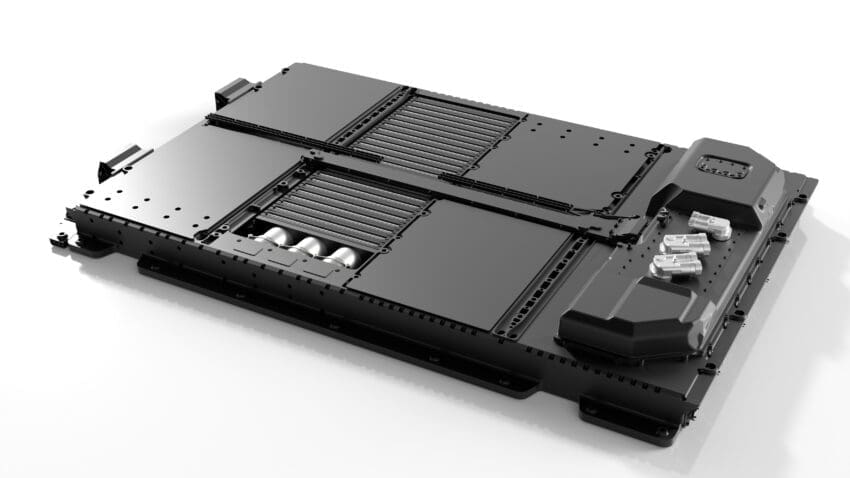
Solid-state batteries are regarded as the next frontier in EV tech. Their higher energy density packs more energy into a smaller, lighter space, providing more range than current batteries without adding bulk. Meanwhile, their solid electrolyte makeup allows for quicker ion movement, leading to faster charging.
What’s more, SSBs do not rely on a flammable liquid electrolyte. This means that the risk of a battery fire is significantly reduced. By offering charge times comparable to filling a fuel tank and a range matching – if not sometimes besting – an internal combustion engine, they eliminate the hurdles of charge time and range anxiety.
In addition to Donut Lab and Toyota, several other automakers are investing heavily in SSB technology. In September last year, a Mercedes EQS fitted with an experimental solid-state battery managed a 749-mile journey from Stuttgart to Malmö on a single charge.
BYD has been researching SSBs since 2013, and is set to introduce them on its higher-end vehicles next year. With this in mind, we expect the first solid-state BYDs to fall under the Yangwang or Denza umbrella. Should these prove successful, the world’s largest EV maker will roll them out to its mass-market models.


