Longbow is aiming to release its first driver-focused, featherweight electric vehicle by the end of 2026. By the end of this interview with its co-founder Mark Tapscott, you’d be daft to bet against them.
Read the news, and you’d think there’s not much to be positive about in Britain these days. It hasn’t stopped raining since January 1st, the cost of living is spiralling, and the less said about the political landscape the better.
Yet beyond the doom and gloom headlines, there lies a glimmer of positivity – especially for those of us in the EV world. Amongst others, Nissan has committed to building the new Leaf at its refurbished Sunderland factory; Chinese newcomer Changan has opened a dedicated R&D factory in Birmingham to refine its cars for local markets, and the UK Battery Industrialisation Centre continues to champion EV innovation.
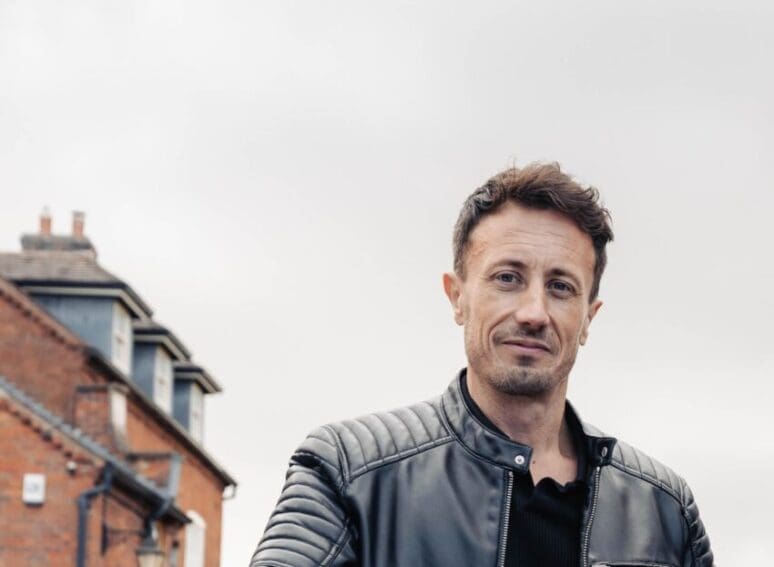
In short, then, our rain-battered island is doing something right when it comes to electric vehicles, and one of its greatest champions is Mark Tapscott, one of the co-founders of EV newcomer, Longbow.
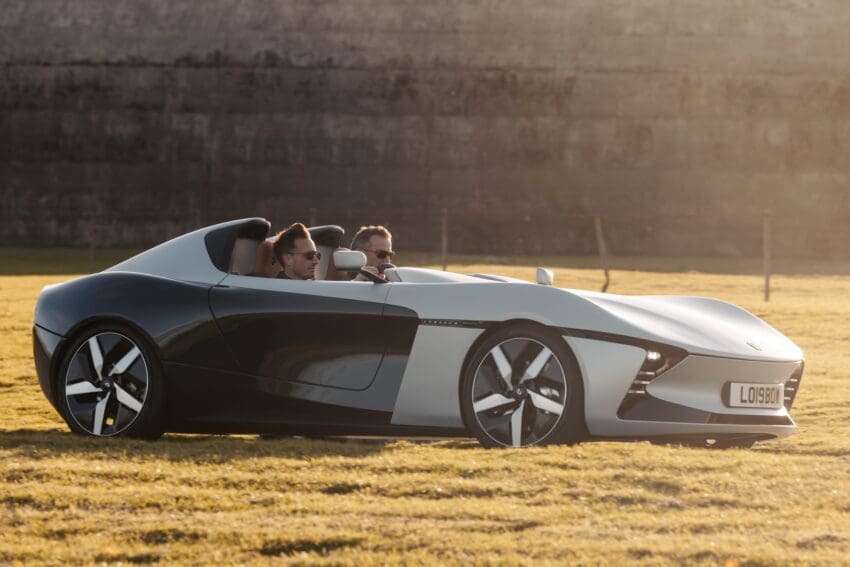
Given that neither Longbow’s Speedster nor Roadster has yet to enter production, a cynical type would already be keen to add the British firm to the list of EV manufacturers that didn’t quite make it. But as Tapscott makes clear, don’t do that.
Most recently, he spearheaded BYD’s entry into the Middle East. Beyond that, Tapscott’s CV is a roll-call of names involving the great and the good from the EV world: Formula E? Check. Involvement in developing the original Tesla Roadster? Check that, too.
Unsurprisingly, then, Tapscott is confident that upon arrival later this year, the hand-built, sub-1000kg Longbow Speedster and Roadster will redefine the traditional British sports as a “featherweight electric vehicle”. Think Lotus Elise with an electric motor, and you’ll not be too far wrong. Sound familiar?
As well as an advisory board comprising former CEOs from McLaren, Alpine, and Lotus, key to Longbow’s success is the EV manufacturing infrastructure and automotive heritage that the UK can offer.
“The UK is probably the best place to build an electric sports car,” Tapscott tells EV Powered. “Dating back to the 1940s and ‘50s, we have this tremendous tradition of building lightweight, engaging sports cars, which have always been a passion of mine.
‘We have a tradition of building engaging sports cars’
“We’re building and developing as much of the Longbow and the Speedster on these shores apart from the battery cells, because we don’t make them in volume here. However, the battery packs we use are British made, meaning we can use multiple suppliers for the cells.
“I think in the past, there were perhaps a few new EV makers who’re now in the graveyard because they became tied to a particular battery or cellmaker. By de-risking the centralisation of any particular supplier, this allows us to focus on building the best possible cars we can.”
Despite not disclosing the name of Longbow’s battery supplier, “focus” is something that often crops up during the conversation with Tapscott. It’s what he cites as the “secret sauce” behind getting the open-top Longbow Speedster down to a featherweight 895kg.
And the word “featherweight” isn’t just a marketing spiel. The Speedster is lighter than a Lotus Elise 220. While no porker, the Norfolk car still tips the scales at 924kg. As well as the original Tesla Roadster, the Elise serves as Tapscott’s muse for Longbow’s first cars.
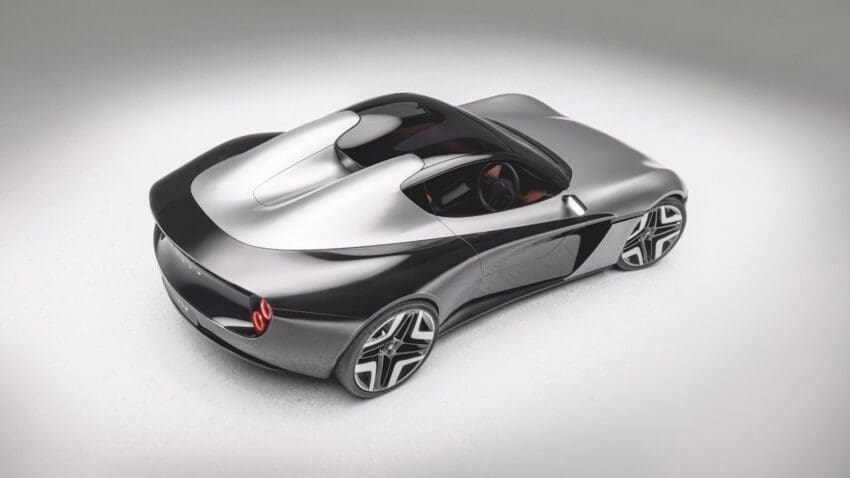

“You’ll find a lot of influence from the Elise on our car, not least because a lot of our engineers were involved with that project to varying extents. I actually had one I used as a daily driver, and luggage space was really important in a car that size.
“I think with an EV, we have an opportunity to do something better than an ICE because of how it’s packaged. The Longbow Speedster and Roadster have a lot more luggage space than the Elise, and how we’ve maximised that is purely down to focus – there’s nothing in either car that’s some sort of unobtainable technology we’re waiting for someone to invent.”
When it comes to focus, Longbow adopts a two-pronged philosophy to carmaking. The first part is engineers removing one gram of weight each day from what they’re working on. The second is that all involved need to consider the idea that “some of the best design you can do is no design at all”.
“This allows us to strip things back and understand what a sports car should be,” Tapscott explains. “I think one of the best examples of this is consumer electronics. Over the years, mobile phones, laptops, etcetera have got smaller, lighter, and cheaper over time, despite doing a lot more.
‘Some of the best design is no design at all’
“When you look at automotive, what seems to have happened very clearly is that things have got larger, heavier, can do a lot more, but cost a lot more. An example of that is BYD’s Yangwang SUV, which for some reason can cross the Yangtze river in China – can you imagine the efforts that have gone into that, not to mention the weight it carries around and the costs involved?
“With us, we ask ourselves ‘what does this car need to do?’ and that’s simply to be an engaging driver’s car. Anything that’s added or doesn’t contribute to that experience is a waste of time, money, effort, and weight.
“With that in mind, we haven’t developed a new wheel nut for our cars. We’ve taken one that one of the big OEMs have used over millions and millions of miles that’s tested and reliable. This way we can make sure that we can bring our products to our customers by the end of this year.”
Oh, and as for those customers? The order books are already full. Given Longbow’s BS-free approach to purely “building cars, not building one dream or vision” it’s not difficult to understand the faith in the brand.
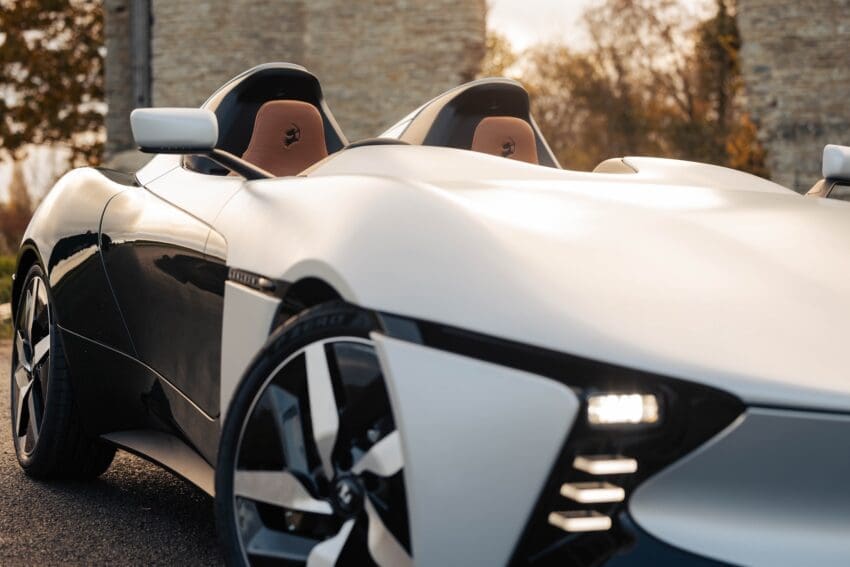
Ultimately, the end game – as Tapscott describes it – is to “put many, many sports cars on the road globally, not just in the UK”.
As a personality, Tapscott is much closer to Maté Rimac than Elon Musk. His description of making the Longbow Speedster and Roadster a reality by the end of 2026 is far from romantic.
He maintains that Longbow’s success will be determined by “a whole load of rather dull maths and spreadsheets that sit behind everything”. Adding a further layer of pragmatism to things, Tapscott immediately points out that his brand “won’t be able to compete against the Chinese for volume, and that’s not a place Longbow should be playing”.
UK success story
As the clock ticks down to arrival date, Tapscott returns to his original point of the UK being a global EV powerhouse.
“We need to say a huge thanks to the supply chain that exists here in terms of electric motors, transmissions, and battery pack manufacturers – the Government has been good in supporting much of that. These are the things the UK does really, really well.
“We’ve got all of the boring numbers in place,” he wraps up. “Now it’s a matter of just starting to assemble things and getting them to our customers.”