





For every all-electric success such as Tesla or Polestar, there have been plenty of EV startups and EVs that have missed the mark.
So, then, this list made up of 10 EVs and EV manufacturers that didn’t quite make it shows that even some of the best in the business can get things wrong.
Given fraud, bankruptcies, and false starts all get a mention, the axiom of “underpromise and overdeliver” is very much applicable to the world of electric vehicles.
As the likes of Apple and James Dyson found out to enormous expense, there’s nothing cheap or easy about developing an EV, let alone bringing it to market successfully.
Apple Car
MacBook. iPhone. iPad. iMac. Those are but a handful of Apple’s success stories. The Apple Car – or ‘Project Titan’ as it was known as internally – won’t go down in history as one of the tech brand’s finest hours. Developed from 2015 until early 2024, the Apple Car was planned to run Apple’s own self-driving tech and hit the market in 2028. Factors leading to the Apple Car’s cancellation included fluctuations in the EV market, high staff turnover, and a lack of backing from an established automaker. Problems with the autonomous driving tech were also cited. After spending $1bn a year on the project, Apple laid off 600 employees involved with it. Those remaining were moved across to work on its Apple Intelligence programme.
Aston Martin Rapide E
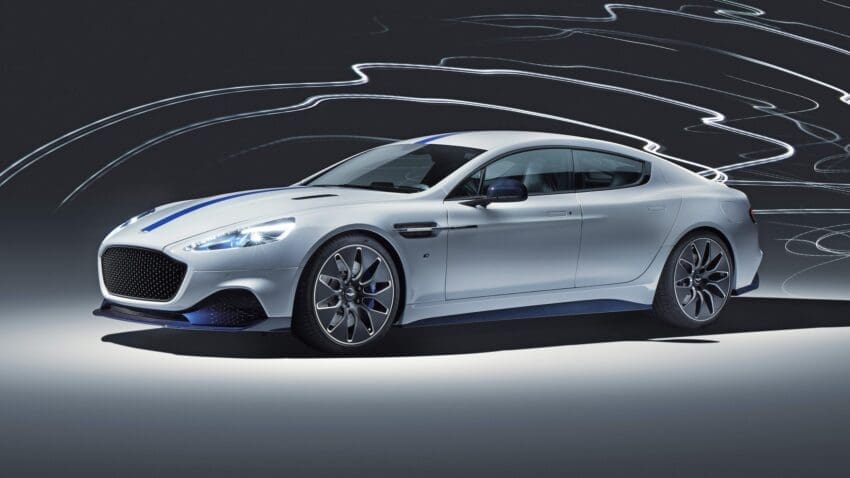
Another case of what might have been for the British car industry, the Aston Martin Rapide E as the Gaydon-based brand’s debut EV. Based on the four-door Rapide S, the all-electric Rapide E was co-developed with Williams Advanced Engineering – yes, that Williams of Formula 1 title-winning fame. In place of the Rapide’s 5.9-litre V12, the Rapide E was based on a clever 800V electrical system with a 65kWh battery and two electric motors producing a combined 604bhp. Aston Martin said the Rapide E was 8% more aerodynamically efficient than its petrol sibling courtesy of more ‘slippery’ bodywork to reduce drag, aero alloys, and low-resistance Pirelli tyres. By removing the exhaust system, the Rapide E benefitted from a flat underfloor to help it scythe silently through the air. Instead of chasing ludicrous speeds, the Rapide E had a top end of 155mph and could manage the 0-62mph run in under four seconds. Initially, a “strictly limited” production run of just 155 cars was planned for 2018. But more financial turbulence for Aston Martin saw the Rapide E shelved as a “research project” in January 2020. According to reports, the next all-electric Aston will arrive in 2030, and a deal between the British carmaker and Lucid will see it use the American brand’s EV tech.
Canoo

In 2025, electric vans are very much a thing – for examples, cast your attention towards the Farizon SV, Renault’s upcoming range of commercial vehicles, and the multi-talented Kia PV5. To all intents and purposes then, Canoo was a good idea. Founded in 2017 , Canoo intended to corner the US delivery van market with it sculpted all-electric cargo ans and passenger-carrying ‘Lifestyle Vehicle’. But there was a catch. Both the all-electric cargo van and Canoo’s people van were sold via a subscription model – no big deal in 2025, but way too early in 2017. Neither products were caught on, and even a three-vehicle agreement with NASA to use the Lifestyle Vehicle as astronaut transport couldn’t salvage a brand whose business model would have most likely seen it thrive today. On January 17 this year, Canoo finally bit the bullet and filed for bankruptcy.
Dyson Electric Car
As James Dyson of vacuum cleaner and Brexit notoriety discovered, making a car – especially an EV – is both difficult and expensive. Colour us shocked. In 2014, Dyson announced that he would set about building a seven-seat EV with a 600-mile range courtesy of a massive 150kWh lithium-ion battery. After hoovering up £500m worth of development costs, Dyson himself announced in February 2021 that he “simply cannot make [project N526] commercially viable”. Had a production version of the Singapore-built Dyson car made it to light, it promised sculpted ergonomic seats, individual-zone climate control, and a hologram-based system to replace a regular head-up display. Despite adopting a conventional SUV body style, the Dyson car rode up on a dedicated aluminium platform and 24-inch wheels. Powering the 2.6-tonne N526 were two 246bhp electric motors sending power to all four wheels. Almost five years later, the Dyson car remains one of the biggest ‘what if’s’ in modern automotive history.
Faraday Future
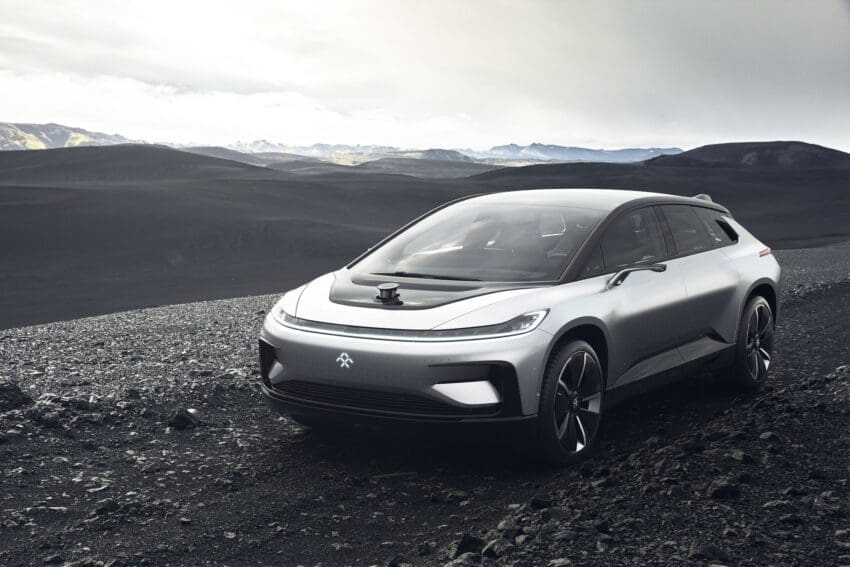
Not quite dead but definitely on some sort of life support, Faraday has existed since 2014 but has delivered a total of less than 20 vehicles to date. Each of these were its only car, the FF 91, which has been in production since 2023. Despite having attracted over a billion US dollars in investment, the Sino-American burnt firm through an exceptional amount of money, which saw its CEO file for personal bankruptcy and the brand evicted from its California HQ. Proof of Faraday’s death rattle is that it’s now focused on selling its FX Super One luxury minivan. If you’ve not heard of it, it’s a rebadged Great Wall Wey Gaoshan plug-in hybrid with plenty of AI and a huge screen strapped to the front – a bold – if somewhat questionable – design feature Faraday describes as an LED “face.”
Fisker Ocean
A product of Fisker Inc. – itself a brand born from the ashes of Fisker Automotive – the Fisker Ocean was a mid-sized all-electric crossover aimed at the likes of the Skoda Enyaq, Tesla Model Y, and the Hyundai Ioniq 5. Everything looked good on paper for the Fisker Ocean – it was reportedly decent to drive, the 113kWh battery version promised up to 440 miles of range, and an optional solar-panelled roof was available to eke out an addition 1,500 electric miles per year. What’s more, UK cars were priced from a very reasonable £36,900. Despite being solid behind the wheel, reasonably affordable, not to mention well made, the Ocean’s biggest problem was that Fisker had no money to support its production or to address widely-reporting and serious problems with its operating systesms. Despite raising over $1bn in investment money, it still wasn’t enough. After a production run from 2022 to 2024, the Ocean was consigned to the automotive history when Fisker Inc. filed for bankruptcy, leaving owners high and dry.
Jaguar XJ EV

Prior to its radical electric-only rebrand, Jaguar came within touching distance of launching a fully-electrified version of its now-dead XJ saloon. Named Project X391, this luxury barge would take the fight to the Mercedes EQS and the BMW i7 following its 2020 launch. Until it didn’t – shortly before its planned public debut, Jaguar pulled the plug on its XJ EV. The reasons behind the canning of what would have been the brand’s second EV are murky. Yet it’s said that poor XJ sales, the COVID-19 pandemic, and doubts over the brand’s decision to go all-electric by 2025 contributed to the car’s demise. There’s reportedly only one photo of the XJ EV in existence, and it’s doing the rounds on social media…
Lordstown
The bizarrely-titled Lordstown was named after a former General Motors plant acquired by the EV start-up. At that very site, the Ohio-based brand planned to conquer the all-electric pickup truck segment. Given Lordstown is on this list, you can guess that’s very much what didn’t happen. After five years of development, Lordstown launched its only vehicle – the Endurance in 2022. Based on a vehicle called the Workhorse W-15 purchased from Lordstown CEO’s previous firm, the Workhorse Group, less than 50 of these vehicles were produced. The Lordstown Endurance was priced at $68,000 (around £49,000). With a 200-mile range, 446bhp, and an 3.6-tonne towing capacity, the all-electric pickup would go toe-to-toe with the likes of the Rivian R1T, the Ford F-150 Lightning, and the Hummer EV. While COVID played a part in Lordstown’s demise, lawsuits, corporate struggles, and financial mismanagement, which included the US Securities and Exchange Commission discovering that Lordstown misled its stockholders about its chance for success, ensured that this particular EV startup was very much dead on arrival.
Kalashnikov CV-1
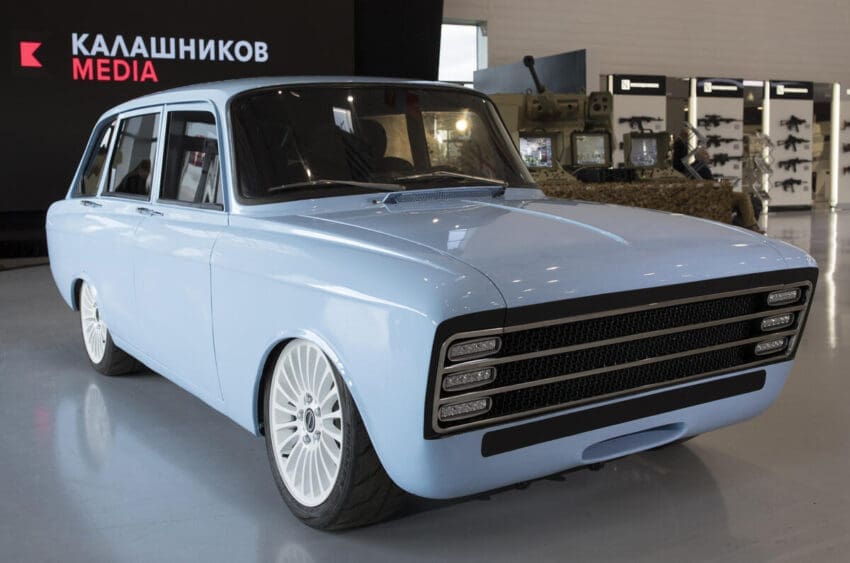
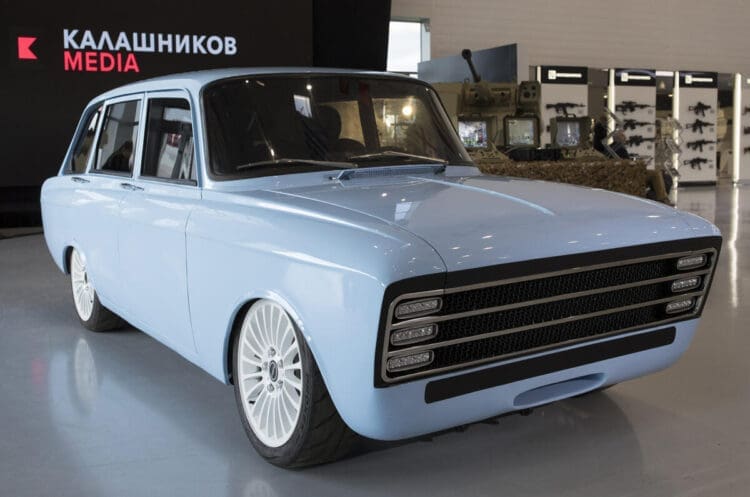
Back in 2018 when Russia and the Western world (sort of…) got on, the Russian government commissioned gunmaker Kalashnikov to build an EV capable of taking on the all-conquering Tesla Model 3. The result was this, the Kalashnikov CV-1. Despite looking like a restomodded version of the Soviet-era Moskvich 412 Kombi, the Kalashnikov CV-1 promised around 680bhp, and its 90kWh battery was said to be capable of 220 miles from a single charge. The veracity of this was never proved, however. The windows of the “demonstrator” were blacked out and curious journalists who asked to take a look inside or for any confirmation of technical details were met with a stern ‘nyet’. Propaganda stunt or not, the CV-1 showed that oil-rich Russia was toying with the idea of entering the EV game. Putin’s invasion of Ukraine in 2022 put pay to all of Russia’s potential as global EV player.
Maserati MC20 Folgore

We came oh-so-close with this one. As recently as December 2024, Maserati stood on the cusp of launching an all-electric version of its gorgeous MC20 Folgore sports car. Until it didn’t, after almost five years of promises. Just like the electric Jaguar XJ, an executive from parent company Stellantis pulled the plug at the 11th hour citing a lack of demand for a fully-electrified rival to the likes of the McLaren Artura, the Mercedes-AMG GT, and the Ferrari 296 GTB. With a clever torque vectoring system, a tri-motor layout producing over 700bhp and a 0-62mph time of two seconds, the Folgore MC20 would have most likely been fantastic, too. Yet after looking into Maserati’s finances, its last minute cancellation makes sense. No stranger to being strapped for cash throughout its history, Maserati sold just 11,800 new cars over the first nine months of 2024. Compared to the previous year, that’s a difference of 8,600 vehicle, which ended up costing Maserati’s then-boss, Davide Grasso, his job.


