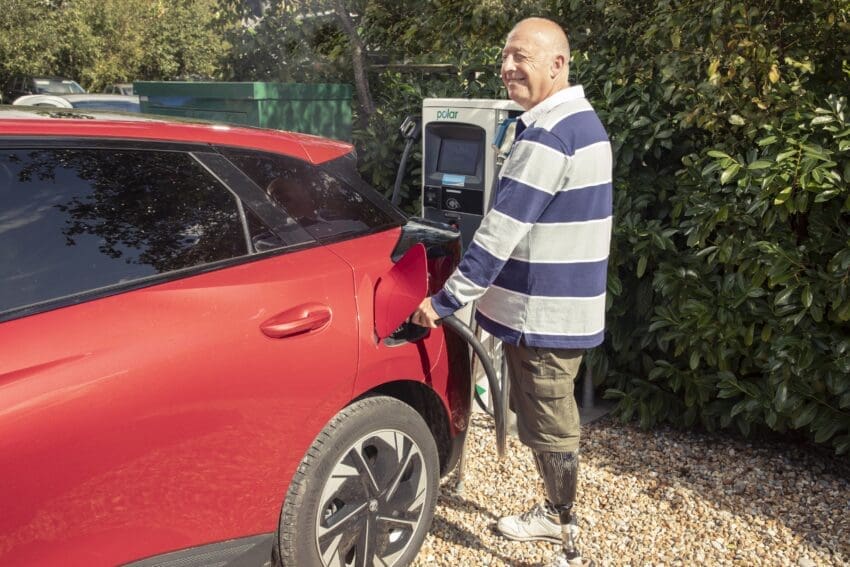
The new EV is on the drive, the wallbox is wired in, and the petrol car that served you for a decade has been quietly demoted to the kerb.
It still starts and still has six months of MOT, and nobody in the house plans to drive it again. Plenty of households are hitting this moment at once: the SMMT’s July 2026 figures put battery electric cars at a 30% share of new UK registrations in June, with a record 25% across the first half of the year. That is a lot of freshly surplus petrol cars looking for a next life.
There are five realistic routes, and the right one depends on what the old car is worth and whether it still runs.
Part-exchange with the dealer
The path of least resistance is to let the dealer who sold you the EV take the petrol car in part-exchange. One appointment, one set of paperwork, and any outstanding finance gets settled inside the deal. For a lot of people that convenience is worth real money, which is handy, because it will cost you real money: part-exchange offers typically sit some way below what the same car fetches privately.
Two things improve the number. First, get valuations from a couple of the instant online car-buying sites before you walk in, so you know what a fair figure looks like and can say so. Second, keep the part-exchange conversation separate from the EV price. A generous-sounding trade-in figure can quietly fund a weaker discount on the new car, and you only spot it if you argue the two numbers one at a time.
Sell it privately
Selling it yourself is where the extra money is. A clean, sensibly priced petrol car with history still shifts quickly in the UK, and the gap between trade and private prices can run to four figures on something desirable.
Earning that gap takes some admin. Put a fresh MOT on the car if the current one is nearly out, sort the tyres if they are close to the limit, and photograph it clean in good light. Have the V5C and the service history ready, along with both keys. When a buyer asks for a test drive, check their driving licence and confirm that your insurance (or theirs) covers them behind the wheel. Take payment by bank transfer and watch it land in your account before the keys change hands, because the oldest scams in this market still catch out trusting sellers. Then tell the DVLA the same day, so the next parking fine belongs to the new keeper.
When the old car no longer runs
Then there is the harder case: the car with the seized engine, the failed gearbox, the head gasket quote bigger than the car’s value. A franchised dealer has little appetite for a part-exchange that arrives on a flatbed, and if they do take it, the offer will be scrap money dressed up politely.
In the UK, the formal route is an Authorised Treatment Facility, which will collect the car and issue a Certificate of Destruction, with the DVLA squared away for you. By law you cannot be paid in cash for a scrapped car, so expect a bank transfer. If the car is mechanically dead but cosmetically decent, a dismantler or a spares-or-repair listing will usually beat the scrap price, since the doors, interior and electronics are worth more in pieces.
Across the Atlantic, this problem has been turned into a proper market. In the US, where the switch to electric is producing surplus petrol cars at far greater volume, sellers have established options to sell a non-running car without leaving the sofa. The seller describes the vehicle and its condition online and takes the instant offer; a tow truck then collects the car free of charge, with payment handed over at pickup. Peddle, one of the larger American buyers of end-of-life cars, accepts vehicles in essentially any condition, which tells you how much residual value the trade can still find in a car that will never drive again.
Donation and scrappage schemes
If the money matters less to you than the faff, charity donation schemes will take the car off your hands, running or otherwise. The established ones collect it, auction or scrap it as appropriate, handle the DVLA paperwork and pass the proceeds to a charity you choose, often with Gift Aid added on top. For a car worth a few hundred pounds, the charity may well end up with more than you would have banked after the effort of a private sale.
Manufacturer scrappage schemes are the other lever, and they come and go with the sales cycle. Brands have periodically offered trade-in bonuses on older petrol and diesel cars against new EV orders, so if you have yet to sign for the EV, check whether your old car qualifies for one before you negotiate anything else.
Keep it, and maybe move it
Sometimes the honest answer is that the petrol car still has a job. Households that tow a caravan or make regular long continental runs often use the EV as the daily and keep the old car for the rest. Insurance and tax on a second car are real costs, though, so this only stacks up if the car genuinely gets used.
The clearest version of that logic plays out in America every autumn, on what locals call the snowbird run. Picture a retired couple outside Boston who have gone electric at home and spend winters on Florida’s Gulf Coast. Their old petrol car is worth more to them parked in the Florida sunshine than sat on a Massachusetts forecourt, so instead of selling it and buying something else 1,400 miles south, they book shipping a car from Massachusetts to Florida with a door-to-door carrier. On that route the car spends three to four days on the truck, and open transport for an ordinary saloon runs to somewhere between $850 and $1,475. Southbound demand peaks from October to February, so carriers on the corridor suggest booking two to three weeks ahead in season.
The UK version is more modest, but it exists. The old car can move to the holiday cottage, or go to a student child at the other end of the country, delivered by a domestic transporter or a willing relative with a free weekend. A car that would fetch £3,000 on the drive might save far more than that in train fares and hire cars over a few years of quiet service elsewhere.
The ten-minute jobs to do first
Whichever way you lean, a few small tasks make every option easier and every offer better:
- Find the V5C and gather the service history, receipts and spare key.
- Check for outstanding finance and request a settlement figure if there is any.
- Photograph the car now, while it is still being cleaned and driven regularly.
- Get two or three online valuations so you recognise a poor offer when you hear one.
If the decision is going to take a few months, look after the car in the meantime. Declare SORN if it is coming off the road, keep the insurance going if it is staying on it, and run the engine up to temperature every couple of weeks so it starts first time when the buyer or the collection driver turns up.