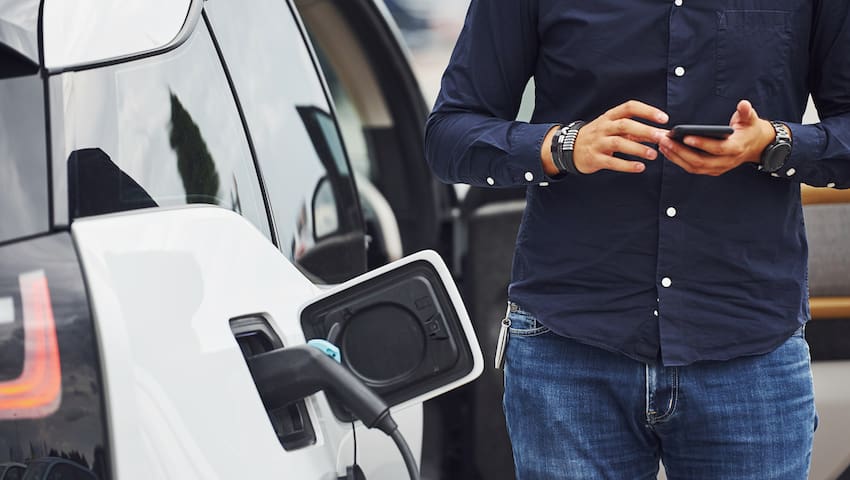
Which? puts the typical spread at £500 to £1,200 to buy and install, with a 7kW unit landing around £900, and the fixed-price packages from established installers sit a little above that once you add a tethered cable and a survey.
That’s the easy number. The useful ones are what turns a £1,000 job into a £1,600 one, who can legally do the work, whether you can get any of it back from the government, and why the sums got noticeably better for home charging on 1 October.
What you’re paying for
You’re paying for three things: the charger, an electrician’s day, and whatever your house makes them do to fit it safely. The first two are predictable. The third is where quotes diverge.
| What you’re buying | Typical 2026 cost | Notes |
|---|---|---|
| 3.6kW charger, supplied and fitted | From about £500, the bottom of Which?’s range | Slow: around 24 hours for a full charge on a large battery |
| 7kW smart charger, supplied and fitted | Around £900 on Which?’s figures; £945 to £1,295 as a fixed-price package from an established installer | The right choice for most homes |
| 22kW charger, supplied and fitted | The most expensive option | Needs a three-phase supply, which most UK houses don’t have |
| Extras your property may need | Nothing to several hundred pounds; a three-phase upgrade is a separate, quoted job | Consumer unit, long cable run, groundworks, main fuse |
Ranges from Which? (February 2026) and published installer pricing (September 2026).
Two things worth knowing before you compare quotes. Every home charger sold in Great Britain since 30 June 2022 has to be a smart charger under the smart charge point regulations, so “smart” on a quote is a legal requirement rather than an upgrade. And the price you’re quoted should be for a dedicated circuit with its own protection, not a spur off something that already exists.
What pushes the price up
The distance between the charger and the consumer unit is the biggest single variable, and the state of the consumer unit is the second. Everything else is detail. Here are the six things installers actually price.
- Cable run. Most fixed-price installs include a set length of cable. Beyond that you pay per metre, plus any trenching if the cable has to cross a garden to reach a detached garage. If your meter is at the front and you park at the back, ask about the route before you ask about the price.
- Consumer unit. An older fuse board without a spare way, or without the right protection, needs upgrading or a small secondary board fitting next to it. This is the item that most often adds a few hundred pounds, and a good installer flags it at survey rather than on the day.
- Your main fuse and the network. A 7kW charger draws 32 amps. On a 60-amp main fuse, with an electric shower and an induction hob in the house, that can be too much. Your installer assesses the load and tells the network operator, the DNO. Under the government’s connection guidance, the installer decides whether the DNO needs telling before or after the job, and since April 2023 you’re no longer charged for reinforcing the local network to accommodate a charger. A main fuse upgrade is often free, but it can add weeks, and if your house shares a service cable with next door (a “looped” supply, common in older semis and terraces) the DNO has to un-loop it first.
- Earthing. Chargers used to need a separate earth rod because of a fault condition specific to the UK’s earthing system. Most modern units have that protection built in, which is why the earth rod has largely disappeared from quotes. If yours still includes one, ask why.
- The wall and the ground. Brick is quick. Render, cladding and stone take longer, and a charger on a post at the end of a drive is a groundworks job as well as an electrical one.
- The charger you choose. A solar-aware charger that diverts surplus panel output to the car costs more than a basic smart unit. If you have panels, or plan to, that premium pays back. If you don’t, it buys you nothing.
You can see how these stack up on an installer’s own numbers. Stratford Energy puts its supply-and-fit range for installing an EV charger at £945 to £1,295 and lists cable run, consumer unit work, wall type and charger model as the four things that move a quote within it. Any firm you approach should be able to do the same for you, in writing, before the van arrives. If a quote is a single number with no breakdown, you’re being asked to pay for someone else’s uncertainty.
Can you get a grant for a home EV charger?
Only if you rent, or own a flat. The Electric Vehicle Chargepoint Grant pays 75% of the cost of buying and installing a socket, up to £500, for renters of any residential property and for people who own and live in a flat. The cap rose from £350 to £500 on 1 April 2026 and the scheme is funded until 31 March 2027.
The conditions that catch people out:
- You need private, off-street parking you have a legal right to use.
- The installer must be OZEV-authorised and the charger must be on the approved list. The installer claims the grant and knocks it off your invoice; you can’t claim it afterwards.
- Renters need the landlord’s written permission before applying.
- It can’t be used where a charger was a mandatory requirement, which includes most new homes with parking built in England since 15 June 2022.
Homeowners with a driveway have been outside the scheme since 2022, and there’s no sign of that changing. A separate grant on the same terms exists for households with only on-street parking who install an approved cross-pavement cable channel, subject to the council allowing it.
Can any electrician install an EV charger?
Any electrician who is registered with a competent person scheme, or who has the work signed off by building control. In England an EV charger is a new circuit, which makes it notifiable work under Part P of the Building Regulations. The Planning Portal is blunt about it: approval is always required, and unless the installer is on a competent person scheme such as NICEIC or NAPIT and can issue a compliance certificate, the local building control body has to be notified before work starts. It’s the householder’s responsibility to make sure that happens, not the installer’s.
OZEV authorisation is a different thing. It’s a government approval that lets an installer claim the chargepoint grant on your behalf. You’ll see some installers describe it as compulsory for every home install. It isn’t. It’s compulsory for a grant-funded install, and a reasonable signal of competence for the rest.
What you should get at the end of the job: an electrical installation certificate, a building regulations compliance certificate, confirmation the DNO has been notified, and the charger set up on its app with the default off-peak schedule explained. That schedule is a legal feature too. New chargers come pre-set to avoid weekday peak hours, and you’re allowed to change it on first use.
The honest answer to “can I fit it myself” is that you can buy the unit, but you can’t self-certify the circuit unless you’re registered, and an uncertified install is a problem for your home insurance, your charger warranty and any future sale. It’s a few hundred pounds saved, with a long tail.
Is a home charger worth it? The 2026 maths
For anyone who can park off-street, yes, and the case got stronger this autumn. From 1 October 2026 the government has removed VAT from household electricity until 31 March 2027, so the Ofgem cap rate of 26.32p per kWh carries no VAT at all. Public charging still carries 20%. EV Powered covered what the VAT change means for drivers when it was announced, and the short version is that the gap between plugging in at home and plugging in on the road just got wider.
On the road, Zapmap’s Price Index for August 2026 puts the average pay-as-you-go price at 54p per kWh on standard public chargers and 77p on rapids, which it converts to 16p and 23p a mile for an average car. At home, an EV tariff’s overnight window is around 8.5p per kWh on Zapmap’s figures, and some go lower: EVA England’s new home charging deal with Pod comes with a 6.49p overnight rate.
| Where you charge | Price per kWh | Roughly per mile | 10,000 miles a year |
|---|---|---|---|
| Home, overnight EV tariff | 8.5p | 2.5p | £250 |
| Home, standard rate (Oct to Dec 2026 cap) | 26.32p | 7.7p | £770 |
| Public standard charger | 54p | 16p | £1,600 |
| Public rapid or ultra-rapid | 77p | 23p | £2,300 |
Assumes 3.4 miles per kWh, the efficiency behind Zapmap’s per-mile figures, and all charging of one type. Real driving mixes them.
Put a £1,100 install against those rows. A driver who moves 10,000 miles a year from standard public charging to an overnight tariff saves around £1,350 a year, so the charger has paid for itself before the first service. Move from the standard home rate to the overnight one and the saving is about £520 a year, which is still a two-year payback on a unit that will outlast the car.
The one caveat is the tariff. An overnight EV rate usually means a higher daytime rate for the rest of the house, so the numbers work best for households that can shift the tumble dryer and the dishwasher into the cheap window too. The smart charger does the car for you; the rest is habit.
Frequently asked questions
Do I need a 22kW charger?
No. A 22kW charger needs a three-phase electricity supply, which very few UK homes have, and most cars can only take 7kW to 11kW from an AC charger anyway. A 7kW unit adds roughly 20 to 30 miles of range an hour, depending on the car, and fills almost any battery in an overnight window. Pay for 22kW only if you already have three-phase and a car that can use it.
Tethered or untethered?
Tethered if one car will use it and you value convenience; untethered if you have two cars, expect to change cars, or want a tidier wall. The socketed version is usually a little cheaper, and you use the cable that came with the car.
How long does installation take?
Two to four hours on site for a standard job, and lead times of two to three weeks from enquiry to fitting are common. A consumer unit upgrade can push it to a full day, and anything that needs the DNO to visit first, such as a main fuse upgrade or un-looping a shared supply, adds weeks rather than hours.
Do I need planning permission?
Usually not. A wall-mounted home charger is permitted development in England for most houses. Listed buildings and conservation areas can have extra conditions, and a charger on a post near the road is treated differently from one on the house, so check with your local planning authority if either applies.
Get an itemised quote, then compare like with like
The right price for a home EV charger is the one that lists what your house needs, not the lowest headline. Get two quotes from installers on a competent person scheme, ask each to itemise cable run, consumer unit work, DNO notification and the charger model, and ask what happens to the price if your main fuse turns out to be 60 amps. If you rent or own a flat, get the grant application in before anyone drills a hole. And if you’re deciding between the charger and a solar-aware version, decide on the panels first, because that’s the choice that changes which charger you should buy.