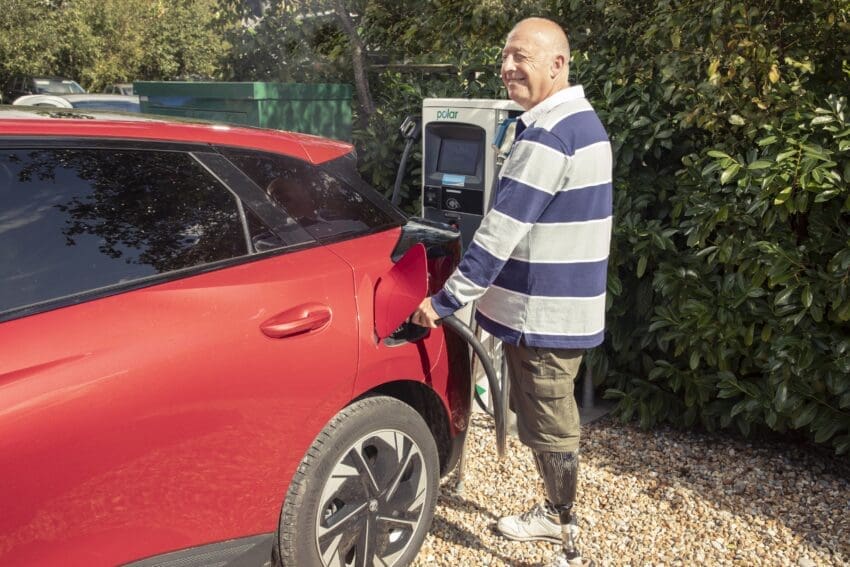
The electric vehicle revolution is influencing far more than the cars people choose to drive.
Across many of the world’s fastest-changing cities, it is beginning to shape residential design, infrastructure investment and, increasingly, the long-term attractiveness of property itself.
Developers are responding by building homes that are designed not only for today’s residents but for the way people are expected to live over the next decade.
Istanbul is becoming one of the more interesting examples of that transition.
While international attention often focuses on Turkey’s strategic location, growing economy and property market, another story is unfolding beneath the surface. Large-scale urban regeneration, expanding transport infrastructure and the construction of modern residential communities are increasingly being accompanied by features that would have been considered specialist only a few years ago: electric vehicle charging, smart-home technology, energy-efficient construction and integrated digital building management.
Individually, none of these features determines whether a property represents a good investment.
Collectively, they may influence which developments remain attractive as buyer expectations continue to evolve.
Cities are competing on infrastructure, not simply location
Property investors have traditionally focused on familiar measures of value.
Location.
Rental demand.
Capital appreciation.
Construction quality.
Those factors remain fundamental.
However, the definition of “quality” is gradually expanding.
Modern buyers increasingly expect residential developments to support changing lifestyles rather than simply provide accommodation. Fast broadband, energy-efficient construction, secure parking, smart-home systems and electric vehicle charging are moving from premium extras towards mainstream expectations in many international markets.
Developments designed around these changing requirements are often better positioned for long-term competitiveness than buildings requiring expensive retrofitting only a few years after completion.
That trend is particularly relevant in Istanbul, where extensive regeneration is replacing ageing residential stock with modern mixed-use developments designed around future living rather than past standards.
Electric mobility is becoming part of residential planning
Apartment living creates challenges that detached housing often avoids.
Installing private charging infrastructure becomes more complex where parking is shared, electrical capacity is limited or ownership arrangements involve multiple residents.
Developers constructing new projects have an advantage.
Rather than adapting existing buildings, they can incorporate charging infrastructure during the design stage, allowing parking layouts, electrical systems and future expansion to be planned from the outset.
For residents, that creates greater convenience.
For investors, it may create longer-term appeal.
An apartment that supports evolving transport habits could become more attractive than an otherwise similar property requiring substantial upgrades before residents can charge vehicles at home.
The charging point itself is only part of the equation.
Buildings incorporating energy-efficient systems, intelligent lighting, modern insulation and integrated technology are increasingly viewed as developments designed for future ownership rather than simply current demand.
For anyone considering a wider relocation, Advice for Expats’ practical guide to living in Turkey provides broader guidance on housing, taxation, healthcare, visas and planning a successful move.
Transport connectivity still drives value
Electric vehicles do not replace the importance of location.
They reinforce it.
The strongest residential districts continue to combine excellent transport links with employment, education, healthcare and commercial activity.
Residents increasingly expect flexibility.
A journey might involve driving an electric vehicle one day, using the metro the next and walking to local services whenever possible.
Neighbourhoods capable of supporting multiple transport options generally remain more resilient than locations dependent on a single method of travel.
That is one reason regeneration continues attracting attention from long-term investors.
Improved metro connections, upgraded roads and expanding commercial districts change how residents use a city. Modern developments constructed alongside those improvements often benefit from increasing demand as accessibility improves.
For investors researching buying property in Turkey, evaluating transport infrastructure alongside developer quality and legal due diligence frequently produces better long-term outcomes than concentrating solely on entry price.
Smart developments still require disciplined investment decisions
Technology should never replace due diligence.
An EV charging point does not compensate for weak construction quality.
Nor does a smart-home system overcome poor transport links, oversupply or limited tenant demand.
Experienced investors continue asking the same fundamental questions.
Who is likely to rent the property?
Will domestic buyers still want it in ten years?
Is the surrounding district improving?
Does the developer have an established reputation?
Technology simply becomes another factor supporting those wider investment decisions rather than replacing them.
Sustainability is becoming part of property due diligence
For many years, due diligence centred on familiar issues: title deeds, planning approvals, developer reputation and construction quality.
Those questions remain essential.
However, investors are beginning to ask additional ones.
Can the building support growing EV ownership? Is the electrical infrastructure designed for future expansion? Are communal systems energy efficient? Will operating costs remain competitive as environmental standards continue to evolve?
These questions are particularly important when purchasing off-plan property.
A completed building allows buyers to inspect what already exists. Off-plan purchasers rely on specifications, contracts and the developer’s ability to deliver what has been promised.
That makes independent legal advice, careful contract review and developer due diligence just as important as assessing the apartment itself.
Technology should never replace sound investment discipline.
The strongest developments may attract stronger tenants
Rental markets evolve alongside resident expectations.
Reliable broadband, secure parking, modern communal facilities and efficient building management have already become standard expectations across many international cities.
Electric vehicle charging appears to be following the same path.
Professionals relocating for work, entrepreneurs establishing international businesses and higher-income families increasingly value developments that remove everyday inconvenience rather than adding lifestyle extras.
For landlords, that can influence occupancy rates over the longer term.
It does not guarantee higher rents.
Nor does it automatically create stronger capital appreciation.
However, where two comparable developments compete for the same tenants, infrastructure designed for changing lifestyles may gradually become an important differentiator.
This is particularly relevant in cities like Istanbul, where new residential communities are increasingly competing with older housing stock that was never designed for modern mobility or digital living.
A broader trend is supporting long-term demand
Electric mobility is only one part of Istanbul’s transformation.
Large-scale regeneration, expanding metro networks, commercial development and continuing investment in public infrastructure are collectively reshaping many parts of the city.
At the same time, Turkey’s recently introduced foreign-income tax reforms for qualifying new tax residents demonstrate that the country is seeking to attract internationally mobile entrepreneurs, investors and business owners as well as tourists and traditional overseas buyers.
Although entirely separate from property ownership, these reforms reinforce a wider picture.
Governments increasingly recognise that attracting internationally mobile professionals is about more than increasing tax receipts.
These individuals bring investment, innovation, entrepreneurship and long-term economic activity. In turn, that can strengthen demand for well-located, high-quality residential property in cities investing in modern infrastructure and sustainable urban development.
International buyers should also understand that property ownership, citizenship and tax residency are separate legal concepts.Those considering relocation may also benefit from understanding how tax planning before moving to Turkey can influence longer-term financial decisions.
Looking beyond today’s technology
Technology evolves quickly.
Buildings remain for decades.
The most successful residential developments are therefore unlikely to be those boasting the greatest number of gadgets at launch. They will be those capable of adapting as resident expectations continue to change.
That adaptability increasingly includes energy efficiency, digital connectivity, intelligent building management and infrastructure capable of supporting electric mobility as ownership continues to grow.
For investors, these factors should never replace the traditional foundations of successful property investment.
Location.
Construction quality.
Transport connectivity.
Developer reputation.
Legal due diligence.
They simply become additional indicators that a development has been designed with tomorrow’s residents in mind rather than yesterday’s.
As cities continue modernising, buyers may increasingly discover that the strongest long-term investments are not necessarily the cheapest properties available today.
They are the developments already prepared for how people are likely to live tomorrow.