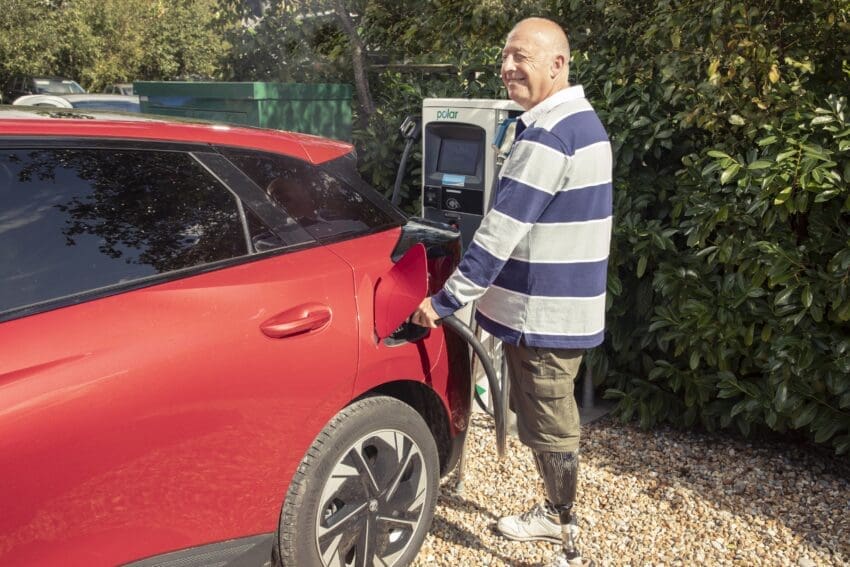
Charging can serve several functions at the same site. It may be provided as a visitor or employee amenity, operated as a paid charging service, or integrated with wider energy-management plans. The mix depends on the property’s location, electrical connection, parking patterns and operational priorities.
Casino-resort groups increasingly operate across both physical and digital channels. An online casino is a remote gambling service with a different operational model, while EV charging is a physical amenity shaped by the capacity and management of a specific property.
Sycuan Pairs Charging With Battery Storage
Sycuan Casino Resort in California provides one of the clearest examples of charging being integrated with wider energy infrastructure.
According to 2022 EV-industry coverage of Sycuan’s project, the resort planned 40 Level 2 charge points, five DC fast chargers and a 250 kW/560 kWh battery energy-storage system. The development was designed to pair charging with storage, which can help manage charging-related electricity demand and peak loads depending on how the system is operated and the local utility tariff.
The announcement does not establish a measured reduction in electricity costs, but the design illustrates an important issue for large charging sites: several vehicles charging simultaneously can place substantial new demand on transformers, switchgear and grid connections.
Resorts Are Taking Different Approaches
Casino-resort charging projects do not follow one model. In 2014, MGM Resorts announced 27 EV charge points across nine Las Vegas resorts, its corporate offices and Circus Circus Reno, describing them as facilities for guests and employees.
In 2021, Station Casinos announced 30 Level 2 charge points across six Las Vegas properties, with capacity to serve up to 60 vehicles. The company said charging would be available free to guests through ChargePoint.
In 2021, the US Chamber of Commerce described Caesars’ EV infrastructure as including 110 charging locations across 18 US destinations as of July 2019. It also highlighted a Tesla charging and energy site on the Las Vegas Strip that incorporated V3 Superchargers, solar canopies and battery storage.
At other destination properties, charging may be treated as a guest amenity, a paid service, or part of a broader site-energy strategy. The appropriate model depends on parking use, electrical capacity, local tariffs and the type of charge point installed.
Public resort announcements usually describe installed capacity and sustainability objectives more readily than detailed financial outcomes, so performance should be assessed site by site.
Charging as a Destination Amenity
For a resort operator, EV charging can be part of the wider parking and hospitality offer. At some properties, it may be available to visitors and employees as a service; elsewhere, it may operate through an energy-based or session-based tariff.
The financial model varies by site. Electricity prices, charger utilisation, network fees, maintenance requirements and the available capacity of the local grid connection all influence the operating result.
At larger sites, the value of charging may also extend beyond the charger itself. Battery storage, managed charging and load balancing can help operators plan around periods of high electricity demand, particularly where multiple high-power chargers share the same connection.
Installation Costs Go Beyond the Charger
The hardware is only one part of a charging project.
A large installation can also require cabling, switchgear, transformers, foundations, trenching, signage, networking, software, permits and utility work. Existing electrical capacity is often decisive: one property may connect Level 2 chargers with limited upgrades, while another may need major distribution work.
DC fast charging increases these demands because individual units can draw substantially more power. Battery storage and load-management systems can help manage demand on a site’s electrical connection, although they add their own capital and operating costs.
Construction also has to fit around an operating property. Charger bays, underground cabling, pedestrian routes and existing vehicle movements all have to be considered when adapting a busy car park
UK Rules Add Another Layer
In the UK, the Public Charge Point Regulations 2023 place requirements on relevant public charging infrastructure covering pricing information, payment methods, data, customer support and reliability. Rapid public charge points rated at 50 kW or above are subject to a 99% annual network-average reliability standard where the requirement applies.
For destination operators, that means charging is not a one-off construction project. Ongoing monitoring, repair, customer support and clear payment information are all part of the service
From Parking Facility to Energy Service
Casino-resort projects show that destination charging can range from a small guest-facing amenity to a wider infrastructure programme incorporating DC fast charging, battery storage and site energy management.
The appropriate model depends on the property. A hotel-style resort with long-stay parking may prioritise lower-power charging, while a venue serving through-travellers may need faster equipment and more complex grid planning.
The common thread is operational integration. For a destination property, EV charging involves parking design, electrical capacity, customer support, maintenance and payment systems as much as it involves the charger itself.