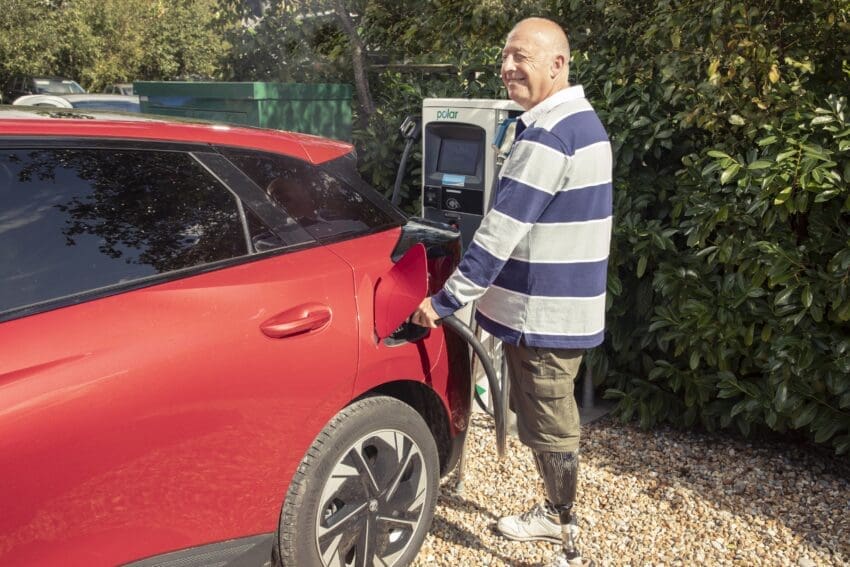
There is a scenario that catches prescribed patients out more often than any other, and electric vehicle drivers encounter it more than most: sitting in a stationary car, engine off, waiting for a charge to complete.
Nothing about that feels like driving. Under UK road traffic law, it can still put you in legal difficulty, and the reason has nothing to do with how the car is powered.
This article is general information rather than legal or medical advice. Anyone with a prescription should follow their prescriber’s instructions and take proper advice about their own circumstances.
A Prescription Does Not Change the Blood Limit
Since November 2018 it has been lawful for specialist doctors to prescribe cannabis-based products for medicinal use, and patients holding a valid prescription possess and use their medicine legally. That legality does not extend automatically to the road.
The Drug Driving (Specified Limits) (England and Wales) Regulations 2014 set blood concentration limits for seventeen controlled substances. THC sits in the group treated on a near zero-tolerance basis, with a limit of two micrograms per litre of blood. That threshold is low enough that a patient taking medical cannabis exactly as directed may well exceed it while feeling entirely unimpaired.
Exceeding the limit is itself the offence. Penalties include a minimum twelve-month driving ban, an unlimited fine and a criminal record.
Where the Framework Comes From
It helps to understand what these medicines legally are, because the driving rules follow from that classification.
NHS England’s guidance on cannabis-based products for medicinal use explains that these products must be supplied under the prescription or direction of a clinician on the General Medical Council’s Specialist Register. A GP cannot initiate treatment, and prescriptions issued outside the UK are not valid here, since Schedule 2 controlled drugs and unlicensed medicines cannot be supplied on a prescription from an EEA practitioner.
The practical consequence for drivers is that your legal position rests on a properly issued UK specialist prescription and on following its instructions. Both parts matter.
The Statutory Defence, and What It Does Not Cover
Section 5A(3) of the Road Traffic Act 1988 provides a statutory medical defence to the threshold offence. To rely on it you generally need to show the medicine was lawfully prescribed for a medical purpose, that you took it in accordance with the prescriber’s and manufacturer’s instructions, and that your possession was lawful.
Three limitations are worth understanding clearly.
The defence applies at the blood test stage, not at the roadside. A positive swab can still lead to arrest and a station blood test regardless of your prescription.
The burden of establishing the defence falls on you, which is why documentation matters.
And it offers no protection against Section 4, the separate offence of driving while impaired. If your driving is actually affected, the prescription is irrelevant to that charge.
Supplementing a prescription with illicit cannabis removes the defence entirely, and forensic analysis can often distinguish pharmaceutical product from illicit material.
Route of Administration Is Part of the Instructions
This is the detail most likely to catch someone out, because the defence depends on taking the medicine as directed.
Administration of cannabis-based products for medicinal use by smoking is not permitted, a position the government set out in September 2018. Prescribed flower is dispensed for vaporisation rather than combustion, and the distinction is legal as well as clinical. Anyone unclear on where the line falls will find the detail in explanations of can you smoke medical cannabis?, as this is a question with a straightforward answer, and it is worth knowing before an interaction with police rather than during one.
If you use your medicine by a method your prescriber did not direct, you have stepped outside the conditions the statutory defence depends on.
The Charge Point Problem
Here is where EV ownership genuinely changes the picture, and it is not obvious.
A rapid charge takes twenty to forty minutes. A slower public charger can take hours. Drivers routinely spend that time in the vehicle, and many treat it as downtime.
For a prescribed patient, taking medication during that window is an entirely reasonable thing to do and creates a specific legal exposure. You are in a vehicle, on a public road or in a public car park, with the keys in your possession.
What Being “In Charge” Means
Section 4 of the Road Traffic Act 1988 covers not only driving while unfit but being in charge of a vehicle while unfit through drink or drugs. Being in charge does not require the engine to be running or the vehicle to move.
Courts look at the surrounding circumstances: where you were sitting, whether you held the keys, whether there was a realistic prospect of you driving. There is a defence available if you can show there was no likelihood of you driving while remaining unfit, but establishing that is a factual argument you would rather not have to make at a charge point on a motorway services forecourt.
The safe approach is straightforward. If you are going to take medication during a charging session, do it somewhere other than the driver’s seat, and be able to demonstrate you had no intention of driving until the effects had passed.
Practical Steps for Prescribed Drivers
A few habits reduce risk substantially.
Carry documentary evidence of your prescription whenever you drive, including the dispensing label and prescriber details. Officers will not necessarily know what a CBPM prescription looks like.
Ask your prescriber for explicit written guidance on the interval to leave between taking your medicine and driving, and follow it. Vague personal judgment is not the same as instructions.
Never combine prescribed cannabis with alcohol before driving, and be aware that other prescribed medicines can compound sedation.
And notify the DVLA if your condition or your medication affects your ability to drive safely, which is a separate obligation from anything discussed above.
If You Are Stopped
Say that you hold a prescription and produce the documentation. Do not refuse a roadside test, since failure to provide a specimen is itself an offence carrying serious penalties.
Expect the process to continue regardless. A positive swab leads to a station blood test, and the medical defence is assessed on the evidence afterwards rather than resolved at the roadside.
Get legal advice early if you are charged. The defence is real and it is fact-specific, which means the quality of the evidence you can produce about your prescription and your adherence to it does much of the work.