


BYD’s latest decision is an all too familiar headache for European brands
Chinese auto giant’s latest plan to build ‘in Europe, for Europe’ is poised to force the hand of some of the continent’s biggest carmakers, including the Volkswagen Group and Stellantis.
It was going so well until recently, wasn’t it? After years of lagging behind Chinese manufacturers with their oft-superior batteries and tech, European EV manufacturers finally looked ready to take on the best from the Middle Kingdom.
With their 800-volt architecture, the new BMW i3 and iX3 can onboard up to 249 miles of range in just 10 minutes. For comparison, that’s the time it takes to fuel your car, pay for your petrol, and have a wee at the services. Volvo, meanwhile, went one further.

Just recently, everyone’s favourite Swedish carmaker claimed the title for Europe’s longest-range electric car courtesy of its rather lovely EX60 SUV, which can manage up to 503 miles on a single charge.
And in recent days we’ve seen a raft of new model announcements promising small affordable European cars, from European brands, for European tastes.
Then China’s big boys threw a spanner in the works.
BYD, who went from an ‘unheard of’ just a handful years ago to outselling Tesla in Europe in 2025, announced it will begin building a line of ‘Euro-spec’ EVs at its Szeged plant in Hungary. That’s not planned for the end of the decade, either. Manufacturing will commence this July with the Dolphin G plug-in hybrid.
‘Why does this matter, George?’ I hear you ask. Well, it’s a sign of serious intent by BYD, and for the most part, the Chinese EV industry.
By producing electric cars geared towards European tastes (as Kia has done to great effect with the EV4, and will do with future models), it shows that China’s carmakers want to be taken seriously.

While ultra fast-charging batteries are great, in-car gimmickry such as rotating screens, karaoke systems, and overly-intrusive ADAS simply won’t fly with European audiences. And good, too – it’s all a bit annoying.
To paraphrase Christian Horner, then, “fix your car, and we can go from here”. Given how rapidly the Chinese automotive industry has skyrocketed over the last few years, I very much believe they will, especially when it comes to screens and ease of use.
The tech is there. You know this. I know this. It’s now just a matter of tweaking the UX.
China’s march across the European EV landscape doesn’t stop at BYD and its associated premium brands, Denza and Yangwang. With its upcoming 7GT wagon, Geely-owned Zeekr has adopted a ‘Chinese car with a European soul’ approach to things.

The 7 GT is also an incredibly handsome and forward-thinking piece of kit. Not a surprise, really, given Geely holds Polestar, Volvo, and Lotus as just a few of the manufacturers within its multi-brand roster.
And there’s more. Last year, Xpeng – also known as ‘China’s Tesla’ – recorded a 127% year-on-year sales increase in Norway, the world’s leading market for electric cars, with a 97% EV adoption rate.
For reference, Xpeng didn’t exist until 2014.
If you’ve been keeping an eye on the EV Powered website and reading our magazine over the last month or so, you will have seen that Dr. Andy Palmer, a man revered as the ‘grey cardinal of the EV world’, said that the bulk of Europe’s EV makers will have to go into joint-venture partnerships with Chinese companies to shore up their competitiveness and ultimately, their survival.
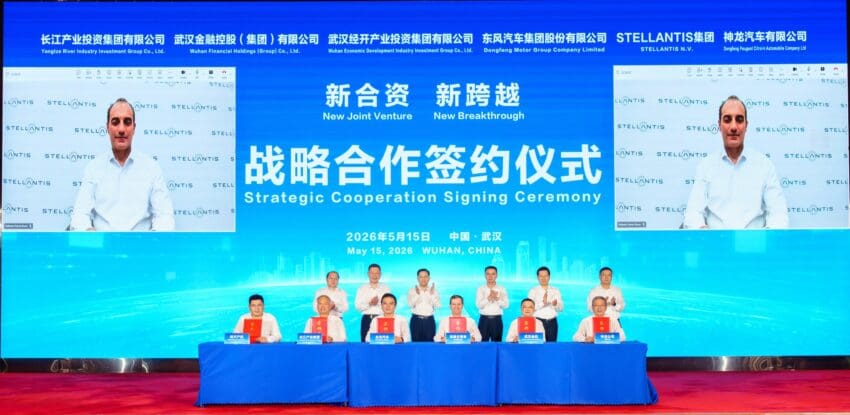
And that’s precisely what’s happening. Stellantis has just confirmed that a raft of upcoming Jeep and Peugeot models will be built by Dongfeng in China, and that it will build and market Dongfeng’s Voyah cars in Europe. Meanwhile, Volkswagen is open to importing software-defined, VW China models co-developed with Xpeng to bolster sales.

When asked last week at a joint-VW/Xpeng press conference if the Chinese manufacturer would be open to taking over any of VW’s plants in Germany, the latter’s MD for northeast Europe, Elvis Cheng, described the existing sites as “a little bit old”.
Ouch.
Yet again, it’s down to Europe to catch up.