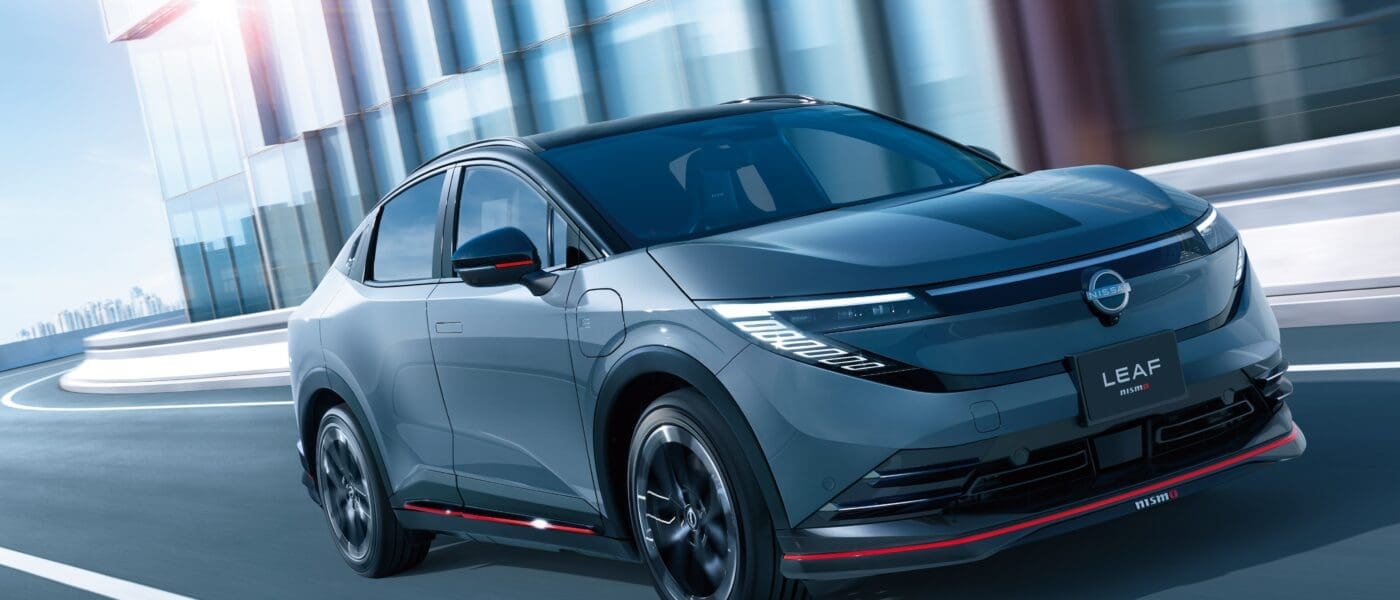
Nissan has taken the wraps off a new Nissan Leaf Nismo, but unfortunately it’s only available in Japan… at least for now.
At the launch of the latest third-generation Leaf in Copenhagen last year, Nissan’s European product lead, Partha Bhagawati, told EV Powered that the Japanese brand’s motorsport arm was “studying customer demand” to decide whether it should make another hot version of its groundbreaking EV.
Before the arrival of the new car, the second-gen Leaf had received the Nismo treatment twice. In 2018, it launched the Leaf Nismo with a race-inspired body kit and various technical upgrades. Fast forward to 2020, and the twin-motor, track-ready Nismo Leaf RC was unveiled.

This latest Nismo model aims to bring “race-bred performance with everyday drivability,” ensuring that the Leaf doesn’t lose any of its easy-going, easy-to-live-with character.
However, dedicated lowering springs, fresh stabilisers, and new bushes seek to turn the Leaf into an “agile intelligent crossover”. New shock absorbers borrowed from the X-Trail Nismo reduce body roll thanks to clever tech that opens and closes the spring valves under cornering.
Nismo has also transferred some of its Formula E title-winning nous across to the Leaf’s drive. The braking regeneration system has been tweaked to return a “more engaging and rewarding driving experience”.
As with the standard Leaf, the Nismo gets three drive modes: Standard, Eco, and Sport. However, Sport has been renamed Nismo, which introduces an undisclosed level of tuning to the front-mounted electric motor.
When speculating last year about any racy Nissan Leaf in the future, Bhagawati explained to us that “when you add performance to any EV, it comes at the cost of range. If we were to do anything, we would need to maintain that balance.”
This means that the new Leaf Nismo retains the standard car’s choice of two batteries and power outputs: A 53kWh pack paired with a 174bhp electric motor, or a 75kWh unit generating 215bhp. With 0-62mph times of 8.6 seconds and 7.6s respectively, don’t expect the Leaf Nismo to be challenging the likes of the Vauxhall Mokka GSE and the MG4 X-Power away from the lights anytime soon.


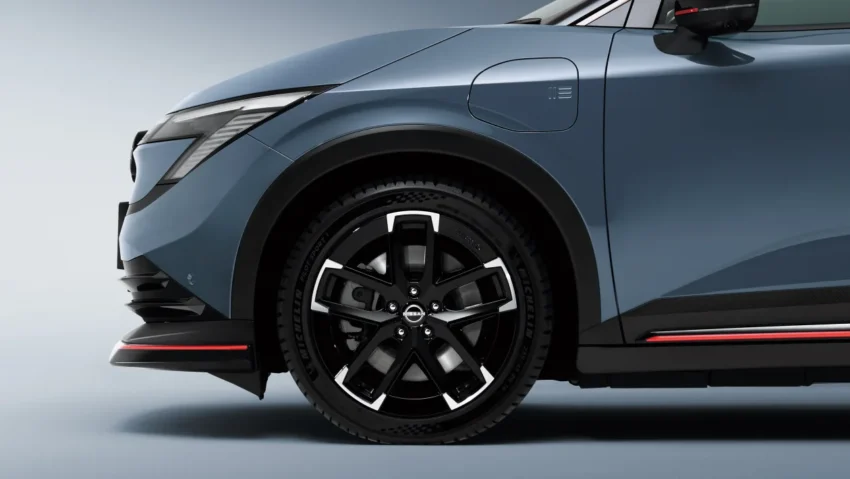
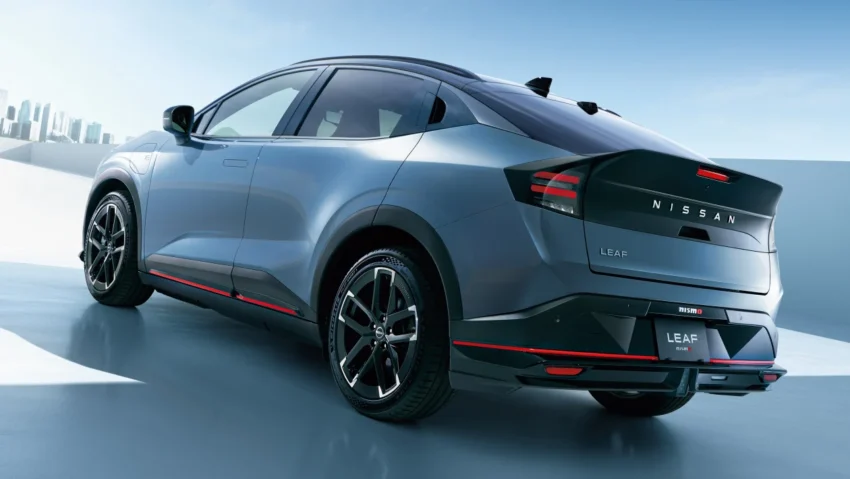
The Nissan Leaf Nismo’s exterior is where the biggest changes have taken place. The friendly design of the regular Leaf has been fitted with a reshaped front bumper with an extended lower lip, side skirts, and a Nismo-branded rear bumper, all of which are offset with red detailing lower down.
Meanwhile, a ducktail spoiler sits atop the bootlid and the retro 300ZX-inspired tail-lights thankfully remain unchanged.
The new Nissan Leaf Nismo rides on 19-inch wheels supplied by Enkei, a Japanese firm specialising in lightweight alloys, while the surrounding tyres are grippy Michelin Pilot Sport 5s. The available paint finishes are grey, white, graphite, and black.
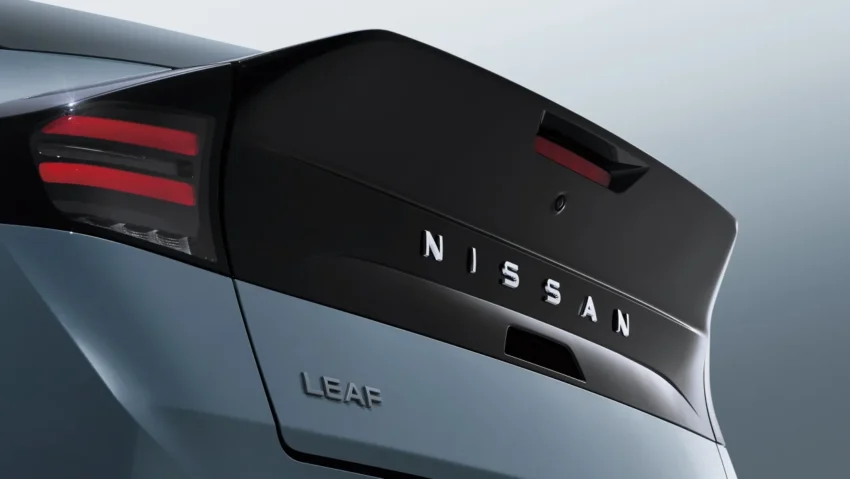
Despite the aggressive new look, Nissan claims that the body-kit generates additional downforce without increasing aerodynamic drag. This suggests that the Nismo’s range will remain comparable to the standard car’s, which can manage 280 miles on a single charge when fitted with the 52kWh battery, and 375 miles with the 75kwh pack.
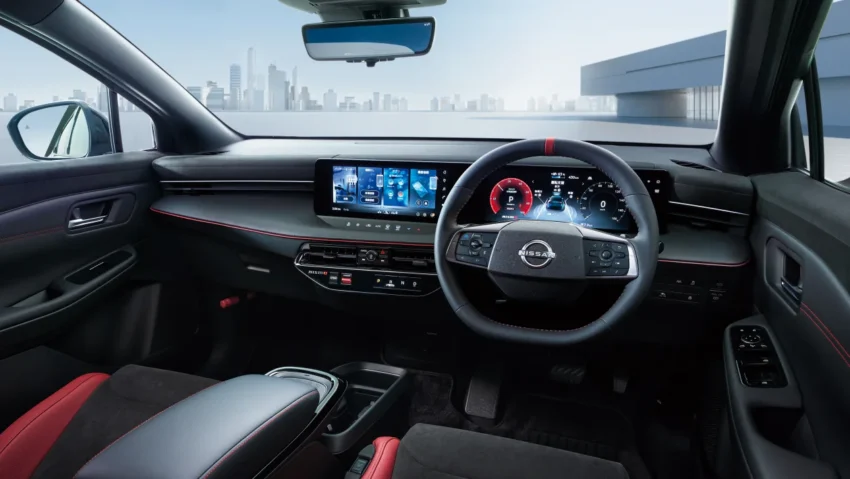
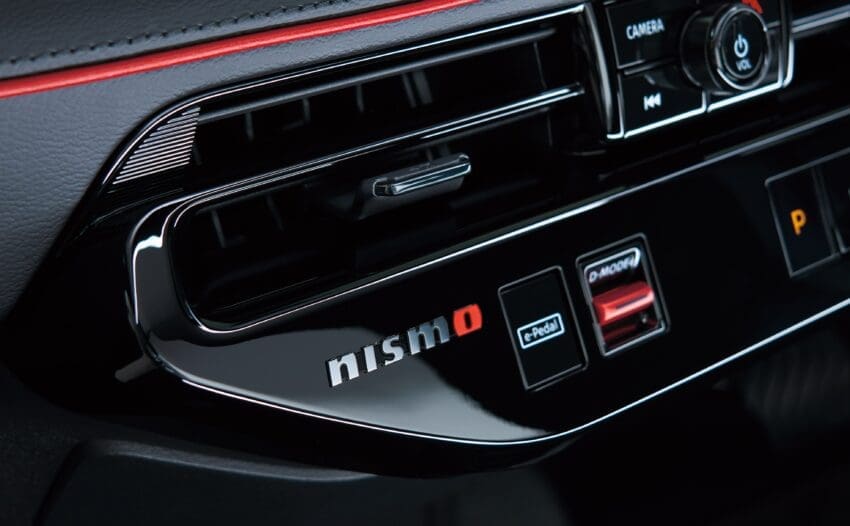
Inside, the Leaf’s simple-to-use dashboard and layout remains, but the cabin has received a couple of tweaks in keeping with Nismo’s heritage. The red accents continue throughout, and the optional two-tone Recaro bucket seats offer improved lateral support. As a reminder of this hot Leaf’s pedigree, the dash is finished with a Nismo badge on the centre console.
While the Leaf’s regular two-spoke steering wheel remains, the Nismo’s is finished in a synthetic Nappa-style lever with a red 12 o’clock marker.

The Nissan Leaf Nismo is on sale in Japan for 6,601,100 Yen (around £30,000) for the 52kWh car, and increases to 7,227,000 Yen (approximately £33,000) for the 75kWh car with the optional Recaros.
While the Leaf Nismo remains a JDM exclusive for now, there is hope for Nismo fans that it’ll be available outside of its domestic market sooner rather than later. Nissan aims to increase its Nismo line-up to 10 models during the coming years, and by the end of 2028, it is looking to boost Nismo sales from 100,000 to 150,000 cars annually.