Leading car makers privately lobbied government ministers to allow pure petrol and diesel cars to remain on sale in the UK beyond 2035.
BMW, Ford, Nissan and Toyota, along with component manufacturer Bosch wrote to the Secretaries of State for Scotland, Wales and Northern Ireland in April calling for a rapid review of the ZEV mandate and an “open technology” approach to sales from 2035.
Currently, sales of any combustion-engined car or light van are due to be banned from 2035. In the letter, the brands suggest “highly efficient” pure internal combustion engine (ICE) models should be allowed to remain on sale alongside EVs and hybrids.
The letter, obtained by the Fast Charge newsletter, also calls for an urgent review of the ZEV mandate and an adjustment of its trajectory, describing its current targets as “unsustainable” and “not fit for purpose”.
The companies want the rules to be changed to allow a multi-pathway approach beyond 2035 to “provide consumer access to a range of more affordable low and zero emissions vehicles”. This, they suggest should include “highly efficient ICE, hybrids, plug-in hybrids, range extenders and combustion engines when utilising green steel and sustainable fuels)”.
They argue that this approach is in line with proposals under consideration in the EU, which will require 90% of new cars and LCVs to be zero-emission from 2035. However, such a move flies in the face of government ambitions for all new car sales to be zero emission vehicles by 2035.
The manufacturers, which employ 30,000 people in the UK, also urge the Government to bring the UK’s CO2 “regional framework” more closely in line with Europe’s, arguing that further divergence creates added challenges for the automotive sector.

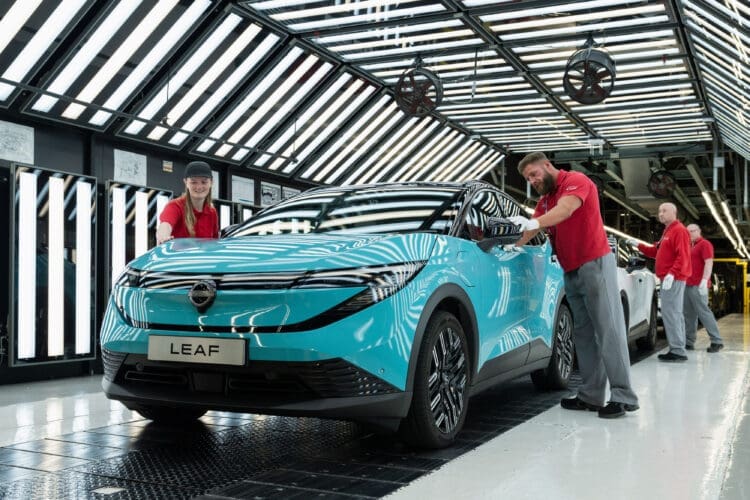
The Government is already under intense pressure to revise the ZEV mandate targets, which will require 80% of all new cars and 70% of vans to be zero emission by 2030, and 100% by 2035.
In the letter, senior figures for the five companies claim the 2030 target is “significantly higher” than the EU’s CO2 regulatory framework. They warn that it doesn’t reflect real customer demand and brings “significant” compliance costs in the form of fines or CO2 trading.
The Department for Transport, however, has said it remains committed to phasing out sales of new non-zero-emissions cars and vans by 2035 and would review the mandate “by 2027”.

‘Demand will shape the transition’
A spokesperson for BMW said the brand was “heavily invested” in EVs and in 2025 exceeded the ZEV mandate target, with a 28.1% EV sales mix.
However, they added: “We have concerns about the trajectory of the ZEV mandate as the sales requirements for 2026 and beyond do not reflect current levels of consumer demand for battery electric vehicles in the UK, despite significant investment from manufacturers and government.
“Ultimately it is customer demand that will shape the pace and success of the transition to electromobility, and we maintain dialogue with government on this matter.”
Toyota has long championed a multi-powertrain pathway for emissions reduction and a spokesperson told EV Powered the brand “views carbon as the enemy”. It already has 10 pure EVs across its passenger and van line-up and all but one of its passenger cars features fully electric, plug-in or full hybrid technology.
The spokesperson added: “While consumer uptake of electrified vehicles continues to grow, the pace of adoption has yet to fully match the pace of regulatory ambition.
“It is important that policy frameworks support continued progress towards net zero while reflecting consumer needs and aligning, where appropriate, with broader European regulatory frameworks. We believe policymakers should remain open-minded about the range of low- and zero-emission technologies, including renewable fuels, that can help reduce carbon emissions and accelerate the transition.”
Toyota, BMW and Bosch are currently trialling 100% renewable fuel which they believe could help decarbonise combustion vehicle emissions.
Ford told EV Powered its commitment to the future remained unchanged, with five new European-built electrified models in the pipeline and a belief in a zero-emissions future. However, its CEO Lisa Brankin said that the mandate and market “have drifted apart”. She added: “The EU has recalibrated its targets to match the market. It’s time the UK reviewed the ZEV Mandate.”
EV Powered has approached Nissan for comment.