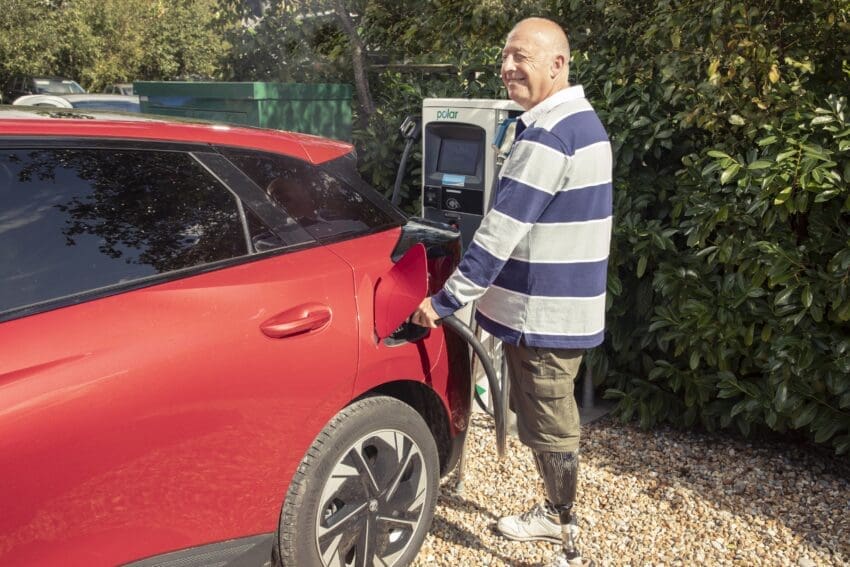
According to research from the AA, around 41 percent of drivers considering an electric vehicle cite battery range as one of the biggest barriers to making the switch.
It is an understandable concern, particularly for those accustomed to filling up in just a few minutes. Yet ask experienced EV owners what has made the biggest difference to everyday driving, and many will give a different answer: charging at home.
A dedicated home charger fundamentally changes the ownership experience. Instead of making separate trips to refuel or planning journeys around public charging points, drivers simply plug in overnight and begin each day with a replenished battery. Industry surveys consistently show that home charging is both the most convenient and the most economical way to run an EV for households with off-street parking.
Convenience that quickly becomes routine
One of the biggest misconceptions about electric vehicles is that charging requires a significant amount of extra time. The reality is that most home charging takes place while the owner is asleep. Rather than waiting beside a rapid charger, drivers simply connect the car before going to bed and wake up with enough range for their normal daily journeys. Modern wallboxes also allow charging to be scheduled automatically during cheaper overnight electricity tariffs, reducing running costs even further. For drivers who cover predictable daily mileages, this routine often proves more convenient than regular visits to a petrol station.
Technically, many EVs can be charged from a standard three-pin socket. However, this is generally regarded as a temporary or occasional solution. Dedicated wallboxes charge more quickly, incorporate additional safety features and often include smart functionality such as remote monitoring, scheduled charging and energy consumption reports. They are specifically designed for repeated long-duration charging, making them a better long-term solution for most households.
Smart charging is the next step
Home charging is becoming smarter as well as faster. Many chargers can now communicate with energy suppliers, allowing charging sessions to begin automatically when electricity prices are lowest. Others integrate with solar panels, enabling homeowners to maximise the use of renewable energy generated during the day.
Researchers are also exploring increasingly sophisticated forms of managed charging, where vehicles automatically optimise charging times to reduce costs while easing pressure on the electricity grid. Studies suggest there is considerable potential to lower both household energy bills and carbon emissions simply through smarter charging schedules.
The role of public charging
None of this diminishes the importance of public charging infrastructure. Rapid chargers remain essential for longer journeys and for drivers without access to off-street parking. The UK’s public charging network continues to expand, although rollout remains uneven in different parts of the country.
The point is that the relationship between home and public charging is becoming complementary. Most routine charging happens at home, while public chargers provide flexibility whenever longer journeys demand it. This combination allows many owners to enjoy the convenience of home charging without sacrificing the ability to travel further afield.
Future-proofing your home
Installing a home charger is increasingly viewed as part of preparing a property for the future. As EV ownership continues to grow, features such as dedicated charging points, smart energy management and compatibility with time-of-use tariffs are likely to become more desirable for prospective buyers.
Manufacturers are also developing bidirectional charging technologies that could eventually allow vehicles to supply electricity back to homes or even support the wider electricity grid during periods of high demand. While still emerging, these developments illustrate how the humble home charger may evolve into a central component of household energy management.
Making the transition easier
For most drivers, range anxiety fades surprisingly quickly after purchasing an electric vehicle. What replaces it is a new routine that feels refreshingly straightforward: arrive home, plug in and leave the car to recharge while you get on with your evening.
That convenience explains why experienced EV owners often describe home charging as one of the biggest advantages of switching away from petrol or diesel. It removes much of the planning associated with refuelling and transforms charging into something that happens quietly in the background.
As battery technology improves and smart charging continues to evolve, the home charger is likely to become every bit as important to EV ownership as the vehicle itself, turning the garage or driveway into the most convenient filling station most drivers will ever use.