EV Powered takes an early drive in the Toyota C-HR+ to see if this confusingly named EV makes sense where it matters
If you’re a bit confused by the name of our latest test car don’t worry, it is all a little confusing. Toyota said earlier this year that it’s trying to simplify and go back to familiar names for its upcoming EVs. But the Toyota C-HR+isn’t really helping.
It carries the C-HR name that’s been around since 2016 and is still in use. Yet the new car is based on a totally different platform with a totally different powertrain. It is also substantially bigger than the existing C-HR, so at least the + makes sense.
In simple terms, the C-HR+ slots in above the existing hybrid C-HR and fills the gap in Toyota’s EV line-up between the Urban Cruiser and the bZ4X.
Toyota describes it as a C-segment SUV but these classifications are so muddied now that they are almost useless. What you need to know is that it’s slightly longer than a Renault Scenic or Skoda Elroq but smaller than a Skoda Enyaq or Kia EV6.
And we’ve been driving pre-production prototypes to get an early feel for how Toyota’s latest EV stacks up against those rivals.
Design, interior and technology
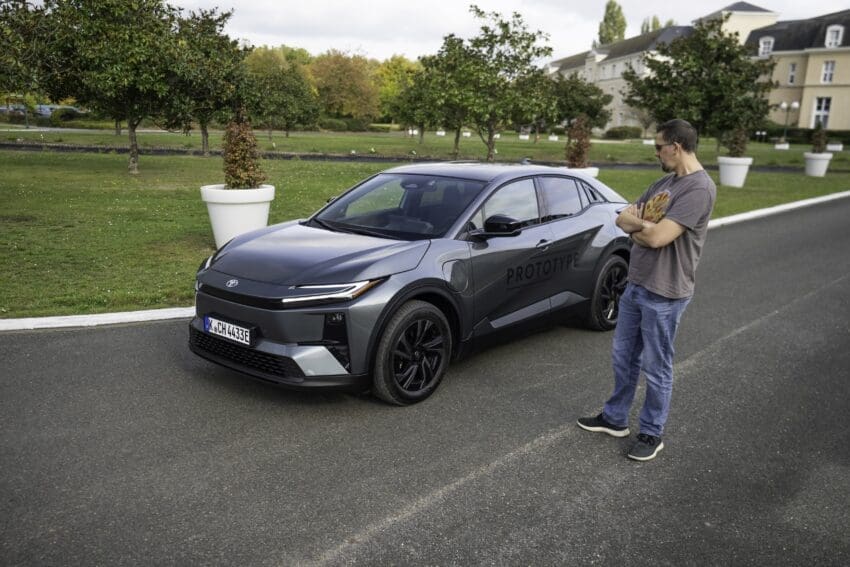
In raw numbers, the C-HR+ is 4.52m long and 1.87m wide – that’s 13cm longer and 10cm wider than the hybrid C-HR and 17cm shorter but 1cm wider than the bZ4X. In the metal and parked side-by-side, the C-HR+ dwarfs its namesake, but it’s hard to discern much difference between it and the current bZ4X.
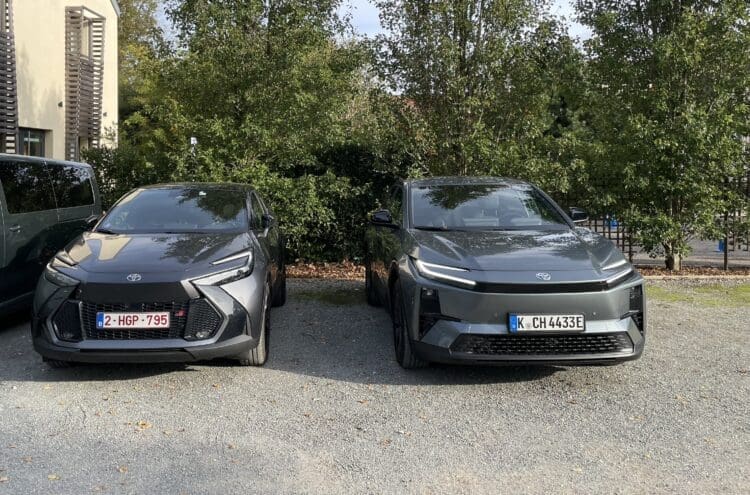
Design-wise, the C-HR+ clearly borrows from both the bZ4X and C-HR. The slim headlights and bonnet line could have been lifted wholesale from the bZ4X. But the angled sculpting on the doors and the way the beltline rises to meet the sloping roof bring common ground with its smaller sibling. While it doesn’t look much smaller than the bZ4X, styling touches around the lights, bumpers and doors give the C-HR+ a neater, tighter, more athletic look.
Inside, the C-HR+’s cabin appears to have been lifted directly from the bZ4X. On the plus side, that means a logical user-friendly layout with rock-solid build quality. There’s a big easy-to-use 14-inch touchscreen mounted high on the dash, with sensible physical controls for climate control and other frequently used functions. There are also twin wireless charging pads which, like the large screen, are standard on all models.
In the negative column, there’s not much creativity and everything is made from dull grey or black materials that create a dreary ambience. The gloominess is alleviated a bit by the panoramic roof in top-spec cars but it doesn’t change the fact it’s an almost entirely monochrome finish.
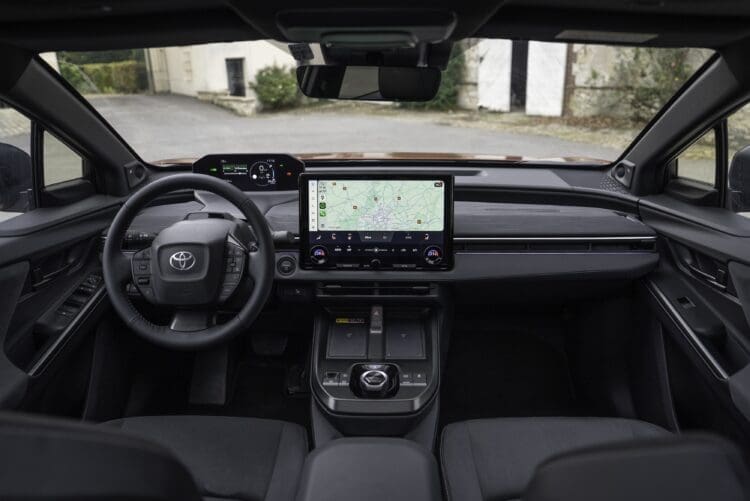
Toyota claims the C-HR+ offers “space from the class above” but it all depends on how you break down the classes. The boot’s a relatively small 416 litres – rivals offer between 20 and 100 litres more – but there is decent passenger space. Four average sized adults will fit comfortably thanks to good leg and headroom, and taller drivers should manage to get comfortable easily. However, the floor in the rear feels high relative to the seat cushion giving an odd knees-up seating position. And, like the smaller C-HR, the rear seats feel quite enclosed due to the shape of the rear glass and the gloomy interior colour palette.
Battery, motor and performance
When the C-HR+ goes on sale it will be offered with two battery and motor options.
Entry-level cars get a 54kWh (usable) battery with a 165bhp motor powering the front wheels and returning up to 283 miles of range.
Higher-tier grades get a 77kWh battery paired with a 221bhp motor. Preliminary WLTP tests put that version’s range at up to 378 miles – that is seriously impressive, beating the Elroq, Enyaq and matching the Scenic. Charging tops out at 150kW, which is on a par with the Renault but behind cars the Skodas.
As with Toyota’s larger EV model, the 221bhp motor feels powerful enough and probably a better choice than the 165bhp option. A 0-62mph time of 7.3 seconds won’t set the world alight but it’s quick enough for day-to-day motoring and acceleration is delivered smoothly and evenly. To match that there’s a similarly well-calibrated braking regeneration with four well-balanced modes. These range for effectively off to near one-pedal operation and can be adjusted quickly via big steering column paddles.

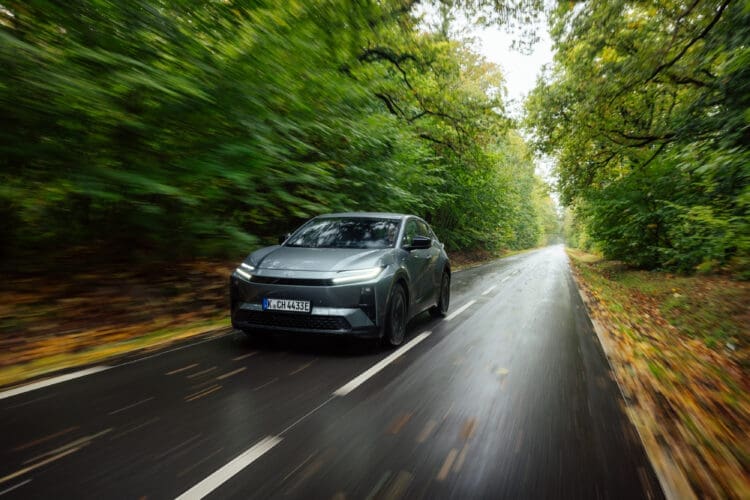
There is a more powerful all-wheel-drive variant with 338bhp and a 0-62mph time of 5.2 seconds, but the UK isn’t getting that. That’s not a problem, though, because based on back-to-back drives the front-wheel-drive one is the nicer feeling on the road.
It’s not some dynamic handling god but it feels lighter and neater from the driver’s seat. The steering has enough weight to give confidence in the car, although enthusiastic cornering reveals a generous scoop of body roll.
One of the most appealing parts of the hybrid C-HR is that it’s actually quite fun to drive. Toyota would have you believe the EV C-HR+ is in a similar vein but it’s not really. It’s a little too heavy and ponderous to meet the engineers’ claims of an exciting driving experience.
That’s mostly forgivable because the ride, especially in the FWD car, is impressive – far more of a priority in a family SUV than envelope-pushing handling. Pleasingly, there’s no unconvincing “Sport” mode, just Eco and Snow settings to conserve energy or manage torque in slippery conditions.
Price and specification
Toyota has been vague on pricing so far but indications are that the C-HR+ will sit closer to the hybrid C-HR in price than the bZ4X. We’d hazard a guess of around £34,000 for the most basic model, rising to around £40,000 for the top-spec version.
That could put the bZ4X in an awkward position. The C-HR+ offers a bigger battery, longer range, broadly similar space and the same tech and safety kit, yet will potentially cost thousands of pounds less.
It’s too early to say whether the C-HR+ might qualify for the Electric Car Grant but it seems likely. The bZ4X with which it shares hardware and a production line does get a £1,500 discount so, in theory, so should the C-HR+ when it goes on sale.
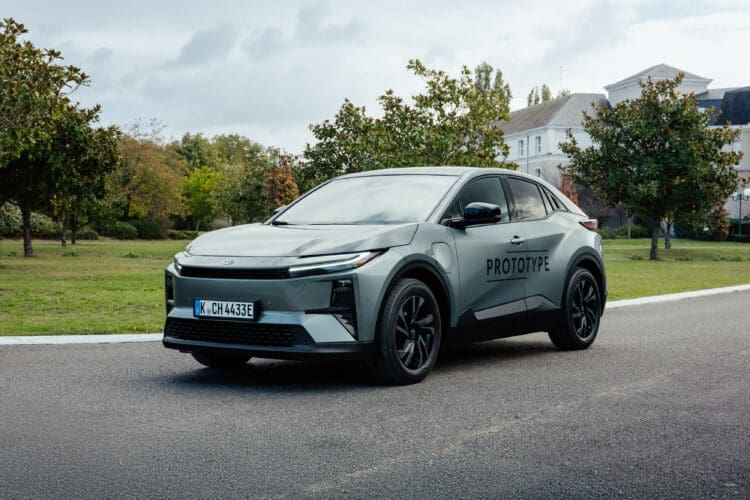
When it does go on sale in the UK there will be three trims, confusingly called Mid, Mid+ and High. Full specs will be confirmed closer to launch but we do know all versions will get the connected 14-inch screen, LED lights, 18-inch alloy wheels, heated seats and steering wheel, a heat pump and Toyota Safety Sense driver assistance
High grade will get a more appealing faux-suede and synthetic leather upholstery, 20-inch wheels and the panoramic roof. It will also add a 22kW AC charger in place of the standard 11kW, a JBL premium stereo, and the option of bi-tone paint.
Every version will also come with Toyota’s industry-leading 10-year, 650,000-mile battery warranty.
Verdict
We’ll have to wait for final pricing and the finishing touches to be applied but the Toyota C-HR+ could, potentially, kill off its bigger brother and offer an interesting alternative to established players.
On first acquaintance, it certainly feels every bit as competent as the bZ4X, with range and power to rival some of the best in its class. It doesn’t feel ground-breaking, however, and there are plenty of other very competent cars in a similar space, so pricing could be vital.
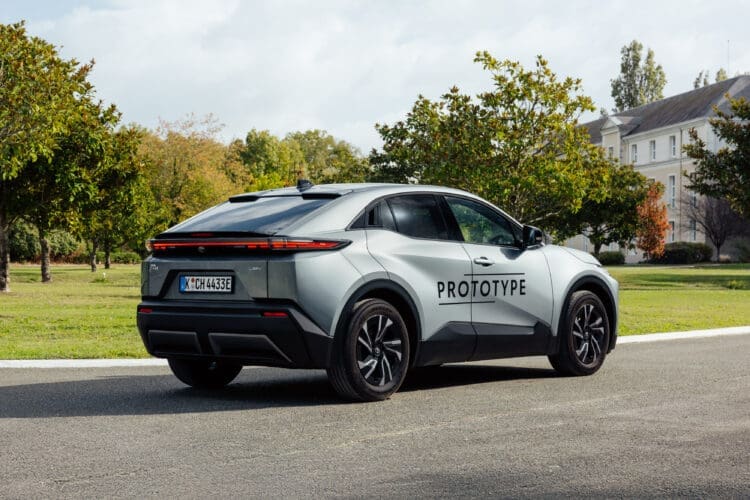
Toyota C-HR+
- Price: £TBC
- Powertrain: Single-motor, front-wheel-drive
- Battery: 72kWh
- Power: 221bhp
- Torque: 198lb ft
- Top speed: 99mph
- 0-62mph: 7.3 seconds
- Range: 378 miles (18-inch wheels)
- Consumption: TBC
- Charging: up to 150kW