Another day, another family SUV from another new Chinese brand, but does the plug-in hybrid Chery Tiggo 7 offer something new?
China’s largest car exporter Chery has just announced it is bringing its fourth car brand to the UK this year.
That might come as a surprise to some who haven’t even heard of the other three, but if you haven’t heard of them you will soon. Omoda and Jaecoo are already storming up the sales charts and now we’ve got Chery as a standalone brand in its own right.
Chery distinguishes itself from the others by focusing on combustion and hybrid powertrains rather than their mix of PHEV and pure EV but, like its sister brands, it’s focused on the lucrative SUV market.
Leading its charge is the C-segment-sized Tiggo 7, which comes in plain old petrol flavour or with the brand’s plug-in hybrid powertrain. Priced incredibly competitively, it’s going up against everything from the MG HS to the Hyundai Tucson and Peugeot 3008, plus the almost identically priced and specced BYD Sealion 5.
Design, interior and technology
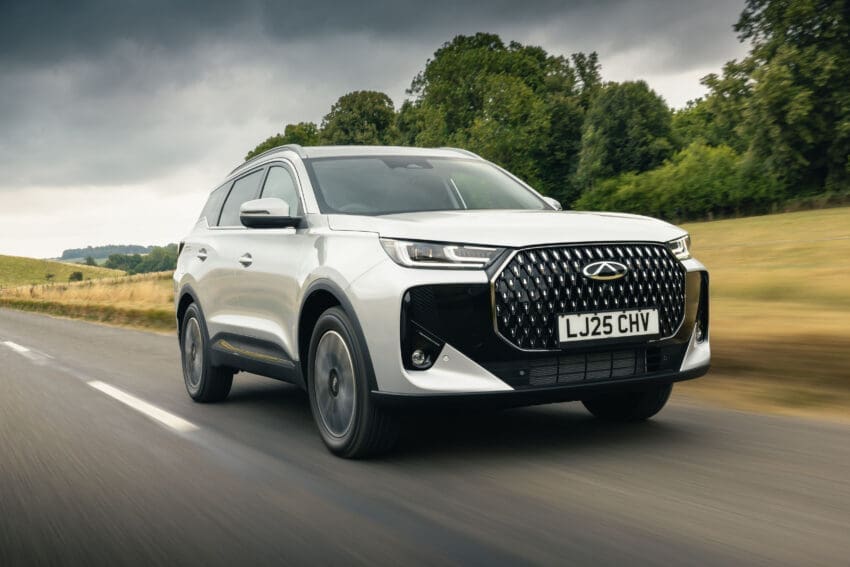
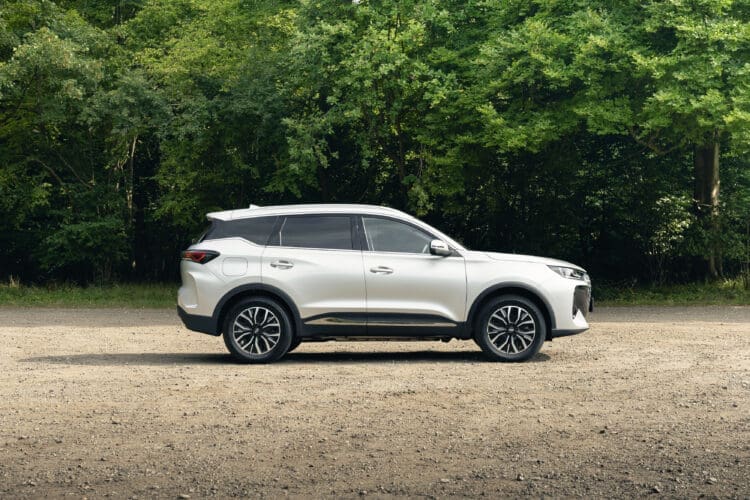
Chery might be the parent company but it seems to have got the design short straw with the Tiggo 7. Love them or hate them, the Jaecoo 7 and Omoda 7 at least have eye-catching designs. The Tiggo 7, in comparison, is largely anonymous.
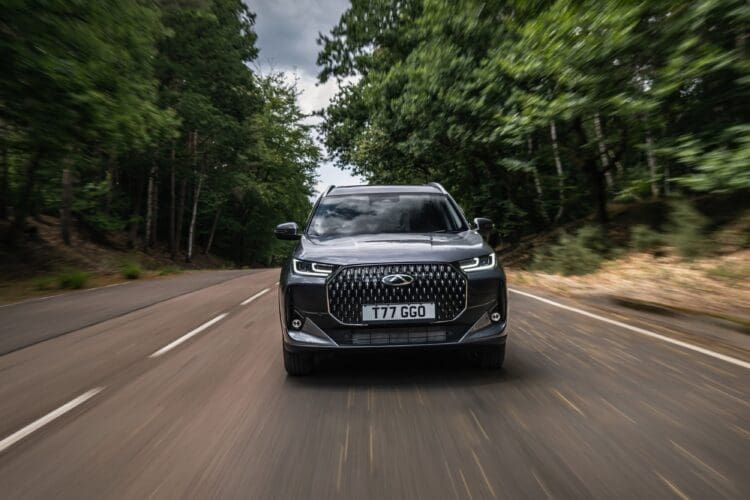
If it wasn’t for the gaping chrome-clad grille, it could be just about any generic mid-sized SUV. It’s not bad looking but nor does it look like anyone has spent much time trying to make it look good. Park it in a car park, come back an hour later and you might struggle to recognise it.
It feels like a bit more of an effort has been made inside. There’s a pale grey/silver finish to a lot of the surfaces that gives a lighter feel than the black-on-black approach of many rivals, and there’s a pleasant robustness to all the touchpoints. However, there’s not much flair. A chunky centre console has a smattering of physical controls, mostly for drive functions, and there are two big screens plonked atop the dashboard.
In some acknowledgement of common sense there are standalone controls for the air conditioning set in a panel on the dashboard. Sadly, though these are a Nissan Ariya-style touch-sensitive affair and don’t always respond or provide any feedback to confirm if you’ve pressed them properly. Still, it’s better than a purely touchscreen-based approach.
Everything else, however, is controlled via a 12-inch touchscreen. It’s definitely not the worst user interface I’ve dealt with but rivals offer slicker, quicker and more user-friendly approaches. Wireless Android and Apple do, at least, make an appearance.
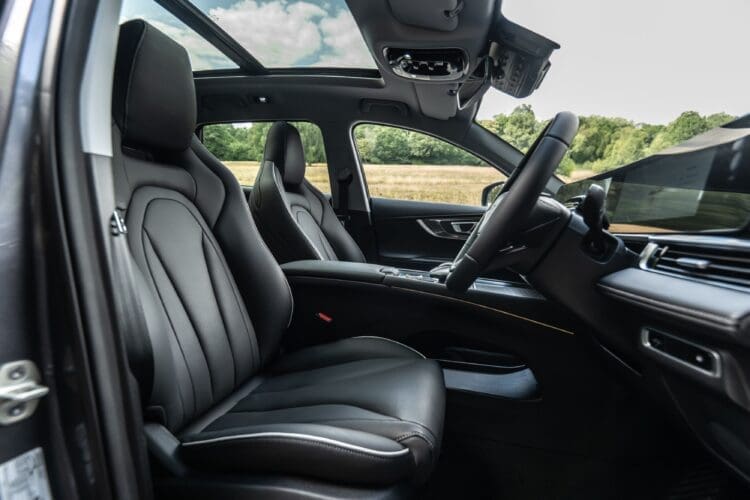
The seats and driving position are definitely designed for average-sized people. Larger drivers might find it a touch uncomfortable on long drives due to short seat squabs and narrow backrests, but for most people it will be fine. Rear legroom is par for the class, although a 426-litre boot is even smaller than the already stingy BYD Sealion 5.
Powertrain
Chery isn’t shy about its plug-in hybrid setup – this car’s full name is the Chery Tiggo 7 Super Hybrid.
And, in fairness, it is a pretty impressive package.
Like its closest competitor, the BYD Sealion 5, the Tiggo 7 uses a punchy electric motor and a substantial 18.4kWh battery to deliver up to 56 miles of all-electric range, with a 1.5-litre petrol engine working alongside it.
Total system power is 201bhp, performance figures are in line with similar vehicles and official economy is the usual pie-in-the-sky nonsense at more than 230mpg, although Chery does also quote a far more realistic 47.8mpg figure in some of its promotional materials.

Frustratingly, the trip computer appears to only share data for the last 50km driven, which makes it impossible to gauge a true long-term average. However, over more than 600 miles, that figure reliably stayed between 45mpg and 55mpg, representing impressive performance for such a big car.
The benefit of these “super hybrid” systems is that they’re EV-led, so the electric motor has plenty of punch on its own to get you going. With decent charge in the battery, it’ll run up to the national speed limit quickly enough on just electric power. When you’re really heavy with the throttle, the engine will fire up and deliver some extra poke without much delay or drama. Once the battery is depleted, the system does a good job of balancing drive power and recharging to keep it in use.
Like a few other recent PHEV models, there’s a battery save setting that can be adjusted to preserve anywhere between 30% and 80% charge for later use.
In operation, the transition from EV to petrol or a combination of both is pretty smooth and generally very quiet, especially in comparison with the unrefined Sealion 5. In most circumstances the engine is just a very faint rumble that’s pretty much drowned out by the tyre noise.
That said, this is not a car for the driving enthusiast. The steering is overly light and suffers from the same feeling of disconnect as other cars in the Chery stable. You’re never 100% confident how your input is going to be interpreted. The feeling isn’t helped by a distinct lack of grip at even the slightest sign of moisture, quite pronounced body roll and a ride that can be caught out by sudden surface changes.
Price and specification
Chery’s plan with the Tiggo 7 is simple. Offer a family-sized SUV to compete with cars like the Hyundai Tucson and Peugeot 3008, but undercut them by thousands of pounds.
There are just two cars in the range – Aspire or Summit grade. The entry-level car costs £29,995, while the tested Summit is £32,995 in top-spec trim.
For context, the MG HS plug-in starts at £32,345, the Kia Niro PHEV is £35,000 and the Tucson and Peugeot start at around £40,000. Some of those offer more power or EV-only range or more advanced equipment but for many buyers the Tiggo 7 will be more than enough. Only the BYD Sealion 5 can match the Tiggo pound for pound.
Every car gets 18-inch alloys, LED lights, dual-zone climate control and power adjustable driver’s seat. The Summit counts a powered tailgate, a 540-degree parking camera, panoramic sunroof, heated and cooled seats, plus an eight-speaker Sony stereo among its upgrades.
The only paid-for option is paint, priced between £500 and £1,000.
Verdict
The Chery Tiggo 7 follows a now-familiar pattern for newcomer Chinese cars.
Rivals from established brands are better to drive, easier to operate and easier on the eye but its shortcomings in driving experience and user interface are offset by an impressively efficient powertrain and unbeatable value.
And its refinement and efficiency are some measure better than the BYD which poses its closest threat.
No-one will ever buy one as anything other than a basic tool, but for those more concerned with the purse strings than the heart strings it’s another solid contender.
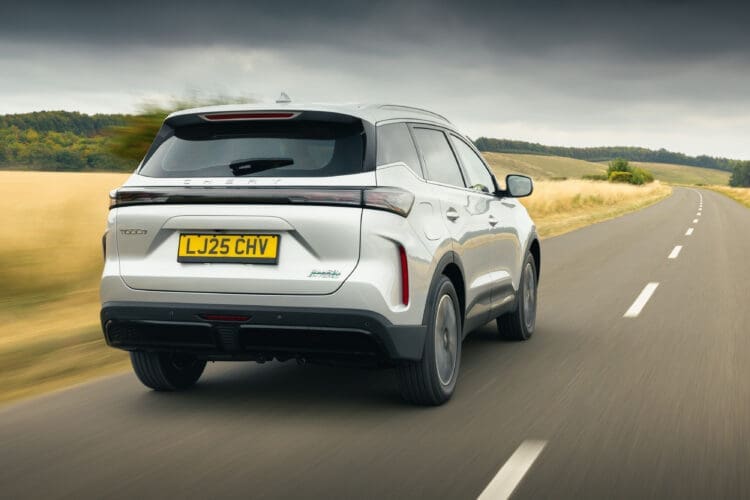
Chery Tiggo 7 Summit
- Price: £32,995 (£33,995 as tested)
- Powertrain: 1.5-litre, four-cylinder, tubo petrol, electric motor, FWD
- Battery: 18.4kWh
- Power: 201bhp
- Torque: N/A
- Top speed: 112mph
- 0-62mph: 8.6 seconds
- EV range: 56 miles
- Consumption: 234.5mpg
- Charging: up to 40kW
Also consider
- BYD Sealion 5, from £29,995
- Peugeot 3008 PHEV, from £40,110
- Kia Niro PHEV, from £35,320