A light, likeable city e-bike that gets the essentials right
The Whyte Rheo 3 trades big-battery range and high torque for low weight, and the result is a nimble, surefooted, fully-equipped city bike that handles town and country with ease. The 250Wh battery limits range on hilly, cold-weather rides, but at around £2,099 it undercuts and outmanoeuvres heavier rivals, making it easy to recommend for the right rider.
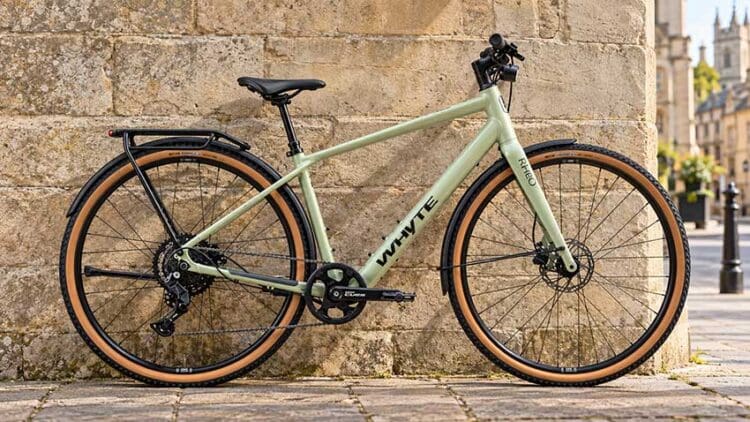
Designed as a city e-bike, the Whyte Rheo 3 is packed with features meant to make getting about by bike as simple as possible. From integrated lights to a rear rack that is ready to load, this is a machine built to turn the daily commute into a breeze.
But what if you do not live in a town? Can all that kit still earn its keep in the rural hills? I spent time aboard the Rheo 3 to find out whether it deserves a place among the best electric bikes for any rider, wherever they happen to live. For context on where it sits in the market, our full library of electric bike reviews is a useful companion read.
Frame, motor and battery
At the heart of the Rheo 3 sit an aluminium frame, a hub-based motor and a 250Wh internal battery, teamed with a straight-bladed alloy fork. That deviates from the current trend of piling on front suspension and larger batteries, as seen on bikes such as the Specialized Turbo Vado, in favour of keeping weight down to a claimed 16.9kg (37lb) in size medium.
Whyte says the Kynamic hub motor delivers 450W of peak power and 45Nm of torque. Set against that Specialized, it has a smaller battery and almost half the torque, yet Whyte’s chief designer Ian Alexander argues the Rheo 3 still delivers a high power-to-weight ratio. Being a UK-built city bike, it also stays firmly within Electrically Assisted Pedal Cycle rules, with assistance capped at 15.5mph and a motor rated within the legal limit, as the government’s EAPC guidance sets out, so there is no licence, tax or insurance to worry about.
Battery placement has been a key design focus. Drawing on Whyte’s off-road heritage, Alexander explains that siting the battery as low as possible in the down tube creates a low centre of gravity for sure-footed handling. “You can’t upgrade the frame geometry,” he notes, so getting it right first time matters.
On range, Whyte suggests anywhere between 20 and 65km, with a 3.5-hour charge from empty to full. An after-market range extender is due from December, which will be welcome news for anyone regularly riding further afield.
Kit and geometry
The frameset and electrics are tied together with the respected Shimano Cues 9-speed groupset, Shimano’s durable, purpose-built ecosystem for commuting and city bikes, and, intriguingly, a Whyte dropper seatpost offering 100mm of drop. Not an obvious addition to a hybrid e-bike, but a genuinely practical one that lets you raise and lower the saddle for easy on-and-offs rather than for tackling gap jumps.
The bike rolls on Whyte’s own-brand wheels with WTB STp i27 rims, wrapped in fast-rolling, high-volume Maxxis Reaver Tanwall 45c tyres that soak up potholed urban streets and rough rural lanes alike. Up front, the one-piece bar and stem measures 720mm wide with a 20mm rise, seven-degree backsweep and four-degree upsweep. With a 599mm stack and 435mm reach in medium, the cockpit gives an upright, confident position that borrows from contemporary mountain bike geometry.
The ride
With its wide, chunky tyres and mountain-bike aesthetics, I immediately pegged the Rheo 3 as a do-all, go-anywhere e-bike, and I was not far wrong. Town to rural, flat to hilly, tarmac to trails, all were tackled with the same ease, as though the bike had been purpose-built for each.
The nine-speed Cues drivetrain and Kynamic motor are a fine combination. Even in a hilly location I found levels one or two of the three assist settings were plenty, reserving level three for the steepest climbs, usually the ones from a dead stop in traffic where I wanted to power clear of harm. I appreciated the slight overrun of the motor 99% of the time, which avoids the jerky on-off feel of some rivals. The one caveat: lean hard on assistance up a climb and forget to knock the power back at the summit, and you can get slung into the next corner. Moderating the assist level before a descent is one to watch, particularly for nervous riders, though the bike’s surefooted nature does a lot to build confidence.
Other than its inability to carry people, the Whyte came a close second to a cargo bike as a car replacement. I loved the integrated setup: never having to remember to charge or clip on lights, with the mudguards and rack ready to go. My only real gripe is that the cable lines cut across the front light beam. It is a quick fix for the brand, but not one I could sort myself without rewiring.
I found myself simply hopping on when I needed the headspace of a ride but not the faff of a full kit change. Trainers, a warm jacket, gloves and helmet, and I was out of the door in minutes, returning from a bracing loop into the hills fresh enough to sit straight back at the laptop.
Lightweight, with a range trade-off
The dropper post seemed perplexing at first, but it made sense the moment I put my bike-novice sister aboard. Combined with the low-slung frame, it let her plant both feet on the ground at a stop, then raise the saddle for a proper riding position. Watching her ride also underlined just how light the Rheo 3 is next to its peers. Where I found it nimble through tight gaps, she was able to manhandle it with ease.
Of course, it is light because the battery is small, and that hampers range. On hilly terrain and cooler days leaning on level two, I was close to using 75% of the battery in just 20 miles (32km). On a flatter 10-mile (16km) ride with level one used sparingly and level three called on once for the home hill, the battery barely moved, dropping only to 80%. Terrain, temperature and rider input make all the difference here, so plan accordingly. If range anxiety is your main concern, a heavier bike with a bigger pack, or something like the Velotric Tempo, may suit better.
Value and verdict
The Whyte Rheo 3 is an agile, nimble e-bike equally at home on town errands and rural forays. It is fast-rolling and, on test, unfazed by terrain or topography. It proved a genuine asset around the household, handling errands, enabling mixed-ability family rides and tempting me out for a refreshing spin without the usual sweaty-cyclist faff.
Its price makes a distinctive mark, too. At around £2,099 it is low enough to give top-end conversion kits a run for their money while offering more subtle, integrated assistance, and it undercuts many rivals outright. Set directly against the Specialized Turbo Vado it shares much of the versatility, yet costs roughly a third less and weighs some 10kg less. If you want that Specialized flavour of lightweight assistance in a pricier package, our Specialized Turbo Levo SL review is worth a look. For most city and mixed-terrain riders, though, the Rheo 3 makes a compelling, sensibly judged case.
For
- Lightweight at a claimed 16.9kg, easy to handle and manoeuvre Nimble, agile and predictable steering Integrated lights, rack and mudguards fitted as standard Smooth 450W Kynamic hub motor with well-judged overrun Reliable Shimano Cues 9-speed drivetrain Practical Whyte dropper post aids confident stops and starts Keen price that undercuts heavier rivals
Against
- 250Wh battery limits range on hills and in cold weather Cable routing cuts across the front light beam Range extender not available until December
- Price
- Around £2,099 (RRP)
- Frame and forks
- 6061 alloy, 12mm thru-axle, mudguard mounts
- Drivetrain
- Shimano Cues 9-speed, 11 to 46t
- Motor
- Kynamic hub motor, 450W peak, 45Nm torque
- Battery
- 250Wh, internally mounted
- Range (claimed)
- 20 to 65km
- Charge time
- 3.5 hours empty to full
- Range extender
- After-market option due December
- Brakes
- Tektro T3020 hydraulic
- Seatpost
- Whyte dropper, 100mm drop
- Wheels
- Whyte own-brand, WTB STp i27 rims
- Tyres
- Maxxis Reaver Tanwall 700x45c
- Cockpit
- Whyte one-piece bar and stem, 720mm wide
- Saddle
- Whyte custom
- Weight
- 16.9kg (claimed, size medium)
- Extras
- Integrated lights, rear rack, mudguards