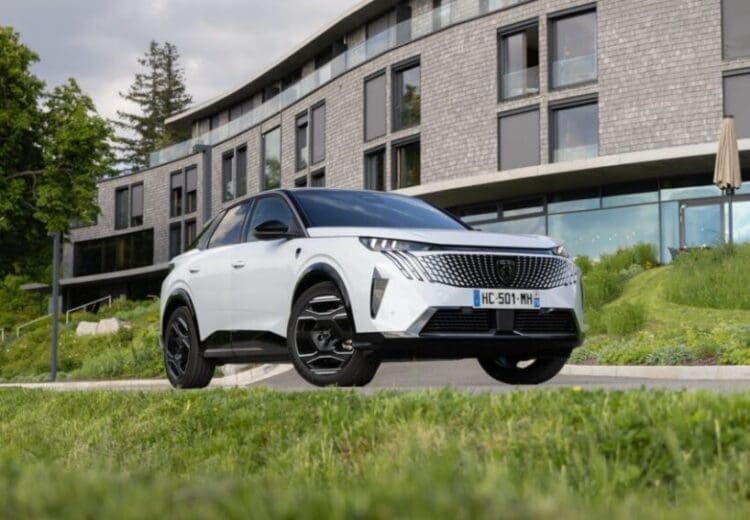
Peugeot is facing long production delays on its E-3008 and E-5008 models due to issues at its European battery supplier.
Peugeot’s parent company Stellantis has been hit by slower-than-expected levels of production at the Automotive Cells Company (ACC) factory in France, leading to delays of up to eight months on long-range variants of the two SUVs.
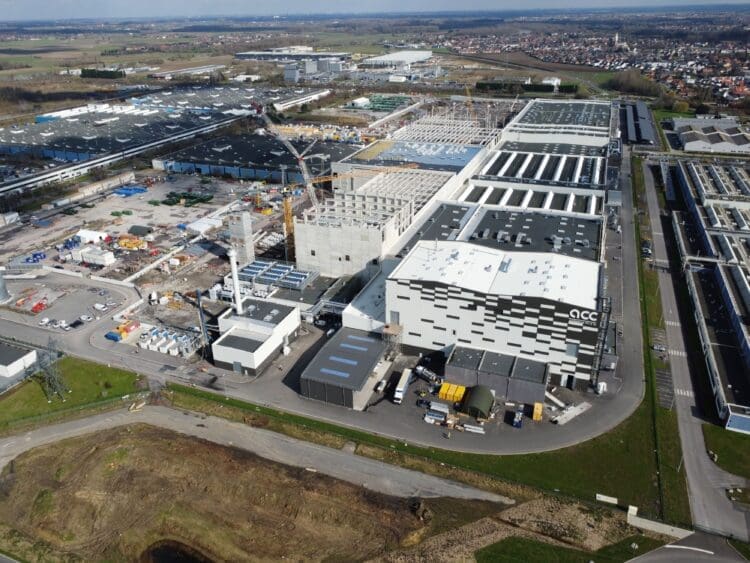
Following reports of delays by Bloomberg, Peugeot confirmed to EV Powered that a combination of high demand and slow ramp-up at the gigafactory in Billy-Berclau Douvrin meant deliveries of the E-3008 and E-5008 SUVs were being delayed.
A Peugeot spokesperson told us: “Due to exceptionally strong demand, driven primarily by B2B [business to business] fleets, which represent nearly 90% of all orders, current order volumes now exceed production capacity.
“The ramp-up with our supplier is progressing, but at a more gradual pace than originally anticipated. To maintain our quality standards, we have chosen not to accelerate production at the expense of finish or reliability.
“As a result, vehicles are being delivered progressively, with average lead times currently estimated at six to eight months. We expect to complete delivery of the existing B2B order portfolio by end of September 2026, with remaining orders fulfilled by Q1 2027.”


They added that in the face of the delays, Peugeot was offered fleet customers “transition” solutions including the 75kWh Standard Range and plug-in hybrid versions of both cars instead.

It is not clear whether the problems also affect other Stellantis brands but Citroen uses the same 97kWh battery in the long-range version of the E-C5 Aircross and Vauxhall is due to launch a version of its Grandland using the same pack.
ACC general secretary Matthieu Hubert told Bloomberg: “The ramp-up is difficult but we are learning every day and doing as much as possible to service our clients.” According to Bloomberg’s sources ACC has now brought in experts from China to help speed up production and reduce “high scrap levels” at the site.
ACC is a joint venture between Stellantis, TotalEnergies-Saft, and Mercedes, with strong backing from European governments including those in France, Germany and Italy and site in all three countries. It had two research and development facilities in France along with the north-eastern gigafactory, with work underway to build two more factories, one in Kaiserslautern, Germany and one in Termoli, Italy.
Its stated ambition is to build “batteries for the future” with twice the energy density and range in half the weight and with three times faster charging than current batteries.