Major UK charging network Instavolt has called on the Government to commit to new standards for EV charging signage.
The chargepoint operator (CPO) says there is a “systematic gap” between the Government’s claims to be backing EV infrastructure and the delivery of clear roadside signage across the country.
There are currently no official guidelines on EV charging signage and CPOs have called on central and local government along with road management groups to develop clear and consistent signage to help drivers find locations.
The Government has publicly backed improved signage for charging sites but Instavolt says progress has stalled, potentially risking slowing down the transition to electric vehicles.


Delvin Lane, CEO of InstaVolt said that drivers “deserve better”.
He said: “We’re delivering on our commitments to build critical EV infrastructure using private investment, and we need government to deliver on its promises as well. We’ve faced an ongoing battle with signage, and we know more can be done.


“We’re doing everything we can to make charging simple and convenient for drivers, but too often people still struggle to find charging locations easily.
“The government has been clear that improving signage for EV charging is a priority. A year on, we are still waiting for that to translate into action.”
His comments come after Instavolt was denied planning permission for a project to highlight the issue.
The application, submitted in November 2025 for a non-functional, advertising wind turbine at InstaVolt’s flagship Winchester Superhub site, was intended to draw attention to the “persistent failure” to provide adequate roadside signage directing drivers to public charging locations.


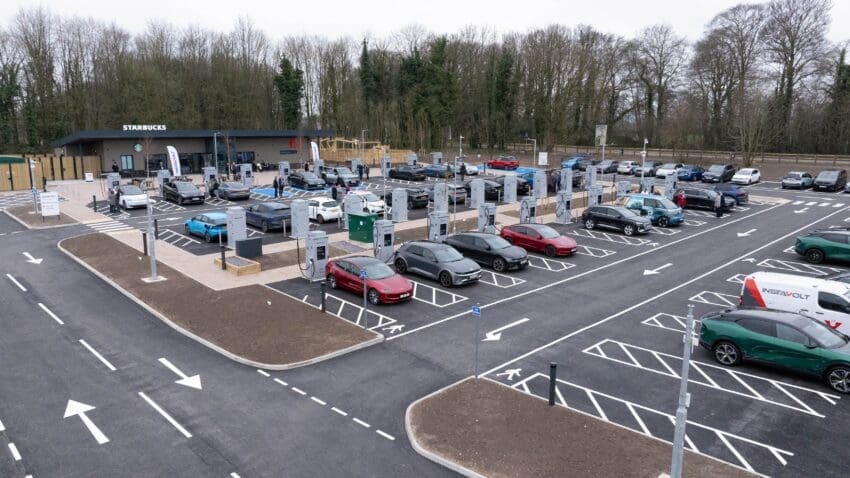
The Winchester Superhub, above, is the UK’s largest single-operator ultra-rapid charging hub, but Instavolt says despite its size and significance, the site lacks clear signage. It also claims that the problem is not an isolated one, but one experienced by CPOs the length and breadth of the country.
InstaVolt believes that part of the problem lies in a disconnect between central ambition and local delivery. Decisions on individual sites rest with local highway authorities and councils, and the CPO believes they are often given a low priority. It wants what it calls clearer coordination between Whitehall and local government.