Falling EV prices, record pump costs and a booming used market push plug-in cars past petrol in a landmark month for the UK’s electric transition
Britain’s car market has passed a symbolic milestone. Sales of electric and plug-in hybrid cars overtook registrations of petrol-only models in June, as record pump prices and increasingly affordable EVs accelerated the shift away from fossil fuels.
Registrations of zero-emission electric cars jumped 35 per cent year on year to almost 63,950, handing battery-powered models a 30 per cent share of the market, according to the latest industry figures from the Society of Motor Manufacturers and Traders. It builds on a strong spring which saw EVs claim a record 27.3 per cent of the market in May.
Plug-in hybrids, which run primarily on battery power with a petrol engine in reserve, added another 26,702 registrations, up 25 per cent on last June, for a 12.5 per cent slice of the market. Together, the two plug-in categories accounted for 42.5 per cent of all new cars sold, comfortably ahead of petrol-only models, which slipped below the 40 per cent mark for the first time at 39.7 per cent on sales of 84,541.
Conventional self-charging hybrids took 14 per cent of registrations, while diesel, in seemingly terminal decline after years of environmental and regulatory pressure, mustered just 3.8 per cent.
Chinese brands claim one in seven sales
The other defining trend of the month was the continued surge of Chinese carmakers, which are now selling petrol, hybrid, plug-in hybrid and electric models at prices that consistently undercut established rivals. In a month when more than 213,000 new cars were registered, up 11.4 per cent overall, the three biggest Chinese exporters shifted more than 30,000 vehicles between them to claim over 14 per cent of the market.


MG, the historic British badge now owned by Shanghai Automotive, took 4.9 per cent of registrations, outselling Toyota, the world’s biggest carmaker, as well as Kia and Hyundai. Chery, which recently agreed a deal to build some of its models at Nissan’s Sunderland plant, claimed 6.4 per cent across its Jaecoo and Omoda brands. BYD, recently crowned the UK’s best-selling electric car brand, took just shy of 3 per cent.
A tipping point for mainstream motoring?
Many in the trade believe June marks the moment electrified motoring tipped decisively into the mainstream, helped by a rapidly maturing secondhand market. Used electric cars are now typically cheaper than their petrol equivalents, opening the door for buyers who could never justify a new EV at list price.
Nick Williams, managing director of the transport business at Lloyds Banking Group, said: “There’s a striking contrast in the affordability picture over the last 12 months. Used electric cars are now generally cheaper than their petrol equivalents and the second-hand market grew by around a third in the first quarter. For households that can’t justify a new electric car at list price, the growing pool of used stock is a route in.
“The other visible shift is on running costs, with pump prices having swung by more than 20p a litre and home charging tariffs have stayed broadly stable.”
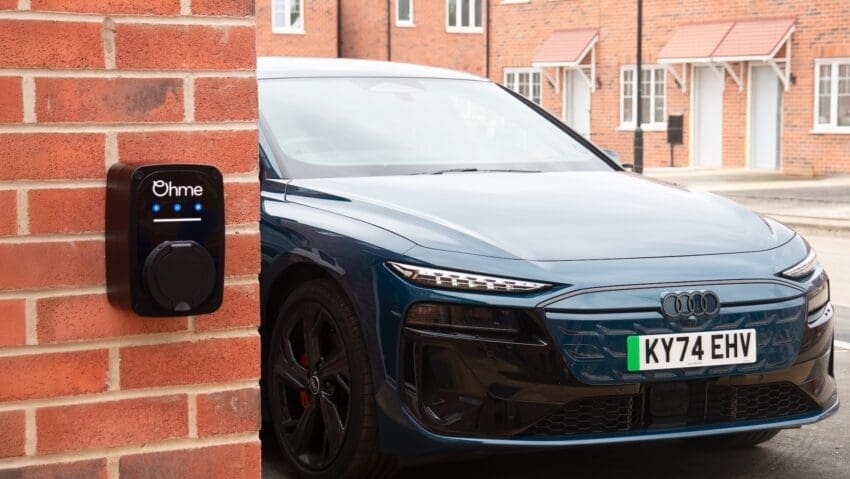
Challenges remain, however. Plug-in motoring is still less convenient, and less cheap, for the roughly two in five motorists without access to home charging, who rely on a public network where prices remain markedly higher, according to charging data specialist Zapmap. Closing that gap will be crucial if the market’s momentum is to carry through the second half of the year.