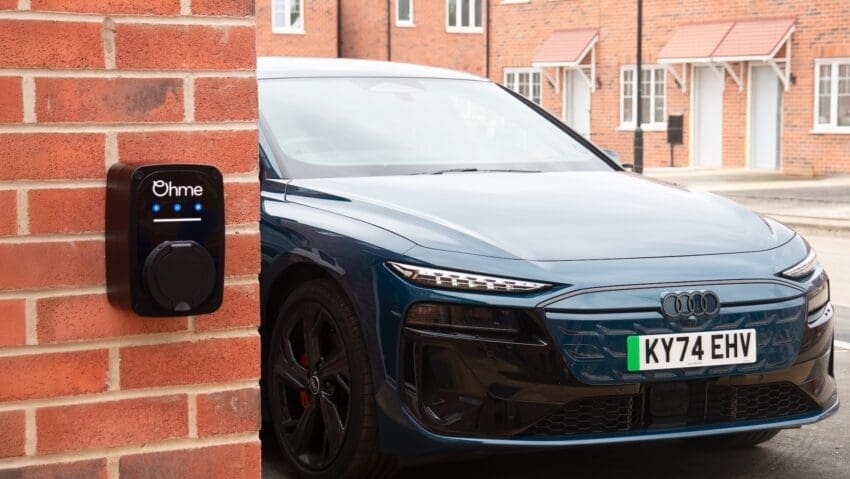
Home charging an EV will get cheaper this winter after Prime Minister Andy Burnham announced he was scrapping VAT on electricity bills.
In one of his first announcements after taking over from Keir Starmer, the new Prime Minister confirmed a temporary end to VAT on domestic energy bills.
Announcing the plan, Burnham said: “I said I wanted to give people breathing space, and that’s what I’m announcing on my second day as Prime Minister. We’re taking immediate action to cut taxes on energy bills, put more money in people’s pockets and bring back hope.”
The change will come into effect from October 1 – the day of the next Ofgem energy price cap change – and will remove the current 5% VAT charge from home electricity bills until March 31, 2027.
The move could save an average EV driver up to £25 per year and has been widely welcomed.
However, industry observers warn the new reduction further widens the gap between those who can charge at home and those who rely on public charging.


How much will the electricity VAT cut save drivers?
Savings will vary depending on how many miles a driver does, their supplier’s standing charges and whether they have a specialist EV tariff or are on the standard variable rate (SVR).
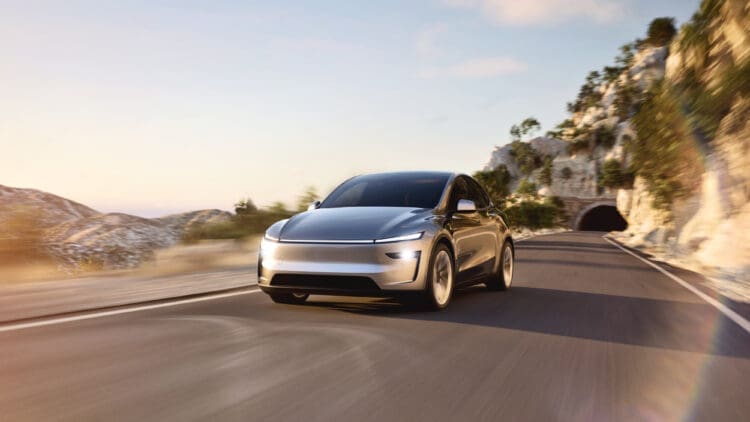
At today’s SVR of 26.11p/kWh, a driver charging the UK’s best-selling EV – the Tesla Model Y – will save roughly £1.15 per full charge, while someone on an 8p/kWh EV tariff will save around 40p per full charge.
Based on average mileage and efficiency data, that equates to savings of around £25.70 for a driver on the SVR, and an £8 saving for one on an EV overnight tariff. Drivers covering more than the average 7,100 miles will see bigger savings.



Vicky Edmonds, chief executive officer of drivers’ body EVA England, welcomed the decision but warned that it again highlighted the need for action on tax on public charging.
She said: “Cutting VAT on household energy bills is welcome news. For EV drivers who charge at home, it will make cars that can already save them thousands of pounds even cheaper to run.
“But millions of drivers without a driveway will not fully benefit because they can’t easily access home charging. The Government’s Cost of Public Charging Review must now deliver real structural reform to bring down prices at the chargepoint. That means tackling the significant taxes, levies and electricity costs faced by chargepoint operators and ensuring savings are passed directly on to drivers. The transition cannot be fair while people pay substantially more simply because they cannot charge at home.”
Public charging unchanged
Edmonds’s comments reflect a lack of movement on public charging costs. Chargepoint operators and EV advocates have repeatedly called for the government to reduce the current 20% VAT on public charging in line with domestic rates.
They argue that the current rate unfairly punishes drivers who are unable to charge at home. According to Zapmap, ultra-rapid charging currently costs an average of 79p/kWh, while slow and fast charging costs an average of 54p/kWh. That means a 100% top-up of the same Tesla Model Y would cost between £47.52 and £69.52 on a public device.
Guy Bartlett, CEO of public chargepoint operator Believ, noted: “We welcome the reduction in VAT on home energy, which will provide valuable support within the ongoing cost-of-living crisis. However, for EV drivers who can’t charge at home, and rely solely on public charging they continue to face an increasing VAT penalty simply because they don’t have a driveway.
“It’s time to end this postcode lottery and align VAT on public charging with home energy to make EVs more affordable for everyone.”
While issues still remain around public charging costs, David Martell, CEO of home charger company Andersen EV, said the VAT announcement was a positive step in the wider transition.
He commented: For the average EV driver charging at home, the saving on charging alone is likely to be around £20–£25 per year. For higher-mileage drivers, it could be closer to £35–£40. That may not sound transformational on its own, but it’s the direction of travel that matters. It demonstrates a willingness to support the transition with practical measures that make a real difference to consumers.”