Toyota aims to give its flagship EV a more practical spin in the shape of the bZ4X Touring, but is there room on the road for this odd SUV/estate crossover?
The Toyota bZ4X had a bit of a rocky start to life but we won’t dwell on that since last year’s facelifted car fixed most of the early problems.
Its biggest issue since then has actually been the C-HR+ which manages to be significantly cheaper than the bZ4X SUV but offer an awful lot of the same qualities. I’d go so far as to say it makes the bZ4X SUV quite hard to recommend.
But Toyota has a solution to that and it might just be brilliant – the Toyota bZ4X Touring.
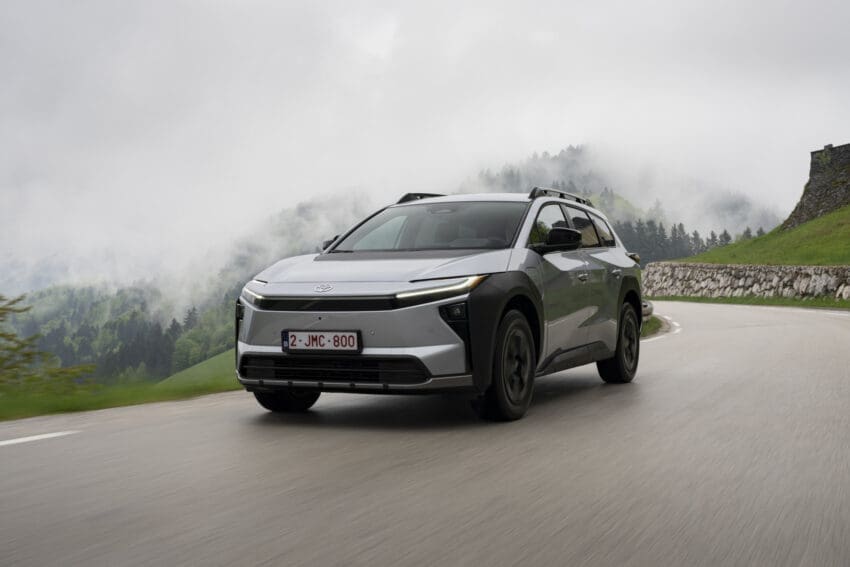
It’s based on the regular SUV but with an elongated wheelbase and a whacking big estate-style boot to bring lots more space. It’s also got plenty of body cladding and a jacked-up ride height to create an odd sort of SUV/estate hybrid – a car in the spirit of the Audi Allroad models or Volvo’s old V70XC.

While SUVs show no sign of losing their appeal there is a growing feeling that estates are on their way back. There’s the VW ID.7 Touring, Audi A6 e-tron Avant and the inbound Polestar 4 estate, plus models from Vauxhall, Peugeot and BMW. So does Toyota’s oddball actually make a lot of sense?
Toyota bZ4X Touring design, interior and technology
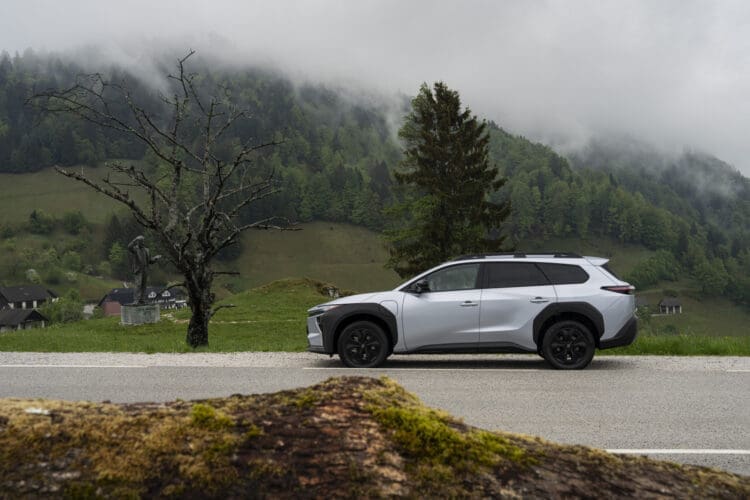
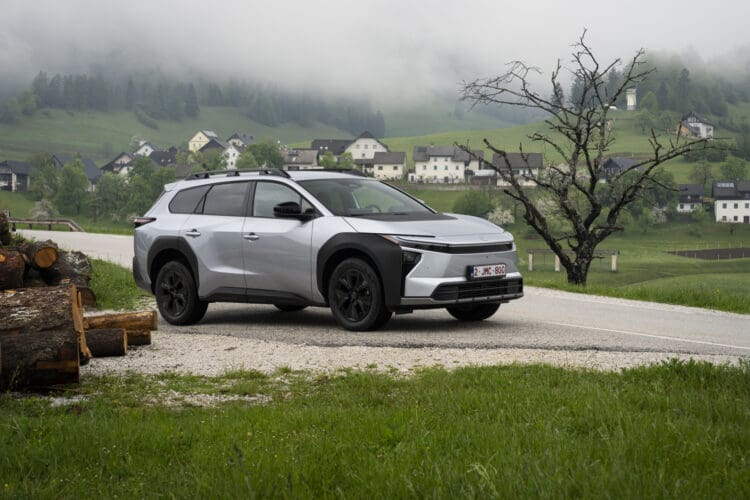
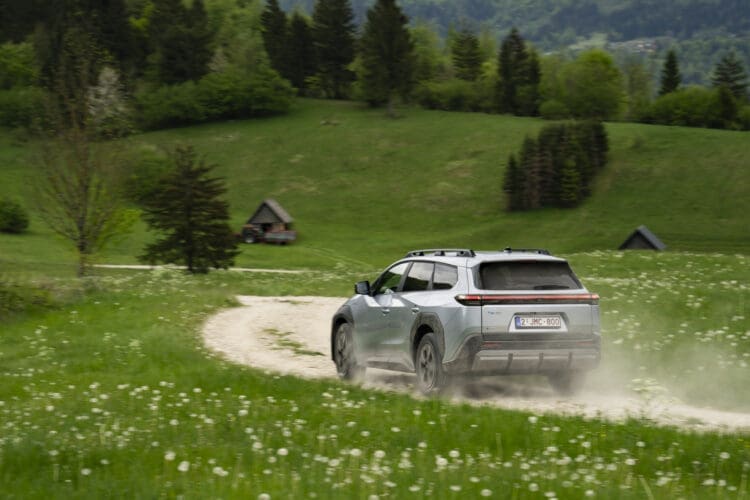
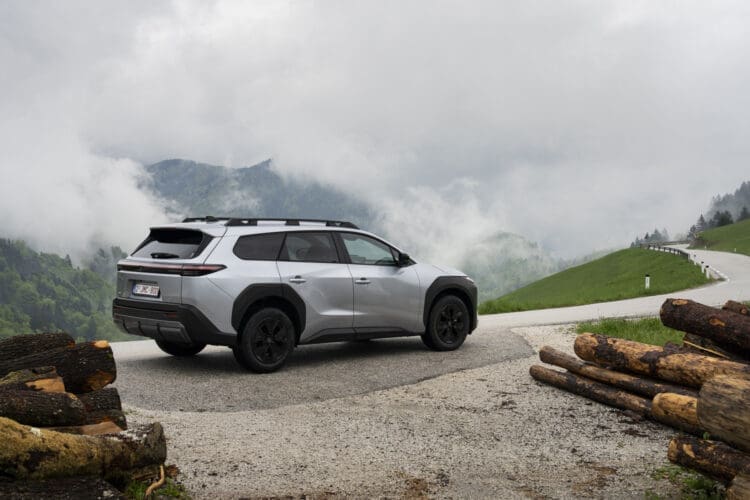
The bZ4X Touring has a more rugged and purposeful look than the SUV variant. The pointy front end with its slimline LED lights is the same but elsewhere there’s a heap of matte black body cladding, prominent roof rails and some skid plate-style lower bumpers for a go-anywhere look.
The tougher image is aided by the larger proportions of the estate body. It’s 140mm longer than the SUV and 25mm taller and has noticeably more road presence.
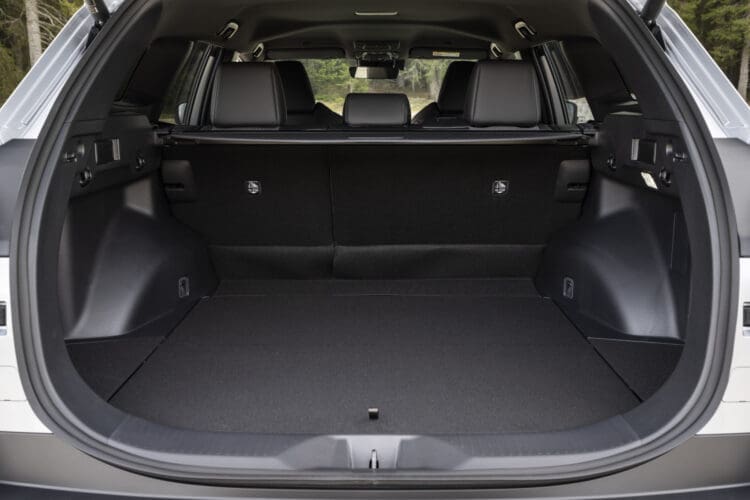
It’s also got noticeably more interior space thanks to that longer wheelbase. The boot has gone from a faintly disappointing 452 litres in the SUV to a generous 699 litres (to the roof). That puts it way ahead of any similarly priced SUVs from other brands or other electric estates such as the ID.7. Fold the back seats down (using the boot-mounted levers) and you’ll get a gargantuan 1,700 litres.
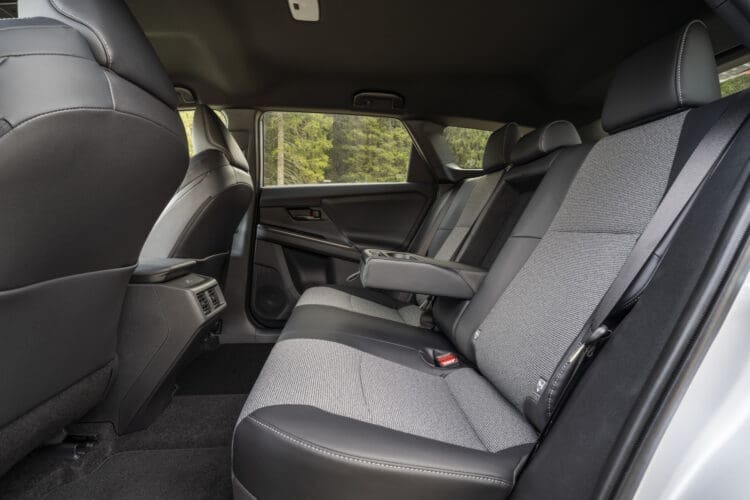
Leave the seats in place and you’ll get plenty of space for five passengers. At 6’ 5”, I had space behind a driver of the same height with knee room to spare, and headroom wasn’t an issue either. The only shortcoming is that the floor is noticeably high and means you sit with your knees pointing towards the ceiling.
Oddly, while there’s lots of room for people, there’s not so much space for their stuff. Estates should be universally practical but the bZ4X Touring lacks much in the way of cabin storage. There’s a clever double-sided central bin, but the lower centre console is virtually inaccessible and the door pockets are barely big enough for a drinks bottle. There isn’t even a traditional glovebox.
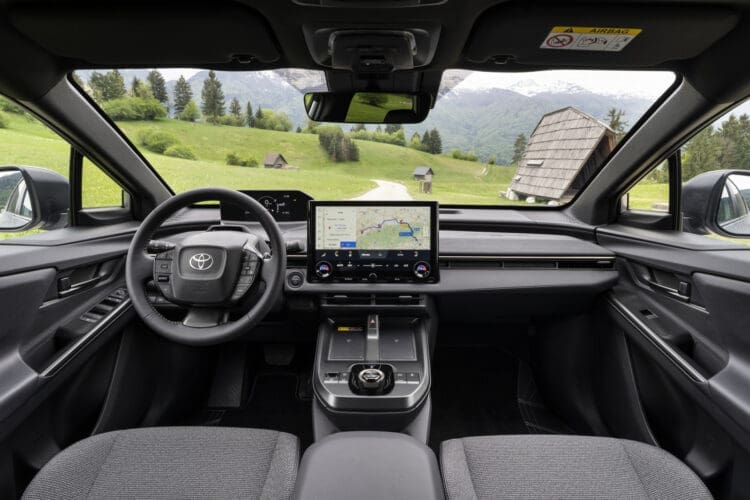
Ahead of the boot, the Touring has an identical cabin design to the SUV which is logical, clear and dull. It suffers the same 50 shades of grey problem that every Toyota has, which leaves it feeling flat and characterless. It’s a pity because, as ever, it’s incredibly well constructed and with a focus on putting key controls close to hand.
Of course, there is still a screen – a 14-inch unit shared with all new Toyotas. This is big and responsive, with large icons to make selections. However, it seems light on features and some obvious things such as phone mirroring aren’t as straightforward as they should be due to the peculiar menu system. It’s better than old Toyota systems but still far from class-leading.
Toyota bZ4X Touring battery, motor and driving
There are two versions of the bZ4X Touring available – a single-motor model with 221bhp and a two-motor all-wheel-drive model with 375bhp.
We haven’t tested that AWD version yet, but Toyota says it will do 0-62mph in an impressive 4.5 seconds and deliver a range of 298 miles from a 71kWh battery.
The front-wheel-drive car we have tested uses the same battery for a claimed range of 366 miles, which is pretty competitive in this peculiar C/D-segment middle ground, and is backed up by 150kW DC charging.


There’s plenty of response from the single motor that would fool you into thinking it’s got more than 221bhp/198lb ft. Not a lot more, but definitely a bit. It only begins to feel a little less lively when accelerating at higher speeds.
I’m sure the AWD will be entertaining with its additional grunt and grip, but I’d need to drive it to be convinced that it’s worth the £6,000 over this model, especially given its impact on efficiency.
The FWD model acquits itself remarkably well here for a car of its size. On one near-three-hour test drive on A-, B-roads and a good chunk of motorway, I saw a remarkable 4.5m/kWh. The longer-term trip computer on this factory fresh car was saying 3.9m/kWh, which still translates to 291 miles per charge against an official 4.44m/kWh and 366 miles WLTP.
There is an eco button to aid efficiency but in my time with it, it made no discernable difference. There’s also a snow mode to tweak the traction control in slippery situations, but that’s your lot.
It’s pleasing to find a car that doesn’t have a pile of driving modes. So often these are pointless affairs that make minimal adjustments to things like steering and throttle response. The bZ4X Touring has instead just been set up properly.
Its controls are all really well calibrated and balanced. Often you only become aware of these things when something feels “off”, so it’s a compliment to say that you don’t notice them in the bZ4X Touring. Response and weight from the throttle, brakes and steering are all bang on the money.
It feels utterly composed on the motorway but equally controlled on twisting country roads. It’s no Subaru Legacy Spec B, but it can manage a B-road with surprisingly little body roll and really impressive damping. It’s not quite as cosseting as the c5 but is brilliantly damped to absorb impacts without the spongy feeling that often comes with softer ride. That’s perhaps helped by the magnificently tall 60 profile tyres.
Toyota bZ4X Touring price and specification
There are just two trim levels in the bZ4X range each linked to a different powertrain.
The tested Design spec is only front-wheel-drive and comes with a list price of £45,995. At the time of writing Toyota is offering a £1,500 discount on that starting price.
That makes it £6,000 more than the SUV, which is quite the step up for an extra 200 litres of boot space. However, it’s a similar price to the mid-level Kia EV5 I drove recently, and £6k cheaper than a basic ID.7. It’s arguably a slightly different prospect than either but at the same time could realistically be considered against either, along with the likes of the Skoda Enyaq.
Design spec is pretty well equipped, with adaptive LED headlights, keyless entry, heated front seats, a powered tailgate and 360-degree parking camera. It also gets a comprehensive ADAS suite incorporating adaptive cruise control, plus a heat pump and tinted rear glass as standard.
The higher-spec Excel grade does bring goodies such as cooled front seats, heated rear seats and a panoramic sunroof, plus 22kW AC charging but is only available in AWD guise. That means an extra £6,000 on the price and a near-70-mile cut to range.
Verdict
The Toyota bZ4X is an interesting and welcome addition to the family EV market.
It’s not quite one thing or another, but it’s no worse for that. It’s an interesting rival to the now-traditional C-SUV while also providing a legitimate alternative to “normal” estate cars.
The interior is a bit drab and could do with more practical storage spaces but the overall passenger and luggage space is generous, and it’s robustly constructed.
It also drives really well, with impressive efficiency and solid range, and it even has an interesting exterior design.
Toyota might just have fixed the bZ4X for good this time.
Toyota bZ4X Touring Design FWD
- Price: £45,995 (£46,675 as tested before Toyota EV discount)
- Powertrain: Single-motor, front-wheel-drive
- Battery: 71kWh
- Power: 221bhp
- Torque: 198lb ft
- Top speed: 99mph
- 0-62mph: 7.3 seconds
- Range: 366 miles
- Consumption: 4.4m/kWh
- Charging: up to 150kW
Toyota bZ4X Touring rivals
- Volkswagen ID.7 Touring – Less rugged and more expensive but with better range and arguably more prestige
- Subaru E-Outback – Sister car to the Toyota means all the same qualities, but only sold in AWD guise
- Skoda Enyaq – A more traditional SUV but still one of the best family EVs out there and with variants to suit lots of budgets and needs